Why Is My Dishwasher Leaving White Residue? 9 Causes and Easy Fixes
Why is my dishwasher leaving white residue on glasses, plates, and the inside of the tub? In most homes, the film comes from hard-water minerals, too much detergent, a missing rinse aid, or detergent that did not dissolve completely. A residue that wipes away is usually treatable; permanent cloudy glass may be etching rather than removable buildup.
This guide helps you identify the residue before changing products or taking the appliance apart. You will learn nine common causes, a safe step-by-step troubleshooting order, and the warning signs that mean the dishwasher needs professional service.
Table of Contents
The Quick Answer
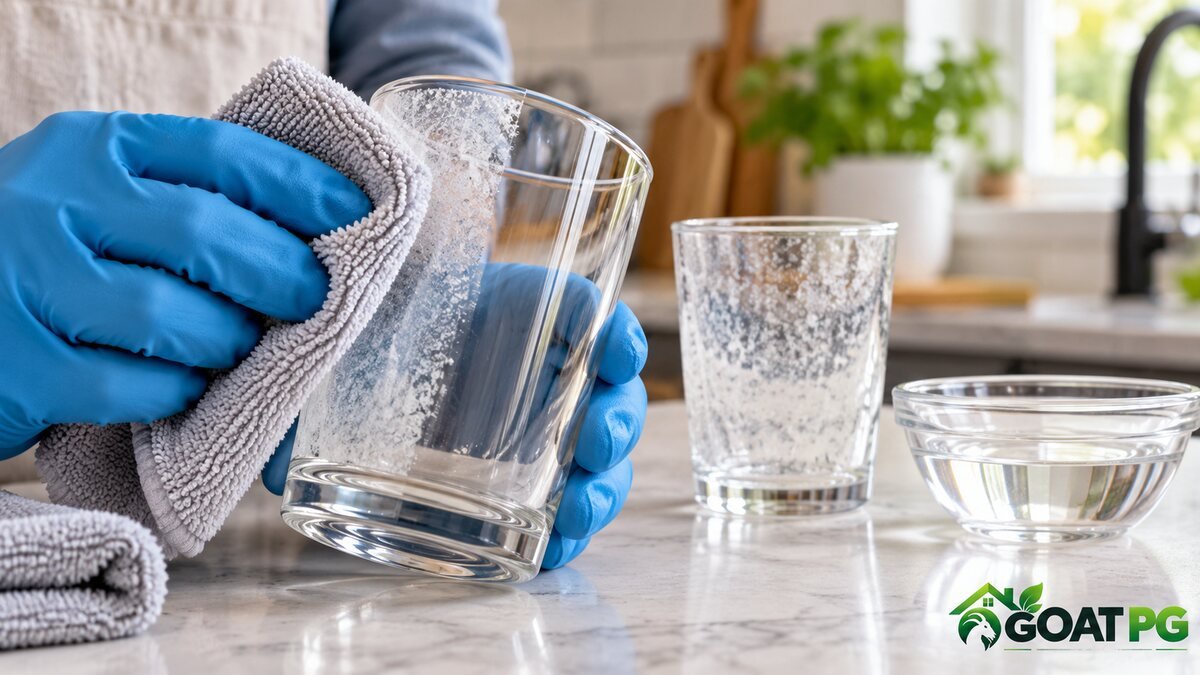
If you are asking why is my dishwasher leaving white residue, start with a simple wipe test. Put a drop of plain white vinegar on one affected glass, wait a few minutes, and gently rub a small spot with a soft cloth. If the cloudiness lifts, mineral scale is likely. If the surface stays cloudy and feels smooth, the glass may be permanently etched.
Next, confirm that the rinse-aid dispenser is filled, use only fresh automatic-dishwasher detergent in the amount recommended for your water hardness, clean the filter according to the owner’s manual, and make sure the spray arms rotate freely. Run the hottest cycle allowed by the dishware and appliance instructions. Do not mix vinegar, bleach, chlorine detergent, ammonia, or commercial cleaners.
Whirlpool explains that rinse aid reduces water spots, white residue, and hard-water buildup by helping water sheet off dishes during the final rinse. Its rinse-aid guidance also notes that many modern efficient dishwashers depend on this sheeting action for better drying.
First, Identify What the White Residue Is
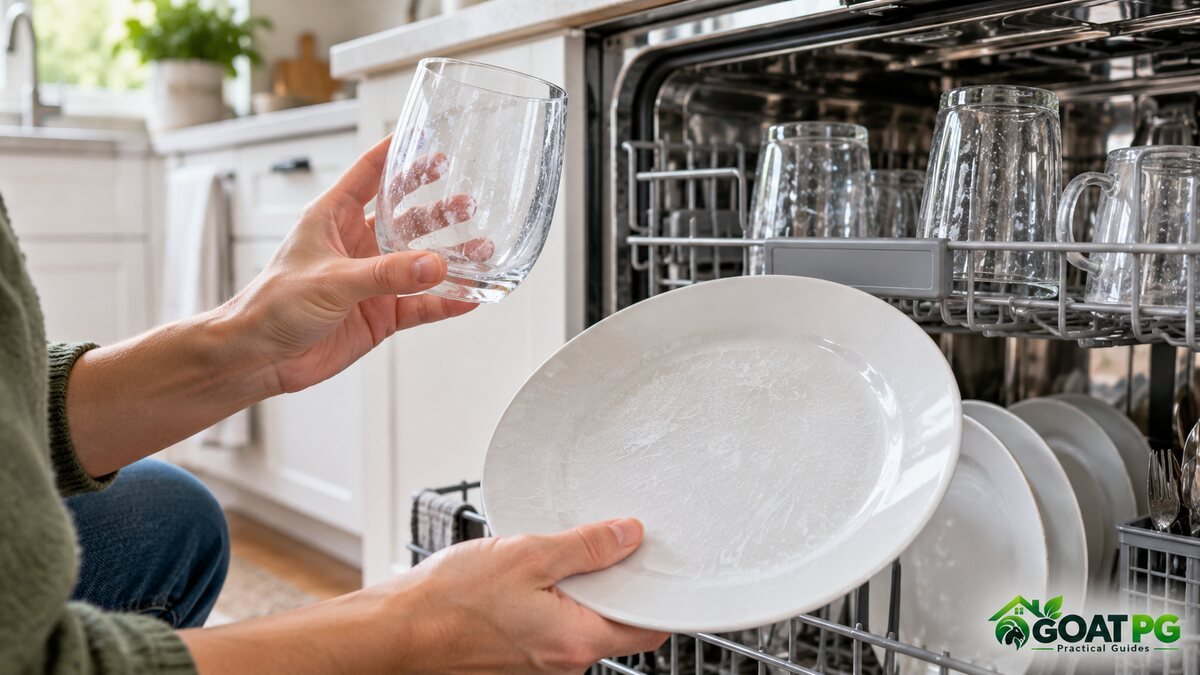
Different problems can look nearly identical under kitchen lighting. Before changing detergent or running repeated cleaning cycles, inspect one glass and one plate in bright light. Note whether the deposit is powdery, chalky, greasy, gritty, spotted, or uniformly cloudy.
Chalky Film That Wipes Off
A removable chalky layer usually points to calcium and magnesium from hard water. It may be heavier on glassware, stainless flatware, the heating area, and the dishwasher walls. The film often improves when rinse aid and detergent dosage are adjusted for local water hardness.
Loose White Powder
Powder that brushes off easily may be undissolved detergent. Common clues include residue near the dispenser, a tablet still partly intact, or powder concentrated on items close to the dispenser door. Cool incoming water, old detergent, a blocked dispenser, or an overloaded rack can contribute.
Permanent Cloudiness
Glass etching is microscopic surface damage. It can result from a combination of very soft water, excess detergent, high heat, and unsuitable glassware. Unlike scale, etching does not wipe away. Preventing additional damage is possible, but the existing cloudy appearance is generally permanent.
Gritty or Food-Colored Specks
Gray, tan, or white grit may be redeposited food and detergent rather than mineral scale. Check the filter, sump area, spray-arm holes, loading pattern, and drainage. If dirty water remains after a cycle, read our guide to why a dishwasher is not draining before treating the symptom as a simple film.
Why Is My Dishwasher Leaving White Residue? 9 Common Causes
1. Hard Water Minerals
Hard water contains dissolved calcium and magnesium. When droplets dry, the minerals remain as white spots or a milky film. The same buildup may appear around faucets, shower glass, and the dishwasher interior. If the vinegar spot test removes the film, hard water is the leading explanation.
For anyone wondering why is my dishwasher leaving white residue even though dishes look clean, compare the dishwasher film with scale on nearby fixtures. Similar deposits in several locations strongly suggest a household water-hardness issue rather than an appliance failure.
2. The Rinse-Aid Dispenser Is Empty or Set Too Low
Rinse aid lowers water’s surface tension so droplets spread and drain instead of drying in place. When the dispenser is empty, water spots and mineral film become more visible. Check the level and adjust the setting only as the appliance manual directs; more is not automatically better.
3. Too Much Detergent for the Water
Extra detergent does not guarantee cleaner dishes. In soft or softened water, an oversized dose may not rinse away and can contribute to film or glass damage. Measure powder or gel carefully, and follow the dishwasher and detergent instructions for the measured water hardness and soil level.
4. Too Little Detergent for Hard Water or Heavy Soil
The opposite problem also occurs. Too little detergent may not bind minerals or suspend food soil effectively, allowing deposits to settle back onto dishes. If you have hard water and heavily soiled loads, use the recommended product and dose rather than guessing.
5. Old, Damp, or Poorly Dissolved Detergent
Automatic-dishwasher detergent can absorb moisture and become lumpy. A tablet may also fail to dissolve when the dispenser is blocked by a large plate, the incoming water is too cool, or a short cycle does not match the product. GE advises discarding old or lumpy detergent because it may leave gritty residue in its wash-performance guidance.
6. Water Is Not Hot Enough
Detergent needs the water conditions specified by the appliance manufacturer. If the kitchen tap takes a long time to become hot, the first fill may be cooler than expected. Run the sink until the water becomes hot before starting the dishwasher if the manual recommends this. Never raise a water heater above a safe household setting merely to solve residue.
7. A Dirty Filter or Blocked Spray Arm
A clogged filter can let debris circulate, while blocked spray holes reduce rinsing coverage. Remove and clean only user-serviceable parts described in the owner’s manual. Never reach into the sump blindly because broken glass may be hidden below the filter.
If why is my dishwasher leaving white residue is accompanied by food specks or dirty water, filter and spray performance deserve more attention than detergent brand changes.
8. Incorrect Loading Blocks Water or the Dispenser
Large trays, cutting boards, and tall utensils can stop a spray arm or prevent the detergent door from opening. Bowls placed too tightly may trap wash water. Load items at an angle toward the spray, keep the dispenser clear, and rotate each spray arm by hand before the cycle begins.
9. Glass Etching or Unsuitable Dishware
If a cloudy glass remains unchanged after a gentle vinegar test, it may be etched. Delicate glass, decorative finishes, aluminum, wood, and some plastics may not be suitable for a dishwasher or for high-temperature cycles. Follow the item’s care label and reduce detergent only when the appliance instructions and water conditions support that change.
How to Fix White Residue From a Dishwasher: 7 Safe Steps
1. Read the Dishwasher Manual
Find the model number and review the sections for detergent, rinse aid, filter care, water temperature, cleaning cycles, and hard water. The correct procedure varies by appliance. Manufacturer directions should take priority over generic internet remedies.
2. Perform the Wipe Test
Test a small area of one plain glass with a soft cloth and a little white vinegar. Keep vinegar away from natural stone counters, and do not put it into the dishwasher unless the appliance manufacturer specifically allows that method. A removable film suggests scale; unchanged cloudiness suggests etching.
This test gives a practical answer to why is my dishwasher leaving white residue without exposing an entire load to another cleaning product.
3. Check Water Hardness
Use a home test strip, a local water-utility report, or a water-treatment professional. Record the result in grains per gallon or parts per million and use the conversion provided by the test maker. Adjust detergent, rinse aid, or a built-in softener only according to the manual.
4. Refill and Adjust Rinse Aid
Open the rinse-aid dispenser, fill it with an approved product, wipe up spills, and close it securely. Start at the manufacturer’s recommended setting. If mineral spots continue, raise the setting one step at a time; if blue streaks or foaming appear, the setting may be too high.
5. Use Fresh Detergent in the Correct Amount
Use only detergent labeled for automatic dishwashers. Never substitute hand dish soap, laundry detergent, or a homemade mixture. Store detergent sealed and dry, keep the dispenser unobstructed, and match the dose to the water and load rather than automatically filling the cup.
6. Clean the Filter and Inspect Spray Arms
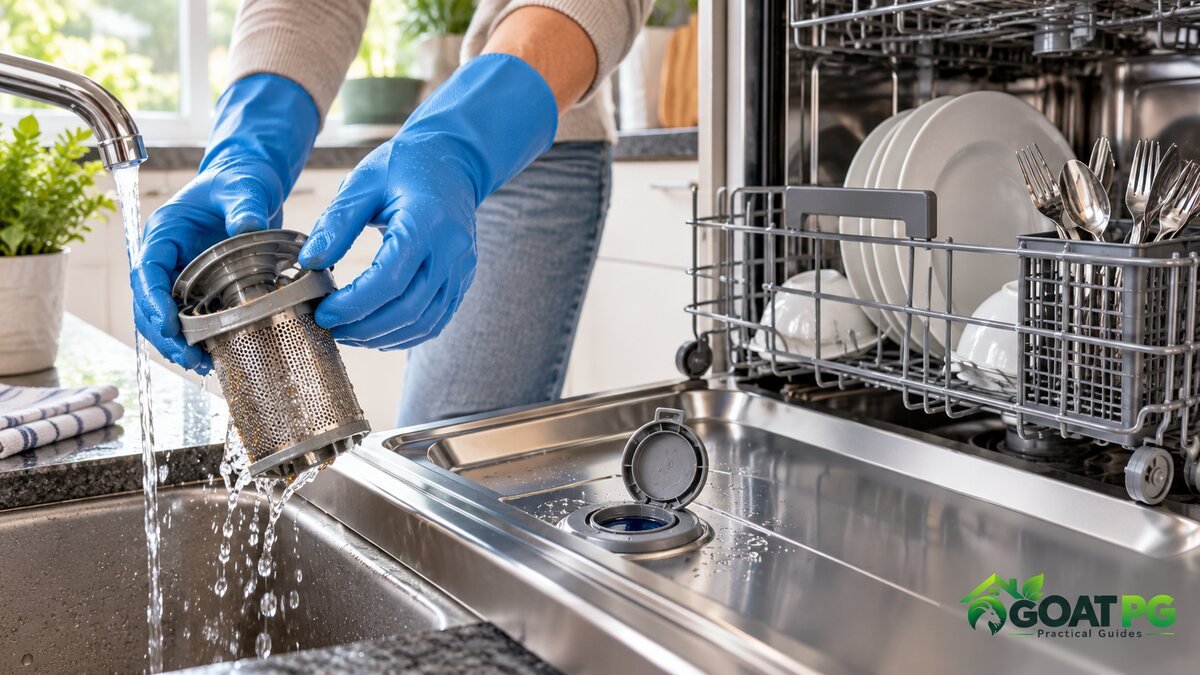
Turn the dishwasher off and let hot components cool. Remove the lower rack and filter as the manual shows. Wear gloves, look for glass, rinse the filter under running water, and use a soft brush if permitted. Check that spray-arm holes are open and that the arms turn freely after reassembly.
7. Run a Controlled Test Load
Load a few dishwasher-safe glasses and plates with space between them. Confirm that the dispenser can open, select the recommended full cycle, and compare the results with the original load. Change only one factor at a time so you know which adjustment worked.
If you still ask why is my dishwasher leaving white residue after a controlled test, note the cycle, detergent dose, water-hardness result, and whether the film wipes off. Those details make a technician’s diagnosis faster.
How to Prevent White Film From Returning
- Keep the rinse-aid dispenser filled at the recommended setting.
- Use fresh automatic-dishwasher detergent and measure it for local water hardness.
- Scrape large food particles, but follow the manual before pre-rinsing everything.
- Leave space between dishes and keep the detergent dispenser clear.
- Clean the filter on the schedule specified for your model.
- Check that spray arms rotate before starting a crowded load.
- Use dishwasher-safe glassware and the appropriate cycle.
- Run the appliance’s approved cleaning cycle as recommended.
A dishwasher that smells bad, drains slowly, or leaves greasy debris needs a broader check. Drainage problems may connect to the sink or garbage-disposal plumbing. Our guides to a bad smell from the kitchen sink and a humming garbage disposal cover nearby symptoms without mixing them into this residue diagnosis.
Once you understand why is my dishwasher leaving white residue, prevention usually comes down to balanced chemistry, unobstructed water flow, and regular filter care—not stronger products.
A Five-Minute Diagnostic Checklist
Before running another full load, walk through these checks in order. Confirm that the white material is on several items rather than one damaged glass. Look inside the detergent cup for damp clumps, check the rinse-aid indicator, rotate both spray arms, and verify that no tray or utensil blocks their path. Make sure the filter is fully seated and the drain area is free of visible debris.
Then compare the residue with your water conditions. White scale on the faucet or kettle supports a hard-water diagnosis. A clean home with very soft or mechanically softened water makes excess detergent more plausible. Powder beside the dispenser suggests a dissolving or loading problem, while mixed food grit points toward filtration, spray, or drainage.
This short checklist keeps why is my dishwasher leaving white residue focused on evidence. It also prevents the common mistake of changing detergent, rinse aid, temperature, and loading all at once. When several variables change together, even a successful load does not reveal which fix mattered.
If you are still asking why is my dishwasher leaving white residue, compare the next load with your notes instead of relying on memory. The location and texture of the remaining film often point to the variable that still needs attention.
What the Next Test Cycle Can Tell You
Use a normal-sized but lightly soiled test load with plain dishwasher-safe items. Photograph one affected glass before rewashing it, measure the detergent, and write down the cycle and rinse-aid setting. After the cycle, inspect the same surfaces under similar lighting.
If spotting improves but does not disappear, make one small adjustment supported by the manual. If white powder remains near the dispenser, improve loading and confirm water temperature. If gritty debris returns, recheck the filter, spray arms, and drainage. If every item is clean but old glasses remain cloudy, the dishwasher may be working correctly and the cloudiness may be permanent etching.
When why is my dishwasher leaving white residue has no clear answer after two controlled cycles, stop repeating cleaners. Record the results and move to model-specific support or professional diagnosis.
A clear answer to why is my dishwasher leaving white residue should explain both the symptom and the test result. If the proposed cause does not match what you observed, return to the identification step before trying another product.
When to Call an Appliance Technician
Stop using the dishwasher and arrange service if it leaks, smells electrical, trips a breaker, shows damaged wiring, fails to heat as designed, or makes unusual grinding noises. Do not remove fixed panels or test live electrical parts. Water and electricity make internal diagnosis a job for a qualified technician.
Professional help is also sensible when residue continues after verified water hardness, correct detergent and rinse aid, a clean filter, free spray arms, and a controlled test load. A failing inlet valve, heater, circulation pump, diverter, dispenser, sensor, or drain component may be limiting wash or rinse performance.
If the appliance is clean but nearby surfaces are coated with kitchen grease, use a separate surface-safe method. Our guide to cleaning greasy kitchen cabinets explains how to test finishes before cleaning.
Frequently Asked Questions
Is white residue on dishes dangerous?
Do not assume the material is harmless. Rewash affected dishes before use and identify the cause. Mineral spots and detergent residue require different corrections, while damaged glassware may need replacement. If anyone swallows a cleaning product or develops symptoms, contact local poison-control or emergency services.
Can I put vinegar in the dishwasher?
Only use a vinegar-cleaning method when the dishwasher manufacturer specifically allows it. Acid can affect some seals, metals, stone surfaces, and finishes, and it must never be mixed with bleach or chlorine-containing products. A small external spot test on plain glass is different from pouring vinegar into the machine.
Why is my dishwasher leaving white residue after I changed detergent?
The new formula or dose may not match your water hardness, cycle, or rinse conditions. Check the package instructions, use a measured amount, confirm rinse aid, and run one controlled test. A recent detergent change can also reveal an existing hard-water problem.
How do I know whether the glass is etched?
Gently rub a cloudy spot with a little white vinegar on a soft cloth. Removable cloudiness is likely film; cloudiness that stays smooth and unchanged may be etching. Test only plain glass and keep vinegar away from incompatible surfaces.
Does more rinse aid always solve white spots?
No. Rinse aid can reduce spotting, but excess product may create streaks, foaming, or other symptoms. Use the dispenser setting recommended for the appliance and adjust gradually based on the results.
Can a dirty filter cause white residue?
Yes, especially when the residue is gritty or mixed with food particles. A dirty or incorrectly seated filter can allow debris to recirculate. Clean it according to the model’s manual and inspect for hidden broken glass.
Why is the residue worse on plastic?
Plastic does not retain heat like ceramic or glass, so water may dry less efficiently and leave visible droplets or film. Place dishwasher-safe plastic as directed, use rinse aid if approved, and select the correct drying option.
Final Takeaway
The best answer to why is my dishwasher leaving white residue starts with identification. If the film wipes away, check hard water, rinse aid, detergent dosage, temperature, loading, filter condition, and spray coverage. If the cloudiness does not change, the glass may be etched.
For most households, solving why is my dishwasher leaving white residue takes one careful test load and one measured adjustment at a time.
Work methodically and follow the appliance manual. Never mix cleaning chemicals or open electrical panels. A measured test load after each adjustment will show whether the fix worked and prevent unnecessary product changes or repairs.