Why Is My Garbage Disposal Humming? 7 Safe Fixes
Why is my garbage disposal humming? In most cases, the motor is receiving power but the grinding plate cannot turn because something is jammed. Switch the disposal off immediately instead of letting it hum. A short, careful inspection may solve the problem, but repeated attempts can overheat the motor or trip its internal overload protector.
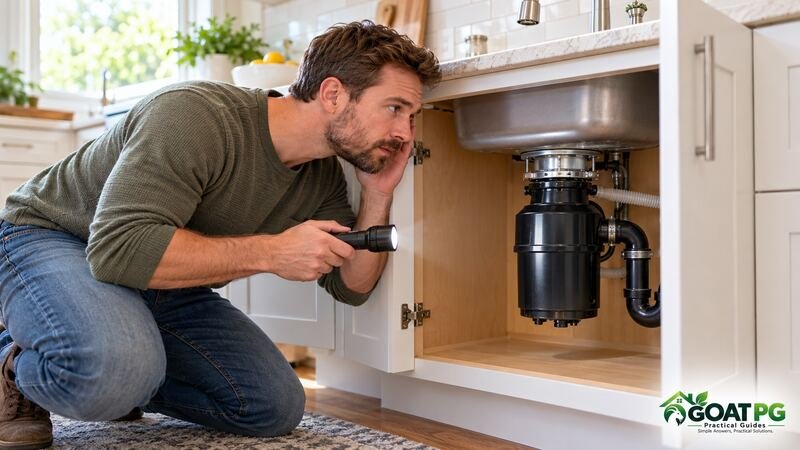
Table of Contents
What the Humming Sound Means
A garbage disposal contains an electric motor that turns an internal plate. Small impellers attached to that plate push food waste against a stationary grinding ring. There are no spinning knife blades like the ones in a blender. When a hard object or fibrous food wedges between moving parts, the motor may energize without being able to rotate. The result is a low hum or buzz.
That distinction matters. A disposal that hums is different from one that is completely silent. Silence may point to a tripped reset button, a tripped household breaker, a failed switch, an outlet problem, or a failed motor. A hum strongly suggests that power is reaching the unit, so leaving it switched on is not a useful test.
If you are asking why is my garbage disposal humming after grinding bones, fruit pits, metal, glass, or a large load of food, a physical jam is especially likely. If it began after the sink backed up, there may also be a drain restriction. Fixing the jam will not necessarily clear a clogged trap or drainpipe.
Before You Start
When diagnosing why is my garbage disposal humming, find the disposal’s model number and owner’s manual if possible. The unjamming socket, reset button, and recommended tool vary by manufacturer. Some models use a hex wrench from below; others provide a special tool that works from the sink opening. Do not force a tool into an opening that the manual does not identify.
Gather a flashlight, the manufacturer’s disposal wrench or correct-size hex wrench, long-handled tongs or pliers, and a small towel. Remove cleaning bottles and stored items from under the sink so you can see the cord, outlet, pipes, and bottom of the unit.
Confirm that no one can accidentally operate the wall switch while you work. For a plug-in unit, unplug it. For a hardwired unit, turn off the correct breaker and use an appropriate electrical tester if you are qualified to do so. If you cannot confidently isolate the power, stop and call a licensed electrician or appliance technician.
Why Is My Garbage Disposal Humming? 7 Safe Fixes
1. Switch it off immediately
The first time you hear a steady hum, release or turn off the switch. Do not repeatedly flip it on and off. A stalled motor draws current and generates heat. The internal overload protector may trip to protect the unit, but it should not be treated as a routine operating control.
A safe answer to why is my garbage disposal humming always starts with stopping the motor. Turn off the water and wait a few minutes. If you smell hot insulation, see smoke, notice sparks, or find a scorched cord or outlet, leave the circuit off and call a professional. Those are electrical warning signs, not a simple food jam.
2. Disconnect power and inspect with a flashlight
Unplug the disposal or turn off its circuit at the service panel. Shine a flashlight through the sink opening. Look for a spoon, bottle cap, fruit pit, piece of glass, bone fragment, or other obstruction. Never explore the chamber with your fingers.
If a visible object can be reached safely, use long-handled tongs or pliers. Keep your face away from the opening and work slowly. Glass may be difficult to see against a wet metal chamber; wear eye protection and do not continue if you cannot control the fragments.
3. Let the motor cool and locate the reset button
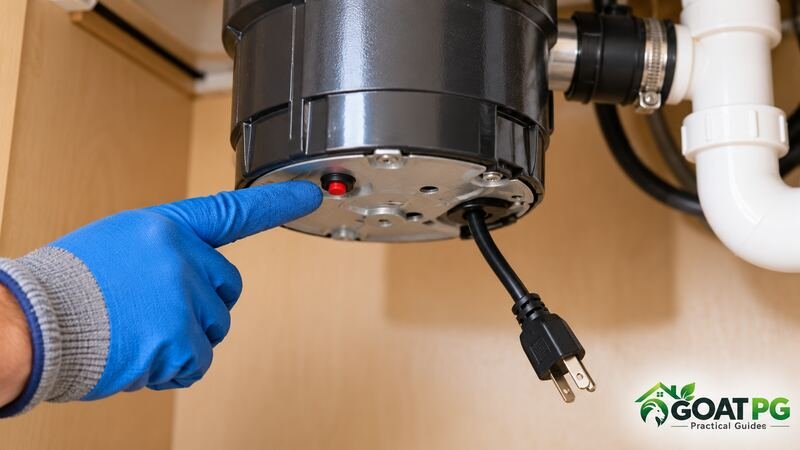
A stalled disposal often trips its internal overload protector. Let the unit cool for several minutes before resetting it. The button is commonly red and located on the bottom or lower side, but placement differs. Moen’s guidance, for example, places the reset button opposite the power cord on many models.
Press the button firmly once. If it does not stay in, the motor may still be hot, the jam may remain, or the unit may have an internal fault. Resetting alone does not remove an obstruction. Keep the power disconnected and continue only if your manual provides an unjamming procedure.
4. Work the grinding plate from below
Insert the manufacturer-specified wrench into the hex socket on the bottom center of the disposal. Move it back and forth rather than trying to spin it rapidly in one direction. A small movement may grow into a wider arc as the obstruction loosens.
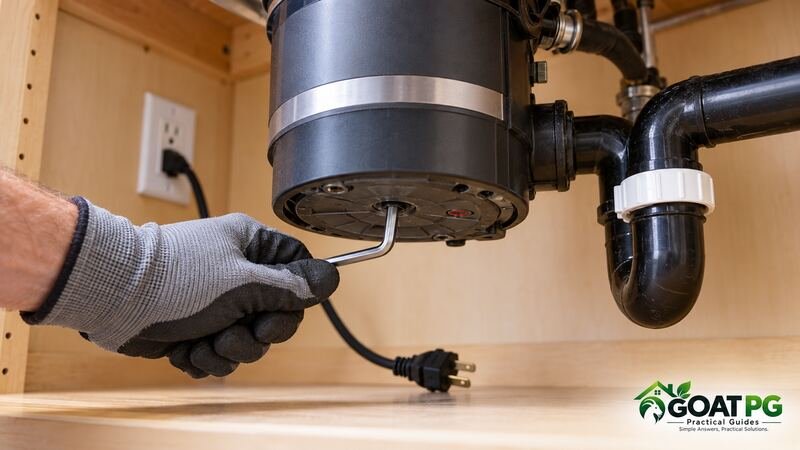
Do not use an extension pipe for extra leverage. Excess force can damage the motor shaft, crack the housing, or strip the socket. If the wrench will not move with moderate hand pressure, stop. The object may require professional removal, or the motor bearings may be seized.
5. Remove the loosened obstruction
After the plate moves freely, look into the sink opening again with the flashlight. Use tongs to lift out the object and any loose fragments. Rotate the wrench another full back-and-forth cycle to confirm there is no second obstruction.
Check the rubber splash guard for trapped utensils or food. If the guard is removable on your model, follow the manual; do not pull or cut it. A damaged guard can allow debris to eject upward during operation.
6. Reset and perform a brief test
Make sure all tools are out of the sink and the cabinet. Press the reset button if it has popped, restore power, and run a strong stream of cold water. Stand to the side and switch the disposal on briefly.
Whirlpool’s disposer guidance says that after a jam is cleared and the reset button is pressed, a smoothly running unit can be flushed with cold water. If it hums again, stops, or the reset button pops, cut the power. Repeating the test will not repair a persistent mechanical or electrical fault.
7. Check the connected systems and call for service when needed
If the plate turns freely but the disposal still hums, the motor, start components, wiring, or switch may be faulty. Do not open the motor housing. A licensed electrician can test the circuit and switch, while an appliance or plumbing professional can determine whether the disposal should be repaired or replaced.
Also check whether the dishwasher drains through the disposal. A jam or a blocked connection can contribute to dishwasher drainage symptoms. Our guide to why a dishwasher is not draining explains the other filters, hoses, and air-gap checks to consider.
Humming vs. Other Garbage Disposal Sounds
Completely silent
A silent unit may not be receiving power. Check the reset button, household breaker, plug, and wall switch without disassembling electrical parts. If the outlet is dead or the breaker will not remain on, call an electrician.
Metallic rattling
A sharp rattle often means a small metal or hard object is bouncing inside. Turn off and disconnect power immediately. Retrieve the item with tongs only after the unit is safely isolated.
Grinding or scraping
A harsh grinding sound can indicate a foreign object, damaged internal component, or loose mounting hardware. Do not assume it will grind the object away. Stop the disposal and inspect safely.
Hum followed by a click
The click may be the overload protector tripping as the stalled motor heats. This pattern is a strong reason to disconnect power, clear the jam, and avoid repeated tests.
Normal motor sound but slow drainage
If the disposal spins normally but water drains slowly, the problem may be a clogged trap or drain line rather than the motor. Avoid chemical drain cleaner unless both the disposal manufacturer and product label explicitly allow it. A plumber can clear the line without creating a chemical exposure risk.
What Not to Do
- Never put your hand inside: the mechanism can move unexpectedly, and sharp debris may be hidden.
- Do not keep switching it on: repeated humming can overheat a stalled motor.
- Do not pour chemical drain cleaner into it: corrosive liquid may remain in the chamber and endanger anyone who later services the unit.
- Do not use a broom handle from above unless the manufacturer specifically directs that method: it can damage the splash guard or components and provides poor control.
- Do not open the motor housing: internal electrical repair belongs to a qualified technician.
- Do not work around active leaks: water near an outlet, cord, or hardwired connection creates an electrical hazard.
A kitchen sink odor is a different problem from a jam. If the unit runs normally but smells unpleasant, follow the cleaning and drain checks in why a kitchen sink smells bad. If tiny flies gather near the drain, our guide to getting rid of fruit flies in the kitchen can help you remove breeding residue rather than merely spraying the adults.
How to Prevent Another Jam
Preventing another episode of why is my garbage disposal humming begins with better feeding habits. Run cold water before starting the disposal, feed small amounts gradually, and keep the water running briefly after the grinding sound clears. Follow the manufacturer’s operating instructions for your model. Cold water helps keep fats firmer so they can move through the system rather than coating the chamber and pipes.
Keep utensils, bottle caps, glass, bones, fruit pits, seafood shells, and nonfood items out. Limit fibrous or stringy scraps such as celery, corn husks, onion skins, and large amounts of potato peel. What a disposal can handle depends on its design and horsepower, so the manual remains the best source.
Scrape grease and cooking oil into a container instead of pouring them down the drain. Dispose of coffee grounds and expandable foods according to local guidance. Use a sink strainer when the disposal is not running, and always check that the chamber is clear before switching it on.
Regularly cleaning food residue also reduces odors and pests. When cleaning the surrounding sink cabinet, keep sprays away from the outlet and cord. For nearby cooking film, use the surface-safe approach in how to clean greasy kitchen cabinets.
When Repair or Replacement Makes Sense
Knowing the answer to why is my garbage disposal humming does not mean every stalled unit should be repaired. Replacement may be more sensible if the housing leaks, the motor shaft is seized, the reset repeatedly trips after the plate is free, the unit has an electrical burning smell, or parts are no longer available.
A leak from a loose plumbing connection may be repairable, but water coming through the disposal’s body or bottom can indicate a failed internal seal. Leave power off and arrange service. Do not operate a wet electrical appliance.
Ask the technician to verify the switch, receptacle, branch circuit, mounting assembly, dishwasher connection, and drain alignment before installing a new unit. Correcting a plumbing or electrical problem at the same time can prevent repeat failures.
Frequently Asked Questions
Why is my garbage disposal humming but not spinning?
The motor is probably receiving power while the grinding plate is jammed. Turn it off immediately, disconnect power, and follow the model-specific unjamming instructions. If the plate turns freely but the motor still will not start, professional service is appropriate.
Will the reset button fix a humming garbage disposal?
If you are still asking why is my garbage disposal humming, remember that the reset button restores the internal overload protector after the motor cools, but it does not remove a physical jam. Clear the obstruction with power disconnected before testing the unit.
Can I use an Allen wrench to unjam it?
Many models accept a specific hex wrench in a bottom socket. Use only the size and method listed in the owner’s manual. Some disposals use a different unjamming tool or do not provide the same bottom socket.
How long should I let the disposal cool?
Follow the manual for your model. Several minutes may be enough after a brief stall, but a hot motor may require longer. If the reset will not stay in or trips again after the jam is cleared, stop testing and request service.
Can a clogged drain make the disposal hum?
A downstream clog can cause slow drainage or standing water, but a steady hum with no rotation usually points to a jammed or failed motor mechanism. Both problems can exist at the same time.
Should I replace an old disposal that keeps jamming?
Repeated jams may reflect worn components, low capacity, improper use, or a drain problem. If the unit leaks, overheats, trips repeatedly, or cannot be freed with the approved tool, compare professional repair with replacement.
Final Takeaway
The safest response when asking why is my garbage disposal humming is to stop the motor, disconnect power, and treat the sound as a possible jam. Use the manufacturer’s wrench, remove visible debris with tongs, reset once, and test briefly with cold water. If the plate remains stuck, the unit hums again, or any electrical or leak warning appears, leave it off and call a qualified professional.