Why Is My Dishwasher Not Draining? 9 Causes and Safe Fixes
Why is my dishwasher not draining? The most common causes are a dirty filter, food or broken glass near the sump, a blocked air gap, a kinked drain hose, a clogged garbage disposal connection, excess suds, or a failed drain component. A small amount of clean water around the filter may be normal on some models, but a pool that covers the bottom after a completed cycle needs attention.
Start with the simple checks below and use the instructions for your exact model. Stop immediately if you smell burning, see damaged wiring, find water near an outlet, or cannot safely disconnect power. Internal electrical, pump, and wiring repairs should be handled by a qualified appliance technician.
Quick answer: what to check first
- Cancel or reset the cycle and listen for the drain pump.
- Turn off power before reaching into the tub or removing parts.
- Remove standing water and inspect the filter area.
- Check the sink, garbage disposal, and air gap for a backup.
- Look under the sink for a pinched or incorrectly routed drain hose.
- Confirm that only automatic dishwasher detergent was used.
- Run the model-specific drain or rinse cycle and watch for leaks.
Why is my dishwasher not draining? 9 common causes
1. The wash cycle did not finish
A dishwasher may keep water in the tub when a cycle is interrupted by a power outage, an opened door, a control error, or an accidental button press. Some machines pause rather than drain when the door is opened. Others need the Cancel/Drain button held for several seconds.
Close and latch the door, restore power if it is safe, and follow the control-panel instructions in the owner’s manual. Do not repeatedly start new wash cycles because each cycle may add more water. If the controls are unresponsive, switch off the dishwasher at its approved disconnect or circuit breaker only if you know which circuit serves it, wait as directed by the manual, and restore power.
2. The removable filter is clogged
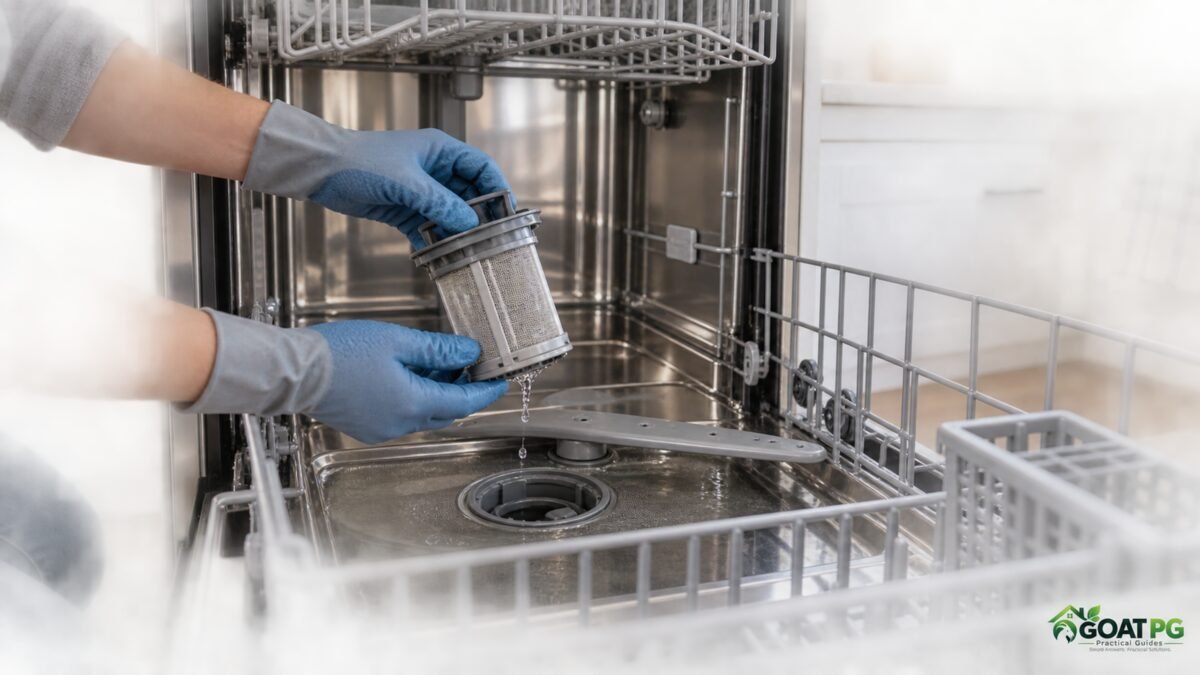
Many modern dishwashers have a cylindrical or flat filter beneath the lower spray arm. Grease, labels, seeds, bones, glass fragments, and food particles can restrict flow. A dirty filter may also cause odors, gritty dishes, or poor cleaning.
Disconnect power, remove the lower rack, and consult the manual before taking out the filter. Wear cut-resistant gloves because broken glass can hide in cloudy water. Rinse a removable filter under warm water and use a soft brush if the manufacturer permits it. Avoid wire brushes, sharp tools, bleach, or aggressive drain chemicals. Reinstall the filter in its locked position; an incorrectly seated filter can damage the pump or allow debris to circulate.
3. Debris is blocking the sump or pump inlet
The recessed area below the filter directs water toward the pump. Small fragments can lodge near its cover or inlet. Remove only loose debris that is visible and safely reachable after power is disconnected. Never put fingers into an unseen pump opening, force an impeller, or remove electrical covers without model-specific instructions.
If you hear humming but no water leaves, or the pump makes a grinding sound, stop the cycle. A foreign object or damaged pump may require professional service. Continuing to run it can turn a minor obstruction into a more expensive repair.
4. The sink drain or garbage disposal is backed up
Dishwashers often discharge into the kitchen sink drain or a garbage disposal. If the sink drains slowly, dirty water can remain in the machine or flow back into it. Run the faucet and observe the sink before blaming the appliance. A slow or smelly sink should be corrected first.
If the disposal is clear and safe to operate, run it briefly with cold water according to its instructions. Never put a hand into a garbage disposal. For persistent odor or slow drainage, see our guide to why a kitchen sink smells bad. A plumbing blockage beyond the accessible trap is a job for a plumber.
5. A new garbage disposal still has its knockout plug
A new disposal includes a sealed dishwasher inlet. During installation, its knockout plug must be removed before the dishwasher hose is connected. If the dishwasher stopped draining immediately after a disposal replacement, this is a strong clue.
This correction involves plumbing connections and a powered appliance. Turn off power to both appliances and follow the disposal manufacturer’s installation instructions. If you are unsure, call the installer or a licensed plumber rather than improvising. Do not drill through a connected hose or strike the inlet while the disposal is installed and energized.
6. The air gap is blocked
Some kitchens have a small capped cylinder beside the faucet called a dishwasher air gap. It helps prevent sink wastewater from siphoning back into the appliance. Food residue can clog it, and water may spill from the air-gap cap during a drain cycle.
With the dishwasher off, lift or unscrew the decorative cap only as the product instructions allow, then remove visible debris from the accessible top. Do not push sharp tools deep into the fitting. If the hoses below it must be disconnected, place a pan underneath and consider calling a plumber.
7. The drain hose is kinked, crushed, or routed incorrectly
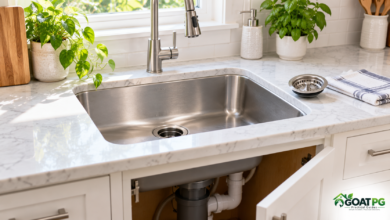
Items stored under the sink can press against the dishwasher drain hose. A sharp bend restricts flow, while an incorrect high loop or air-gap connection can let wastewater return. Look for visible kinks, compression, leaks, or a hose that has fallen from its support.
Do not pull the dishwasher out just to inspect hidden hose sections; doing so can damage flooring, the water line, wiring, or anti-tip mounting. Correct only an obvious accessible kink after disconnecting power. Hose replacement and routing should follow local plumbing requirements and the appliance installation guide.
8. Too much foam is interfering with drainage
Regular hand dish soap creates excessive suds and should never be used in an automatic dishwasher. Too much automatic detergent, an incompatible pod, or spilled rinse aid can also produce foam. Suds may prevent proper pumping and can leak past the door.
Stop the machine and follow the manufacturer’s oversudsing instructions. Remove foam and water carefully without adding more chemicals. Do not mix cleaners, vinegar, bleach, ammonia, or commercial drain opener inside the dishwasher. Once the problem is resolved, use the detergent type and quantity recommended for the machine and local water hardness.
9. The drain pump, check valve, sensor, or control has failed
If the filter, sink connection, air gap, and visible hose are clear, a mechanical or electrical fault may be responsible. Warning signs include repeated error codes, silence when the drain cycle starts, loud grinding, a burning smell, a tripped breaker, or water that immediately flows back.
Record the model number and error code, then consult the manufacturer’s manual or service support. The official Maytag dishwasher drainage guide similarly recommends checking accessible items such as the filter, disposal, air gap, and drain hose before arranging service. Brand-specific construction varies, so a step that is correct for one dishwasher may be unsafe for another.
How to drain a dishwasher safely
Step 1: protect the floor and disconnect power
Place towels around the base and keep children and pets away. Turn off the dishwasher using the approved disconnect method in the manual. If water is near an electrical connection, do not touch the appliance; shut off the correct circuit from a dry location and contact a professional.
Step 2: remove the racks and standing water
Lift out the racks, then use a cup or small container to transfer water into a bucket. Absorb the remaining shallow water with towels or a sponge. Do not tip the dishwasher, use a wet vacuum unless its instructions allow the application, or let water enter the door controls.
Step 3: inspect and clean accessible parts
Check the filter, sump surface, air gap, disposal connection, and visible hose. Photograph each removable part before disassembly so it can be returned to the correct position. If the water contains glass, use gloves and a tool approved by the manufacturer rather than bare hands.
Step 4: reassemble and test
Lock the filter and covers into place, restore power, and run the model’s drain or short rinse program while staying nearby. Watch under the sink and around the appliance for leaks. Stop the test if the pump sounds abnormal, water escapes, or an error returns.
What not to do when a dishwasher will not drain
- Do not pour liquid drain cleaner into the dishwasher.
- Do not mix bleach with vinegar, ammonia, detergent, or other cleaners.
- Do not reach into cloudy water without disconnecting power and protecting your hands.
- Do not force the filter, pump cover, spray arm, or impeller.
- Do not pull a built-in dishwasher forward without protecting the supply line, wiring, floor, and mounting brackets.
- Do not keep running cycles when the machine smells hot, grinds, leaks, or trips a breaker.
- Do not assume every model uses the same filter or drain layout.
How to prevent future drainage problems
Scrape bones, fruit pits, paper labels, and large food scraps into the trash before loading. You usually do not need to pre-rinse normal soil, but hard objects should never enter the pump. Check that utensils cannot fall through the rack and block the filter or spray arm.
Clean the filter at the interval stated in the manual, inspect the air gap, and avoid storing heavy bottles against the drain hose. Use fresh automatic dishwasher detergent in the recommended amount. If mineral film appears on glassware or inside the tub, our guide on removing hard-water stains from glass explains how to identify mineral deposits without damaging surfaces.
When to call a plumber or appliance technician
Call a plumber when the sink or disposal also drains slowly, wastewater backs up, the air-gap plumbing leaks, or the drain connection needs correction. Call an appliance technician when the dishwasher shows a persistent error, the pump hums or grinds, wiring or controls may be involved, the unit trips a breaker, or it still holds water after all accessible checks.
For a dishwasher under warranty, contact the manufacturer or authorized service provider before removing parts. Unauthorized repairs can create safety problems and may affect warranty coverage.
Frequently asked questions
Is a little water in the bottom of a dishwasher normal?
A small amount of clean water in or around the filter can be normal because it helps keep seals moist on some models. Water that covers the tub floor, smells bad, contains food, or remains after every completed cycle is not something to ignore. Check the manual for the expected water level.
Why is my dishwasher not draining but the sink works?
The problem may be limited to the dishwasher filter, sump, pump, air gap, disposal inlet, or drain hose. A sink can appear normal while the smaller dishwasher branch is blocked. Start with the accessible filter and connection checks.
Can I use baking soda and vinegar to unclog a dishwasher?
Do not improvise chemical combinations inside the machine. Foaming mixtures may not reach the obstruction and can interfere with sensors, seals, or detergent. Use only cleaning and descaling products approved for your model.
Why did my dishwasher stop draining after installing a garbage disposal?
The disposal’s dishwasher-inlet knockout plug may still be in place, or the hose may have been reconnected incorrectly. Turn off power and ask the installer or a plumber to verify the connection.
How often should I clean the dishwasher filter?
The interval depends on the design, how often the dishwasher runs, and how much food enters it. Inspect it regularly and follow the owner’s manual. Frequent loads with heavier soil generally require more frequent cleaning.
Can a clogged dishwasher become a health problem?
Standing dirty water can develop unpleasant odors and contaminate the tub. Do not wash dishes in a machine that is backing up with wastewater. Remove the water safely, correct the cause, clean the appliance as the manufacturer directs, and run the recommended sanitizing or cleaning cycle before normal use.
Bottom line
When a dishwasher will not drain, begin with the completed cycle, removable filter, sink or disposal, air gap, and visible drain hose. These checks solve many straightforward problems without opening the appliance. Persistent standing water, electrical symptoms, leaks, abnormal pump sounds, or recurring errors call for a qualified professional.