Why Does My Kitchen Sink Smell Bad? 8 Causes and Fixes
Why does my kitchen sink smell bad? The most common reasons are food and grease in the drain, residue under the strainer, a dirty garbage disposal, or a dry P-trap in a rarely used sink. A slow drain, plumbing vent problem, loose dishwasher connection, or leak inside the cabinet can also produce persistent odors.
Start by locating the smell and checking for visible problems. Safe cleaning can solve surface buildup, but a sewer-like odor that affects several fixtures usually needs a plumber rather than stronger chemicals.
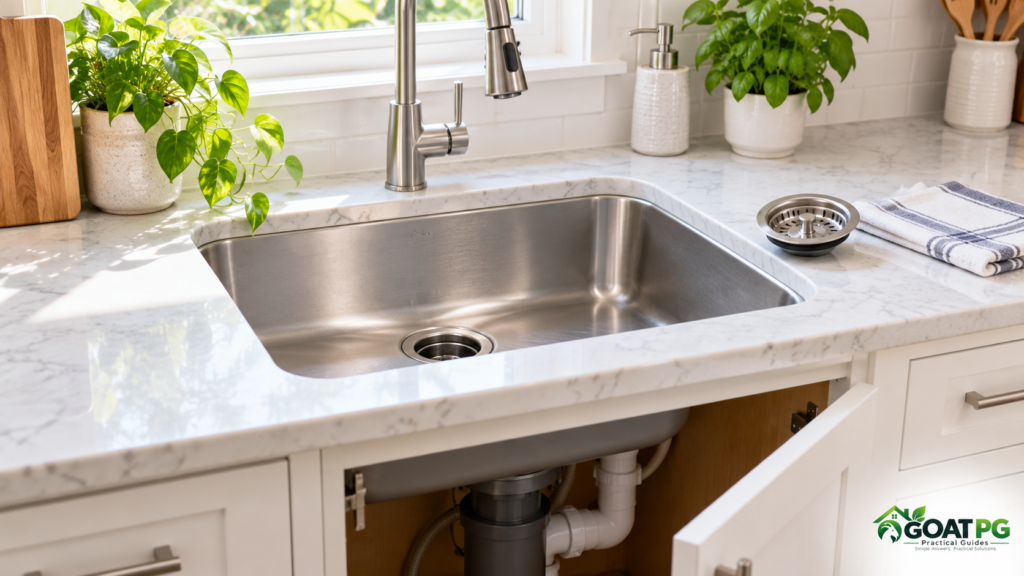
Why does my kitchen sink smell bad? 8 common causes
1. Food and grease are coating the drain
Small food particles, oil, and grease can cling to the drain opening and pipe walls. As residue breaks down, it produces a sour, rancid, or rotten smell. Pouring more grease down the sink makes the layer thicker and can contribute to clogs.
2. The strainer or stopper is dirty
The top of the sink may look clean while the underside of the strainer, stopper, or removable basket holds slime and food. This is one of the easiest areas to inspect and clean.
3. The garbage disposal contains residue
Food can remain on the splash guard, grinding chamber, or surrounding rubber parts. A disposal that drains slowly or makes unusual sounds may also have a mechanical problem.
4. The P-trap is dry
The curved pipe under the sink normally holds water that blocks sewer gas. In a guest kitchen, bar sink, or other fixture that is rarely used, the water can evaporate. Running water may refill the trap and restore the barrier.
5. The drain is partly blocked
A partial clog lets water pass slowly while trapping organic material. Gurgling, bubbles, or a smell that returns quickly after cleaning may point to a restriction deeper in the line.
6. The plumbing vent is blocked or poorly installed
Drain vents help wastewater move and protect trap seals. If the vent is blocked, pressure changes can pull water from the P-trap and allow sewer odors into the room. Several gurgling fixtures are a useful warning sign.
7. The dishwasher hose or air gap is dirty
Food residue can collect in the dishwasher drain path or air gap. A hose installed without the required high loop may allow dirty water to flow back, depending on the appliance and local plumbing rules.
8. There is a hidden leak or sewer-line issue
A loose slip joint, cracked pipe, leaking disposal seal, or damaged cabinet base can create a damp, musty odor. If several drains smell like sewage, the problem may be in a shared drain, vent, or sewer line. For comparison, our guide on why a bathroom smells like sewage explains similar trap and vent symptoms.
How to find where the kitchen sink odor comes from
- Remove dishes, sponges, and trash so they do not confuse the test.
- Smell near the drain opening, disposal splash guard, overflow if present, and cabinet below.
- Run water and watch how quickly the sink drains.
- Look for drips, stains, swollen cabinet material, and damp supply or drain connections.
- Listen for gurgling in this sink or nearby fixtures.
- Notice whether the odor appears only when the dishwasher runs.
A damp cabinet smell may be a moisture problem rather than a dirty drain. The guide to why a bathroom smells damp includes useful leak and drying checks that also apply around sink cabinets.
Safe ways to remove a kitchen sink smell
1. Remove visible debris
Wear gloves and lift out the strainer or stopper if it is designed to be removed. Put food waste in the trash or compost according to local rules. Never push your hand into a garbage disposal.
2. Wash the removable parts
Use warm water and a small amount of dish soap on the strainer, stopper, and sink rim. Clean the underside and small crevices with a dedicated soft brush, then rinse thoroughly.
3. Clean the drain opening gently
Wipe the accessible inside edge of the drain with a soapy cloth or suitable brush. Do not force tools deep into the pipe, and do not use a wire that could damage a connection.
4. Follow the disposal manufacturer’s instructions
Switch off power as directed before cleaning any accessible rubber splash guard. Use only cleaning methods approved in the appliance manual. If the disposal is jammed, leaking, or unusually noisy, stop using it and arrange service.
5. Refill a dry P-trap
For a rarely used sink, run water long enough to fill the trap. If the smell returns soon, the trap may be leaking or losing its seal because of a venting problem.
6. Flush with normal hot tap water
After removing surface debris, run hot tap water to carry away loosened residue. Avoid pouring boiling water into plumbing unless the sink and pipe manufacturer confirms it is safe, especially with some plastic pipes, seals, or delicate sink materials.
7. Check the cabinet for moisture
Dry the area, place a clean paper towel under suspicious joints, and run the faucet and dishwasher while watching for fresh drops. Tightening or disassembling plumbing incorrectly can worsen a leak, so contact a plumber if the source is not obvious.
8. Maintain the dishwasher drain path
Clean the dishwasher filter and air gap according to the appliance manual. A qualified plumber or appliance technician can verify the hose routing and check valve if dirty water is returning to the sink or machine.
Do not mix drain-cleaning chemicals
Never combine bleach, ammonia, vinegar, drain opener, or other household cleaners. The CDC’s ammonia safety guidance specifically warns against mixing ammonia with bleach because dangerous gases can be released.
If a chemical drain product has already been used, tell the plumber before work begins. Do not add a second product in an attempt to make the first one stronger. Follow the label, ventilate the area, and keep children and pets away.
When to call a plumber
Arrange professional help when:
- The sewer smell returns after the trap is refilled.
- Several fixtures smell or gurgle.
- The sink drains slowly after visible debris is removed.
- Wastewater backs up into the sink or dishwasher.
- A pipe, disposal, or cabinet is leaking.
- You suspect a blocked vent or sewer line.
- The odor causes dizziness, headache, nausea, or breathing irritation.
If a strong chemical or sewer-gas odor causes symptoms, move to fresh air and contact local emergency or poison-control services for guidance.
How to prevent kitchen sink odors
- Scrape plates into the trash or compost before washing.
- Do not pour grease or cooking oil down the drain.
- Empty and wash the strainer regularly.
- Use the disposal only as the manufacturer directs.
- Run water in rarely used sinks to maintain the trap seal.
- Repair small leaks before cabinet materials stay wet.
- Clean the dishwasher filter on its recommended schedule.
Frequently asked questions
Why does the sink smell only when I run water?
Water movement can disturb residue in the drain or push odor from a partially blocked line. It can also reveal a leak at a joint under the sink. Watch the cabinet while water is running.
Why does the sink smell after the dishwasher runs?
Check the dishwasher filter, air gap, drain hose routing, and sink connection. Food residue or wastewater flowing backward can cause the odor.
Can I pour bleach down a smelly drain?
Do not use bleach as a default drain treatment, and never mix it with ammonia, acids, vinegar, or another cleaner. Surface cleaning and correcting the plumbing cause are safer and more reliable than combining chemicals.
Will running water fix a dry P-trap?
Often, yes. If the fixture is rarely used, running water can refill the trap. If the smell returns quickly, have the trap and venting checked.
Bottom line
A bad kitchen sink smell usually comes from trapped food, grease, a dirty removable part, or a lost trap seal. Clean accessible parts safely, refill the trap, inspect for leaks, and avoid chemical mixtures. Recurring sewer odor, gurgling, backups, or multiple affected drains calls for a plumber.