Why Does My Bathroom Smell Like Sewage? 8 Causes and Fixes
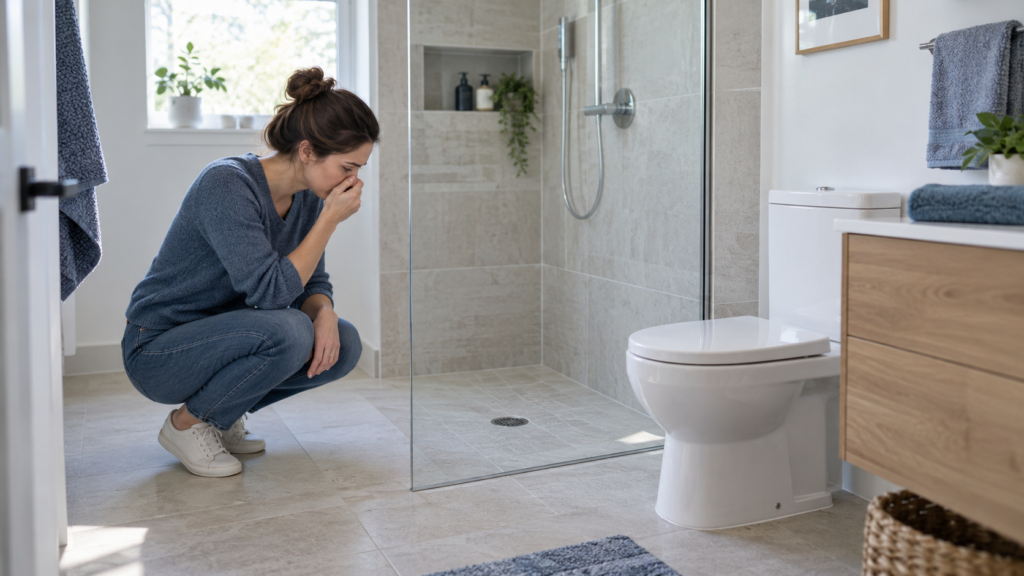
Why does my bathroom smell like sewage? The odor usually comes from a dry drain trap, buildup inside a drain, a failed toilet seal, a blocked plumbing vent, or a damaged waste pipe. Some causes have a simple and safe first step, while persistent or strong odors need a licensed plumber.
Quick Answer
Run water into every sink, shower, tub, and floor drain that is rarely used. This can refill a dry P-trap, which is designed to hold water and block gases from the drainage system. If the smell remains, inspect the drain openings and toilet base without dismantling anything. Call a plumber when the odor is persistent, affects several fixtures, or appears with slow drains, gurgling, leaks, or sewage backup.
Why Does My Bathroom Smell Like Sewage? 8 Common Causes
1. A Drain Trap Has Dried Out
Every properly installed sink, shower, tub, and floor drain should have a curved section of pipe called a trap. Water remains inside the trap and forms a barrier between the room and the drainage system.
If a bathroom or individual drain is not used regularly, that water can evaporate. Air from the waste system may then enter the room and create a sewer-like odor.
Run water into the unused fixture for 30 to 60 seconds. For a floor drain, slowly add enough clean water to refill the trap. If the odor disappears but repeatedly returns, ask a plumber to inspect the trap and venting.
2. Organic Buildup Is Inside the Drain
Hair, soap residue, toothpaste, skin oils, and other material can collect around a stopper, strainer, overflow opening, or the upper section of a drain. Bacteria feeding on this buildup may create an odor that resembles sewage.
Remove only parts that the manufacturer or owner’s manual identifies as user-removable. Clean the stopper and visible drain surfaces with warm water and ordinary dish soap, then rinse them thoroughly.
Avoid mixing drain cleaner with bleach, vinegar, ammonia, or another cleaning product. Chemical combinations can release dangerous gases or cause splashing inside a blocked drain.
3. The Toilet Wax Ring or Seal Has Failed
A toilet is sealed to the waste pipe at the floor. If that seal fails, odor may escape around the base even when the toilet still flushes.
Possible warning signs include:
- A toilet that rocks or shifts
- Moisture around the base
- Staining on the floor or ceiling below
- An odor that becomes stronger near the toilet
- A smell that appears after flushing
Do not simply caulk over a suspected leak. A plumber should remove the toilet, inspect the flange, and replace the seal correctly.
4. The Sink Overflow Opening Is Dirty
Many bathroom sinks have an overflow channel near the upper rim. Water, soap, and biological residue can remain inside this hidden passage and produce a surprisingly strong odor.
Compare the smell near the overflow opening with the main drain. Clean accessible areas according to the sink manufacturer’s instructions. If the channel cannot be cleaned safely or the odor continues, arrange professional service.
5. A Plumbing Vent Is Blocked or Damaged
Plumbing vents allow gases to leave the drainage system above the roof and help drains flow correctly. A blockage, damaged vent, or poor installation can change pressure inside the pipes and allow trap water to be siphoned away.
Clues can include gurgling toilets, slow drains, changing water levels in toilet bowls, or odors from several fixtures.
Do not climb onto the roof to inspect the vent unless you are trained and equipped to do so. A licensed plumber can test the drainage and vent system safely.
6. A Drain or Waste Pipe Is Leaking
A loose connection, cracked pipe, failed joint, or corrosion can release odor inside a vanity, wall, ceiling, or floor cavity. Small leaks may also create damp materials that develop a separate musty smell.
Check accessible cabinets for moisture, staining, warped materials, or a localized odor. Do not open walls or ceilings when sewage, mold, electrical wiring, or structural damage may be present.
If the room smells damp rather than distinctly like sewage, use our guide to determine why a bathroom smells damp.
7. The Main Drain or Sewer Line Is Restricted
A blockage farther down the drainage system can cause slow fixtures, gurgling, repeated clogs, or water rising in another drain when the toilet is flushed.
Stop using affected fixtures if wastewater is backing up. Avoid repeatedly flushing or running more water, because this can increase contamination and property damage.
A main-line blockage requires professional drain equipment and should not be treated by combining chemical products.
8. The Septic System Has a Problem
Homes with septic systems may develop odors when the tank is overdue for service, the drain field is saturated, a pipe is blocked, or a component is damaged.
Warning signs may include sewage odors outdoors and indoors, unusually green or wet ground near the septic area, slow fixtures, or wastewater backup.
Keep people and pets away from any wet or contaminated area and contact a licensed septic professional.
How to Find Where the Sewage Smell Is Coming From
- Ventilate the room. Open a safe window or use the exhaust fan if no natural-gas leak is suspected.
- Check rarely used fixtures. Run water into the sink, shower, tub, and floor drain.
- Compare locations. Determine whether the odor is strongest near a drain, the toilet base, inside a vanity, or near a wall.
- Watch drainage. Note slow water, bubbling, gurgling, or changing toilet-bowl levels.
- Look for moisture. Check for stains, damp cabinets, loose flooring, or visible leakage.
- Check the pattern. Record whether the smell appears after flushing, showering, using another fixture, or during windy weather.
These observations can help a plumber diagnose the problem faster. They should not be used to justify dismantling a pipe or toilet without the right tools and experience.
Safe Fixes You Can Try First
Refill Rarely Used Drain Traps
Run clean water into every rarely used drain. If the smell stops, repeat this periodically or ask a plumber about a more permanent solution for an infrequently used floor drain.
Clean Accessible Drain Parts
Remove hair and visible residue from a user-removable stopper or strainer. Wash the component with warm water and dish soap before reinstalling it.
Wash Bathroom Textiles
Damp towels, bath mats, and shower curtains can create sour or musty odors that may be mistaken for a drain problem. Launder and dry them completely. Our related guide explains why towels can still smell after washing.
Improve Moisture Control
Use the exhaust fan during bathing and for a reasonable period afterward. Dry wet surfaces and repair water leaks. If odors also affect other rooms, compare the signs in our guide to a musty bedroom smell.
What Not to Do
- Do not mix bleach with vinegar, ammonia, drain cleaner, or other cleaning products.
- Do not pour several drain chemicals into the same pipe.
- Do not use an open flame to investigate an odor.
- Do not ignore a rocking toilet or moisture around its base.
- Do not climb onto the roof to inspect a plumbing vent without proper training and equipment.
- Do not continue using fixtures when wastewater is backing up.
- Do not assume every rotten-egg odor is harmless sewer gas.
Could It Be Natural Gas Instead?
Fuel gas is intentionally odorized so leaks can be noticed. That smell may be described as sulfur-like or similar to rotten eggs, which means it can be confused with some drain odors.
If the odor is sudden, widespread, close to a gas appliance or gas line, or accompanied by hissing, do not operate electrical switches or use flames. Leave the building and follow the emergency instructions of your local gas utility.
The CDC/NIOSH hydrogen sulfide guidance describes hydrogen sulfide as a colorless gas with a rotten-egg odor and documents serious risks at high concentrations.
When to Call a Plumber
- The odor returns after drain traps have been refilled
- The smell is strongest around the toilet base
- Several fixtures drain slowly or gurgle
- Water rises in another drain when a fixture is used
- You see leaking, staining, or damaged flooring
- Sewage is backing up
- The home has recurring septic odors
- You suspect a cracked pipe or blocked vent
Frequently Asked Questions
Why does my bathroom smell like sewage at night?
Changing air pressure, an exhaust fan, wind around a vent, or an intermittently dry trap may make the odor more noticeable at certain times. Persistent nighttime odors still require a plumbing inspection.
Why does the bathroom smell after I shower?
Water may disturb buildup inside the shower drain, or the added airflow may make an existing plumbing odor more noticeable. Clean accessible drain parts and check for slow drainage.
Can I fix sewer smell by pouring water into the drain?
Water can solve the problem when an unused drain has a dry trap. It will not repair a broken pipe, failed toilet seal, blocked vent, or main-line clog.
Why does the smell come from the toilet even though it is clean?
The source may be below the toilet rather than inside the bowl. A failed floor seal, loose toilet, damaged flange, or venting problem may allow odor to escape.
Is a sewage smell dangerous?
A mild odor does not reveal the type or concentration of gas present. Leave the area and seek help when the smell is strong, persistent, or associated with physical symptoms. Treat a possible fuel-gas leak as an emergency.
Final Thoughts
A dry trap or dirty drain is often the simplest explanation for a bathroom sewage smell, but failed toilet seals, blocked vents, leaking pipes, and main-line problems are also possible.
Start with safe observations and refill rarely used traps. If the odor persists, affects several fixtures, or appears with gurgling, leakage, or sewage backup, arrange a professional plumbing inspection.