Why Does My Closet Smell Musty? 9 Causes and Proven Fixes
If you open the door and immediately wonder, “Why does my closet smell musty?”, the odor is usually telling you that moisture is lingering somewhere it should not. A closed closet gets little air movement, so even a slightly damp jacket, an exterior wall, or a small plumbing leak can create the stale, earthy smell people associate with mildew.
The good news is that most closet odors can be traced and corrected without masking them with fragrance. This guide walks you through the nine most likely causes, a safe cleanup routine, and the simple habits that keep the smell from returning.

Table of contents
Why Does My Closet Smell Musty? The Quick Answer
A musty closet usually has one of three underlying conditions: excess humidity, damp belongings, or a hidden moisture source. Poor airflow then concentrates the odor. Emptying the closet and checking every surface is more effective than adding an air freshener because fragrance cannot correct the moisture that supports mildew and mold.
Start by checking the clothes and shoes nearest the strongest odor. Then inspect the back wall, baseboards, carpet edges, ceiling, and any wall shared with a bathroom or exterior. A cool or stained area deserves attention even when you cannot see obvious growth.
9 Common Causes of a Musty Closet
1. Trapped humidity
Closets are often closed for most of the day and may have no supply or return vent. Moisture from the room can enter, but it escapes slowly. If the closet stays above roughly 60% relative humidity, mold-friendly conditions become more likely. The U.S. Environmental Protection Agency recommends keeping indoor humidity below 60%, ideally between 30% and 50%. See the EPA guide to mold and moisture.
If the question “why does my closet smell musty?” comes with repeated readings above 60%, humidity control should be part of the solution.
2. Clothes were stored before they were fully dry
A towel, gym shirt, raincoat, or coat that feels nearly dry may still hold moisture in seams and thick fabric. Placed among tightly packed garments, it can transfer dampness and odor to nearby items. If laundry itself regularly comes out with an unpleasant odor, use our guide to why clothes smell sour after washing before returning them to storage.
3. The closet is overcrowded
When hangers are pressed together and boxes touch the walls, air cannot circulate around fabric or cool surfaces. Dust and moisture also become harder to spot. You do not need a minimalist wardrobe, but garments should move freely on the rail and stored items should not seal an exterior wall from room air.
4. Shoes and laundry are carrying odor inside
Sweat, skin oils, wet soles, and dirt feed odor-producing bacteria. A closed hamper or frequently worn shoes can be the entire answer to “why does my closet smell musty?” Remove them for a day and smell the empty space again. If the odor fades, clean and dry the items rather than treating the closet walls.

5. Condensation forms on a cold exterior wall
A closet built against an outside wall can have a colder surface than the bedroom. Warm, humid air meeting that surface may produce fine condensation, especially behind stacked bins where air is still. This can happen without dripping water. A hygrometer and a careful touch test on a cool morning can reveal the pattern.
6. There is a hidden plumbing or roof leak
A closet beside a bathroom, below an attic, or under an upstairs plumbing line may be the first place a slow leak appears. Look for yellow-brown stains, bubbling paint, swollen trim, soft drywall, rusty fasteners, or damp carpet padding. Do not simply repaint a stain; find and repair the water source first.
When you ask “why does my closet smell musty?” after rain or showering, this timing can help narrow the search to an exterior leak or nearby plumbing.
7. Carpet, cardboard, or stored paper absorbed moisture
Porous materials can hold an odor long after the surface feels dry. Cardboard boxes placed directly on a slab or carpet are common offenders. Old carpet padding can also stay damp underneath while the pile seems normal. Replace wet cardboard with washable, vented containers and inspect below removable flooring when appropriate.
8. Dust and poor ventilation are amplifying the smell
Dust contains fibers, skin cells, and other material that can absorb moisture and odors. It accumulates on the top shelf, closet floor, baseboards, and behind organizers. If the entire bedroom also smells stale, compare the symptoms with our guide on why a bedroom smells musty.
9. Mold or mildew is already present
Growth may appear as scattered spots or a fuzzy, discolored patch, but color alone cannot identify the species. It may also be hidden behind drywall, wallpaper, carpet tack strips, or shelving. A persistent earthy odor plus recurring dampness is enough reason to investigate; you do not need to identify the type before correcting the moisture source.
How to Find the Source Before You Clean
Finding the source first prevents wasted effort. To solve “why does my closet smell musty?” for good, work methodically rather than spraying every surface.
- Empty the closet completely. Place belongings in a dry room and separate anything that feels damp or smells strong.
- Use your nose carefully. Without pressing your face against a suspect area, compare the back wall, floor edges, shelves, shoes, hampers, and boxes.
- Inspect with a flashlight. Check corners, wall-to-ceiling joints, baseboards, pipe penetrations, and the underside of shelves.
- Feel for temperature and moisture differences. A noticeably cool, clammy, soft, or swollen surface may point to condensation or a leak.
- Measure humidity. Leave a digital hygrometer in the empty closet for 24 to 48 hours with the door used normally. Compare its reading with the bedroom.
- Track when the smell worsens. An odor after rain, showering, laundry, or HVAC shutdown offers a valuable clue. If rain is the trigger, read why a house smells musty after rain.
If you have found active water, shut off the relevant supply when safe, protect belongings, and arrange the repair. Cleaning before the leak is stopped only resets the clock.
How to Remove a Musty Closet Smell Safely
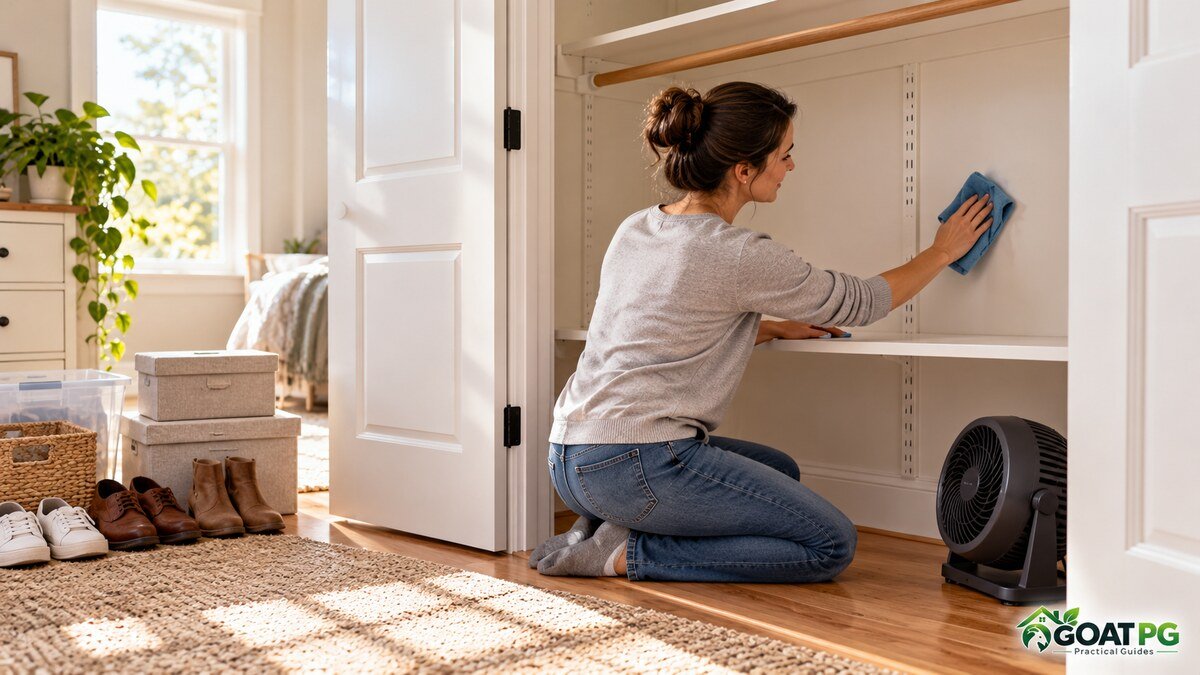
Step 1: Sort, wash, and dry the contents
Follow each garment’s care label. Wash washable items and dry them completely before storage. Air out clean, non-washable items in a dry location; consult a cleaner for delicate garments with visible growth. Clean shoes according to their material, and discard water-damaged cardboard that cannot be cleaned.
A damp garment is often the simplest answer to “why does my closet smell musty?”, so do not skip the fabric check even when the walls look clean.
Step 2: Vacuum dust and loose debris
Vacuum the floor, shelf tops, corners, baseboards, and organizer hardware. A vacuum with a HEPA filter is helpful when available. Avoid aggressive dry brushing of suspicious patches because it can spread particles into the room.
Step 3: Clean hard surfaces
For ordinary grime and a small, washable surface, use water with mild detergent and a well-wrung cloth. Test painted or finished material in an inconspicuous area first. Wipe shelves, rods, sealed walls, and baseboards, then remove any detergent residue as the manufacturer directs.
Never mix bleach with ammonia, vinegar, or other cleaners. Mixing products can release dangerous gases. More chemical is not better, and porous materials that remain damaged or moldy may need replacement rather than repeated spraying.
Step 4: Dry the closet fully
Leave the door open and use room ventilation or a fan to move air across the surfaces. If household humidity is high, run a properly sized dehumidifier in the room and follow its cleaning instructions. Do not return clothes while walls, flooring, or shelving are damp.
Step 5: Correct the moisture source
Repair leaks, improve bathroom exhaust, move storage away from cold walls, or address insulation and air-sealing problems as appropriate. If you only clean the odor, the answer to “why does my closet smell musty?” will be the same a few weeks later.
Step 6: Refill with breathing room
Return only clean, dry items. Leave a small gap between belongings and the back wall, avoid compressing the hanging rail, and keep the floor edge visible enough to inspect. Use storage that suits the item; fully sealed plastic can trap moisture if the contents were not completely dry.
How to Prevent a Musty Closet From Coming Back
- Keep humidity controlled. Use an inexpensive hygrometer and respond to repeated readings near or above 60%.
- Store only dry items. Let coats, shoes, towels, and laundry dry outside the closet after wet weather or exercise.
- Create airflow. Open the door regularly, avoid wall-to-wall packing, and make sure nearby supply and return vents are not blocked.
- Clean seasonally. Vacuum the floor and shelves and inspect the back corners at least a few times a year.
- Choose better containers. Keep boxes off potentially damp floors and avoid untreated cardboard in humid spaces.
- Act on small clues. A new stain, peeling paint, or odor after rain is easier and cheaper to address early.
Moisture absorbers can help in a small, otherwise dry closet, but they are not a substitute for ventilation, dehumidification, or a leak repair. Keep chemical moisture-absorbing products away from children and pets and follow the label.
If you are still wondering “why does my closet smell musty?” after these steps, recheck hidden porous materials and bring in a qualified professional to investigate concealed moisture.
When to Call a Professional
Stop and get qualified help when the affected area is large, returns quickly after cleaning, involves sewage or contaminated floodwater, or extends into drywall, insulation, subflooring, or an HVAC system. Also call when you cannot locate the water source, when electrical components are wet, or when structural materials feel soft.
People with asthma, severe allergies, immune suppression, or other health concerns should avoid disturbing suspected mold and ask a healthcare professional about appropriate precautions. A remediation professional can establish containment and remove damaged material, while a plumber, roofer, or building specialist may be needed to solve the underlying leak.
Frequently Asked Questions
Can a closet smell musty without visible mold?
Yes. Damp fabric, shoes, carpet padding, cardboard, dust, or concealed growth can produce an odor before you see a patch. Emptying the closet and monitoring humidity helps separate an item-related odor from a building moisture problem.
Will baking soda remove the smell?
Baking soda may absorb a mild residual odor, but it will not fix high humidity, a leak, or damp material. Use it only after the source has been removed and the closet is clean and dry. Keep open containers where children and pets cannot spill or ingest them.
Should I leave my closet door open?
Leaving it open periodically can improve air exchange, especially after cleaning or during humid weather. It is only one part of the fix: room humidity still needs control, wet items must stay out, and any leak requires repair.
How long does it take for a musty odor to disappear?
A simple clothing or shoe odor may improve within a day after removal and ventilation. Odor from wet carpet, drywall, or an unresolved leak will persist or return. The closet should be fully dry before you judge the result.
Why does my closet smell musty only after rain?
Rain-related timing suggests moisture entering through the roof, exterior wall, window flashing, foundation, or elevated outdoor humidity condensing on a cool surface. Inspect during or just after rain and have the building envelope checked if stains or dampness recur.
The Bottom Line
When you ask “Why does my closet smell musty?”, treat the odor as a moisture clue rather than a fragrance problem. Empty the space, identify whether the source is a damp item or part of the building, clean only after stopping the moisture, and let every surface dry. With humidity kept below 60%, better spacing, and quick attention to leaks, most closets can stay fresh without constant sprays or scented products.