How to Remove Hard Water Stains from Glass Safely
How to remove hard water stains from glass safely depends on the type of glass and the finish around it. For ordinary, uncoated shower glass or window glass, start with the mildest method: remove grit, wash away soap film, then use a manufacturer-approved mineral deposit remover. If the manufacturer allows it, a diluted white-vinegar solution can soften many mineral spots. Always test a hidden area first, protect nearby stone or metal, and never mix cleaning products.
Hard water marks can look permanent, but many are simply mineral deposits sitting on the surface. The key is to identify what you are seeing before you scrub. Heavy abrasion can turn a removable stain into a scratched pane.
What causes hard water stains on glass?
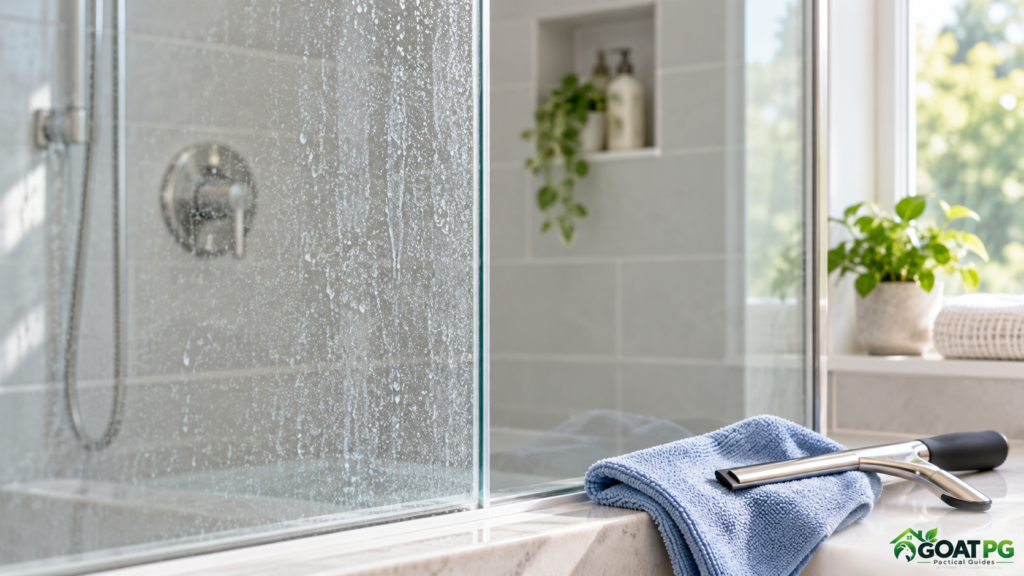
According to the U.S. Geological Survey, water hardness mainly comes from dissolved calcium and magnesium. When droplets dry on glass, the water evaporates and leaves those minerals behind. Repeated splashes build a cloudy white film, rings, or rough spots.
In bathrooms, the mineral layer may also trap soap residue. If your bathroom stays humid or smells damp, fix the moisture source too. Our guide to why a bathroom smells damp explains how ventilation, wet surfaces, and hidden leaks contribute to recurring problems.
Hard water stain, soap scum, or etched glass?
Before cleaning, check the pattern:
- Hard water deposits: chalky white spots or a cloudy film, often where droplets dry.
- Soap scum: a dull, slightly greasy layer found mainly on shower doors.
- Etching: permanent surface damage that stays cloudy after deposits are removed.
If a small test patch becomes clear with a compatible mineral remover, the problem is probably surface buildup. If it remains rough or cloudy, the glass may be etched and could need professional restoration or replacement.
What you need
- Clean microfiber cloths
- Mild dish soap
- Warm water
- A non-scratch sponge
- A squeegee
- Gloves and good ventilation
- A cleaner approved by the glass manufacturer
For plain, uncoated glass, the manufacturer may allow diluted white vinegar. Do not assume vinegar is safe for every surface. Acid can damage natural stone, some metal finishes, grout sealers, specialty coatings, and tinted films.
How to remove hard water stains from glass safely
1. Check the care instructions
Look for the shower-door, window, tint, or coating manufacturer’s cleaning guidance. If the glass has a protective coating, use only products listed as compatible. When you cannot identify the surface, test a small hidden corner first.
2. Rinse away loose grit
Dust and sand can scratch glass when rubbed. Rinse the surface or wipe it very lightly with a wet microfiber cloth before applying pressure.
3. Remove the soap film
Mix a few drops of mild dish soap with warm water. Wipe the glass using a soft cloth or non-scratch sponge, then rinse. Removing greasy residue allows the mineral treatment to reach the deposits directly.
4. Apply a compatible mineral remover
Use a product approved for the surface and follow its label. If plain white vinegar is permitted, dilute it with water and apply it to a cloth rather than spraying the whole area. This gives you more control and helps protect frames, stone, painted surfaces, and nearby fixtures.
5. Give it a short contact time
Keep the treated area damp for the time recommended by the product maker. Do not let the cleaner dry on the glass. Work in small sections so you can rinse each area properly.
6. Wipe gently
Use a microfiber cloth or non-scratch sponge in overlapping motions. Avoid aggressive pressure. Repeat a mild treatment if necessary instead of reaching immediately for a harsher chemical or abrasive tool.
7. Rinse and dry completely
Rinse away all residue with clean water. Dry the surface with a fresh microfiber cloth, then use a squeegee to check whether any marks remain.
What not to use on glass
- Do not mix vinegar or acidic cleaners with bleach.
- Do not mix bleach with ammonia or other household cleaners.
- Do not use steel wool, abrasive powder, or a rough scouring pad.
- Do not scrape with a razor unless the glass manufacturer specifically permits it.
- Do not use acidic products near marble, travertine, limestone, or other acid-sensitive stone.
- Do not leave any cleaner on longer than its label recommends.
If you have already used another cleaner, rinse the surface thoroughly and ventilate the room before switching products. Mixing chemicals can create dangerous fumes.
How to prevent hard water spots from returning
The easiest prevention is to remove water before it dries. Squeegee shower glass after use, wipe the lower edge and tracks, and leave the bathroom fan running long enough to clear visible humidity. Wash microfiber towels regularly and dry them fully; if they develop odors, see our guide on why towels smell after washing.
For windows or doors exposed to sprinklers, adjust the spray pattern so droplets do not repeatedly hit the glass. If mineral buildup affects faucets, appliances, and plumbing throughout the home, ask a qualified water-treatment professional to test the water before buying a softener or filtration system.
When to call a professional
Professional help makes sense when the glass has deep cloudy patches, scratches, failed coating, or deposits that do not respond to approved methods. A glass specialist can distinguish removable scale from permanent etching. If water is entering around a window frame, the issue is maintenance rather than cleaning and should be repaired before cosmetic work.
Frequently asked questions
Can vinegar remove hard water stains from glass?
It can soften many calcium-based deposits on ordinary, uncoated glass, but it is not suitable for every glass treatment or nearby material. Check the manufacturer’s instructions and test a hidden spot first.
Why are the stains still visible after cleaning?
There may be several layers of buildup, or the glass may be etched. Repeat a compatible mild treatment once or twice. If the surface remains cloudy after the mineral residue is gone, get advice from a glass professional.
Is baking soda safe for shower glass?
Baking soda is mildly abrasive and may affect coatings or create fine scratches when rubbed hard. Use a non-abrasive, manufacturer-approved cleaner as the first choice.
How often should shower glass be cleaned?
Drying it after each shower prevents the fastest buildup. A gentle weekly clean is usually easier than removing a thick mineral layer later.
Bottom line
To remove hard water stains from glass, identify the surface, start gently, use only a compatible product, rinse thoroughly, and dry the glass. Prevention—especially a quick squeegee after use—will save more effort than any strong cleaner.