How to Clean Window Tracks: 7 Easy Steps for Amazing Results
Wondering how to clean window tracks without turning a small chore into a muddy mess? The most reliable method is to remove dry debris first, loosen the remaining grime with a soft brush, and then wipe with only a small amount of soapy water. That order matters. If you wet a dusty track too early, the dirt becomes a paste that is harder to lift from corners.
This guide walks you through seven practical steps for vinyl, painted, and aluminum window tracks. You will also learn how to protect weather seals, keep drainage openings clear, and recognize stains that point to a moisture problem rather than ordinary dirt.
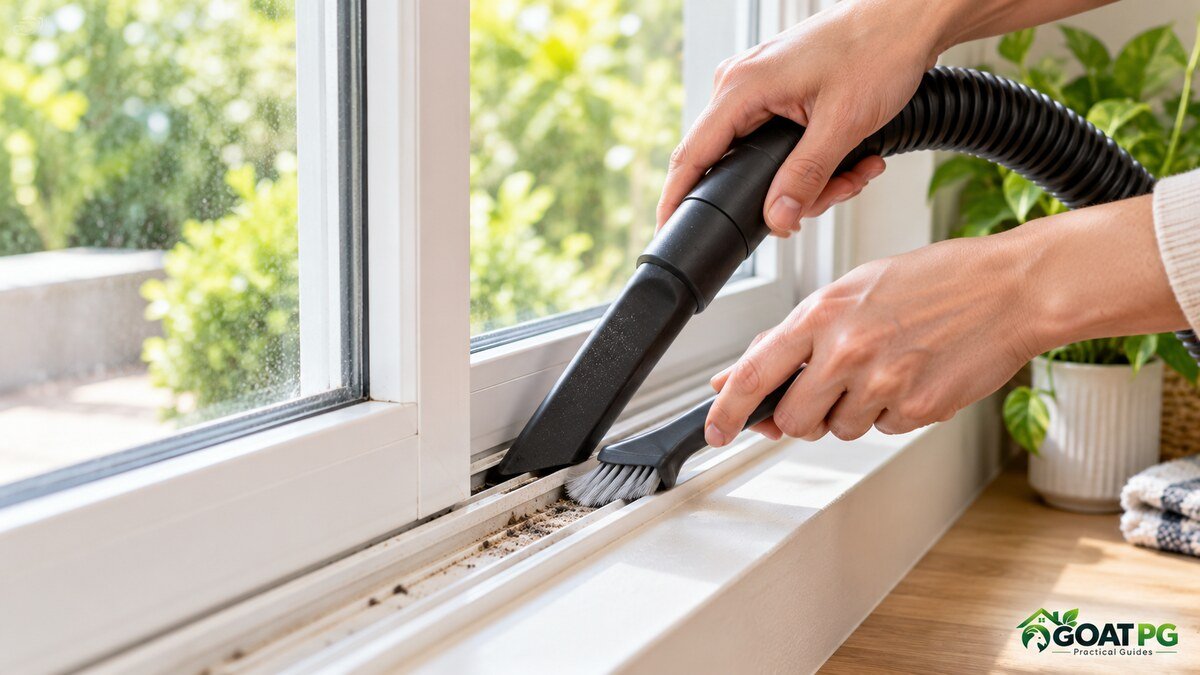
Table of Contents
What You Need: How to Clean Window Tracks Safely
You do not need a collection of specialty products. A few ordinary tools give you more control and reduce the chance of scratching the frame or soaking the wall below it.
For anyone learning how to clean window tracks, simple tools are usually more useful than a strong chemical because they let you control pressure and moisture.
- A vacuum with a crevice attachment
- A soft toothbrush or small detailing brush
- Two microfiber cloths
- A small bowl of warm water
- One or two drops of mild dish soap
- Cotton swabs for tight corners
- A flashlight for checking drainage openings
Before using any cleaner, check the window manufacturer’s care instructions if they are available. Test the solution on an inconspicuous area, especially on painted wood or a dark factory finish. For a ready-made cleaner, the EPA’s Safer Choice product search can help you identify products that meet its ingredient-safety standard.
How to Clean Window Tracks in 7 Easy Steps
Once you understand how to clean window tracks in the right sequence, the job becomes faster and far less messy. Work on one window at a time so loosened debris does not settle before you can remove it.
1. Open the Window and Inspect the Track
Open the sash as far as it moves comfortably. Look along the bottom rail, both vertical channels, the meeting point between panels, and the corners. Remove curtains or objects that could get in the way, and place an old towel on the sill or floor if the track is heavily soiled.
Pause if you see broken glass, loose hardware, peeling paint on an older window, or heavy fuzzy growth. A routine cleaning is not the right first step when the surface itself may be damaged. Likewise, repeated standing water deserves investigation before you simply wipe it away.
2. Vacuum Every Loose Particle
Use the crevice tool slowly from one end of the track to the other. Keep the nozzle just above soft weather stripping so it does not pull or deform the material. Brush compacted grit toward the nozzle instead of pushing the attachment hard against the frame.
This dry pass often removes most of the visible mess: dust, dead insects, pollen, crumbs, and small bits of leaf material. It also prevents abrasive sand from being dragged across painted or vinyl surfaces during wiping. If dust returns unusually fast throughout the room, our guide to why a house gets so dusty can help you trace the larger source.
3. Loosen Dirt in Corners with a Soft Brush
Work a dry toothbrush along corners, screw heads, and the narrow groove beside the sliding rail. Use short, gentle strokes. Vacuum again as the brush releases debris. A cotton swab can reach a final narrow spot, but avoid forcing it into drainage openings.
Do not use a screwdriver, utility blade, or metal pick to scrape the track. Those tools can score vinyl, remove paint, damage seals, and create small burrs that make a sliding window feel rough.
4. Wash with a Small Amount of Mild Soapy Water
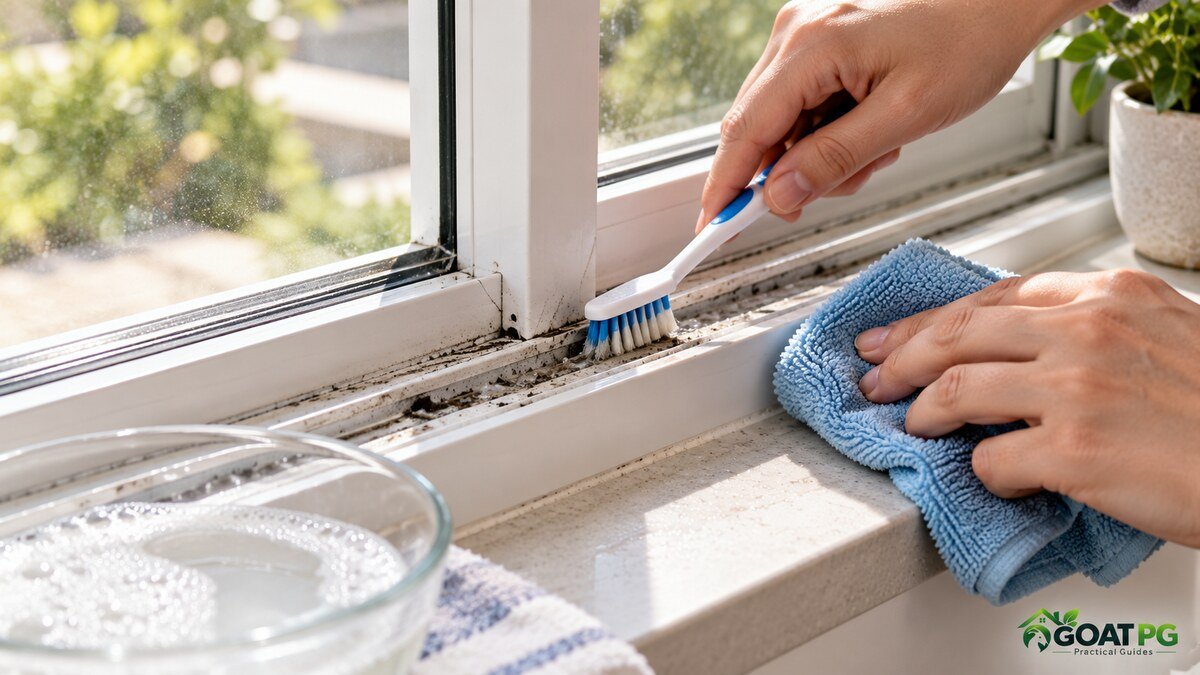
Add one or two drops of mild dish soap to a small bowl of warm water. Dip a microfiber cloth into the solution and wring it until it is damp rather than dripping. Wipe the broad surfaces first. Then use the damp toothbrush to agitate the remaining film in the grooves.
Work in short sections and keep a dry cloth nearby. The goal is to lift grime, not flood the frame. Excess water can run through joints, reach unfinished materials, or collect where you cannot see it. It may also carry dirt into the drainage system instead of removing it.
For most tracks, patience is safer than stronger chemistry. Let the damp cloth rest on a sticky spot for a minute, then brush again. Never combine cleaning products. If you previously used another product, rinse the cloth and allow the area to dry before trying anything different.
5. Clean the Vertical Channels and Window Edges
Dirt does not stay on the bottom rail. Wipe the vertical channels, the lower edge of the moving sash, and the area where the two window panels meet. These surfaces can transfer grime back onto a track that looked clean moments earlier.
Support the window normally as you work. Do not remove a sash unless the manufacturer specifically describes a safe removal procedure and you are comfortable following it. A large sash can be heavier and more awkward than it appears.
6. Check and Clear the Weep Holes
Many exterior windows have small drainage openings, commonly called weep holes, that allow rainwater to leave the frame. They may appear as narrow slots or small covered openings on the exterior side. Use a flashlight to identify them. Brush away surface dirt without enlarging, sealing, or aggressively probing the openings.
Do not assume every hole is a drain or push a long object deep into the frame. Window designs differ. If you cannot identify the drainage path, consult the manufacturer’s instructions. Water that keeps collecting after the visible openings are clear can indicate an installation, seal, or flashing problem.

7. Dry the Track and Test the Window
Use the second microfiber cloth to dry the rail, corners, and window edges. Leave the window open for a short time so hidden moisture can evaporate. Then slide or close the window gently and check the latch.
If movement is still stiff, inspect for bent metal, damaged rollers, loose hardware, or swollen wood. Do not spray an all-purpose oily lubricant into the channel; it can attract more dust and may be incompatible with the window material. Use only a product and method approved by the manufacturer.
How to Clean Window Tracks with Stubborn Grime
Old window-track dirt often builds in layers. One gentle cleaning may remove the loose top layer while leaving a gray shadow behind. Repeat the damp-cloth step rather than jumping immediately to a harsh cleaner.
For Sticky Residue
Hold a warm, damp microfiber cloth against the residue for one to two minutes. Wipe, rinse the cloth, and repeat. Avoid saturating adhesive seals or painted joints. If the residue came from tape, caulk, or a previous repair, check which remover the frame manufacturer allows.
For Dark Specks or Suspected Mold
A few surface specks may come away with normal cleaning, but recurring growth means moisture is feeding the problem. Check for condensation, leaks, blocked drainage, and damaged seals. Large affected areas, strong musty odors, soft wall material, or symptoms that worsen near the window are reasons to stop and seek professional advice.
For Mineral Marks Near the Glass
White crust at the glass edge may be mineral residue from repeated water exposure. Keep any treatment compatible with the frame finish and avoid letting liquid run into joints. For the glass itself, follow our separate method for removing hard-water stains from glass safely.
6 Window-Track Cleaning Mistakes to Avoid
Knowing how to clean window tracks safely also means knowing which shortcuts create damage or extra work. Avoid these six common mistakes.
- Adding water before vacuuming. It turns dry dust into sludge and pushes dirt deeper into seams.
- Flooding the track. More water does not mean more cleaning power and can reach the wall assembly.
- Using sharp metal tools. Scratches collect dirt and can damage finishes or weather seals.
- Mixing cleaners. Use one mild method at a time and follow every product label.
- Blocking drainage openings. Paint, caulk, or packed debris can trap rainwater inside the frame.
- Cleaning only the bottom rail. Dirty sash edges and vertical channels quickly soil it again.
Window tracks are only one place where airborne dust settles. Blades above the room can redistribute that dust, so it may help to use our low-mess method for cleaning a ceiling fan without making a mess during the same seasonal routine.
How Often Should You Clean Window Tracks?
For most homes, a light vacuum every one to two months and a deeper cleaning two to four times a year is reasonable. Your schedule may need to be more frequent if windows stay open often, the home is near a busy road, pets shed heavily, pollen is high, or wind carries sand and leaves against the house.
How to clean window tracks also depends on the season: vacuuming dry spring pollen may be enough one month, while fall leaves and windblown grit may require the complete seven-step routine.
A quick monthly inspection is more useful than waiting for a fixed date. Clean when the window becomes gritty, dirt is visible in corners, the track holds water, or the sash begins to drag. Catching debris early turns the task into a five-minute wipe instead of a long scrub.
When Dirt Is Actually a Sign of a Window Problem
Ordinary dust is dry and predictable. Call a qualified window professional or investigate the building envelope when you notice repeated standing water, staining below the sill, swollen trim, crumbling drywall, a soft frame, fogging between sealed glass panes, or a window that will not lock securely.
Cleaning can reveal these issues, but it cannot correct failed flashing, damaged insulated glass, deteriorated seals, or a distorted frame. Photographing the condition before wiping it away can help a professional understand where the water traveled.
Frequently Asked Questions
How to clean window tracks the easiest way?
The easiest answer to how to clean window tracks is to vacuum first, brush the corners while they are dry, and finish with a wrung-out microfiber cloth dipped in warm soapy water. Dry the track before closing the window.
Can I use vinegar to clean window tracks?
Vinegar is not necessary for routine dirt and may not suit every stone sill, metal finish, seal, or nearby surface. Mild dish soap and water are easier to control. Always follow the window manufacturer’s care directions.
Can I pour water into a window track?
No. Pouring water can overwhelm the intended drainage path and send dirty liquid into joints or wall materials. Apply water with a damp cloth and dry the track afterward.
How do I clean very narrow window-track corners?
Use a soft toothbrush, a cotton swab, or a microfiber cloth wrapped around a plastic card with rounded edges. Do not use a knife, screwdriver, or other sharp metal tool.
Why is there black dirt in my window tracks?
Black residue may be ordinary dust mixed with moisture, worn material from seals, insect debris, or microbial growth. If it returns quickly or appears with dampness and a musty smell, look for the moisture source rather than repeatedly cleaning the surface.
Should I lubricate a window after cleaning the track?
Only if the manufacturer recommends a compatible lubricant for that model. General-purpose oil can hold dust and may affect seals or finishes. Cleanliness, alignment, rollers, and hardware should be checked first.
Bottom Line
Learning how to clean window tracks is mostly about using the right order: dry removal, gentle agitation, controlled damp wiping, drainage inspection, and thorough drying. The process needs no aggressive scraping or heavy soaking. With a small maintenance routine, the window will look better, move more smoothly, and give you an early warning when moisture or hardware needs professional attention.