Why Does My Washing Machine Smell? 9 Causes and Safe Fixes
Why does my washing machine smell? The most common causes are trapped moisture, detergent buildup, a dirty door gasket, a clogged filter, or a drainage problem. Many washer odors can be removed with routine cleaning, but a burning, gas-like, or persistent sewage smell may require professional attention.
Why Does My Washing Machine Smell? 9 Common Causes
1. Moisture Is Trapped Inside the Washer
A washing machine remains damp after almost every cycle. If the door or lid is closed immediately, that moisture has little opportunity to evaporate. The warm, dark interior can then develop a stale or musty odor.
Front-load washers are especially susceptible because water can remain around the rubber door seal. Top-load machines can also smell when water and residue collect below the visible basket or around the dispenser.
2. Too Much Detergent Is Being Used
More detergent does not necessarily produce cleaner clothes. Excess detergent can leave residue on the drum, gasket, hoses, and other internal parts. Dirt, body oils, lint, and fabric fibers can stick to this residue and eventually cause an unpleasant smell.
High-efficiency washers normally require HE detergent. Follow the detergent label and your washer manufacturer’s recommended quantity. Homes with soft water and small laundry loads may require less detergent than expected.
3. The Door Gasket Is Dirty
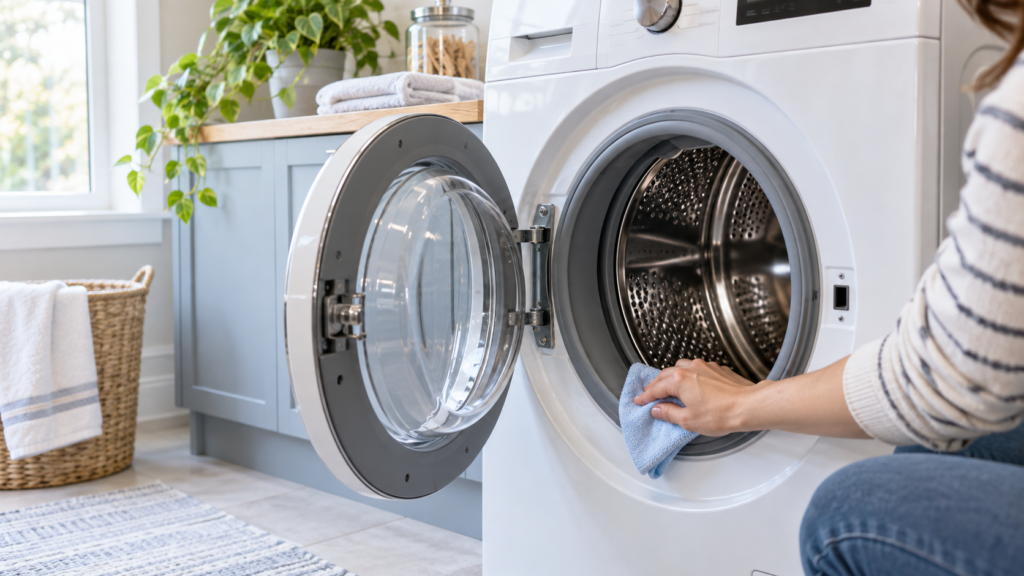
On a front-load washer, gently inspect the folds of the rubber gasket around the door. Hair, lint, detergent residue, small objects, and standing water can collect in this area.
Follow the manufacturer’s instructions for cleaning the gasket. Use a soft cloth and only a cleaner approved for your model. Dry the gasket thoroughly and avoid sharp tools that could puncture the rubber.
4. The Detergent Drawer Has Buildup
Detergent and fabric softener can collect inside the dispenser drawer. Over time, this buildup may smell sour or musty.
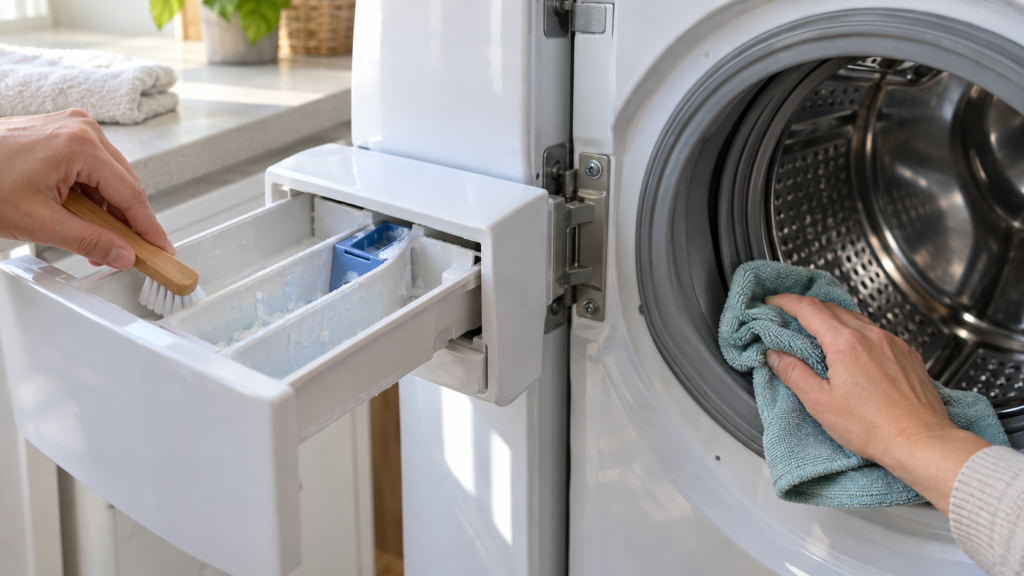
If the dispenser is removable, take it out according to the owner’s manual. Rinse it with warm water and use a soft brush to clean its corners and channels. Inspect the compartment behind the drawer and let every part dry before reinstalling it.
5. The Pump Filter Needs Cleaning
Some front-load washers have an accessible drain-pump filter. It can collect lint, coins, hair, buttons, and other debris. A dirty filter may cause an odor, slow drainage, standing water, or unusually long wash cycles.
Consult the owner’s manual before opening the filter because water may escape. Not every machine has a user-serviceable filter, so do not remove panels or dismantle the appliance unless the instructions specifically allow it.
6. Wet Clothes Are Being Left in the Drum
Clean laundry can develop an odor when it remains wet in the washer for several hours. Move each load to the dryer or drying rack as soon as the cycle finishes.
If laundry already smells unpleasant, see our guide explaining why towels smell after washing and how to prevent the odor from returning.
7. The Washer Needs a Cleaning Cycle
Many modern machines include a cycle called Clean Washer, Self Clean, Tub Clean, or Drum Clean. Empty the washer and run this cycle according to the appliance manual, using only the cleaning product and quantity approved by the manufacturer.
Do not assume that vinegar, bleach, baking soda, or another homemade mixture is safe for every machine. Materials and instructions vary between models, and the wrong product may damage seals or other components.
8. The Drain Hose or Standpipe Is Causing the Smell
If the odor resembles sewage or rotten eggs, the source may be the drain system rather than the drum. Possible causes include a partially blocked hose, incorrect hose placement, a dry plumbing trap, or a blocked household drain.
Check the visible hose for kinks or damage and compare its position with the installation instructions. If the smell also comes from nearby drains, contact a licensed plumber.
9. The Water Supply May Be the Source
A sulfur-like smell can occasionally come from the water supply, particularly hot water. Compare a clean glass of hot water with cold water from a nearby faucet.
If only the hot water smells, the water heater may need inspection. If both hot and cold water smell throughout the home, contact the water supplier or an appropriate water-treatment professional.
How to Clean a Smelly Washing Machine Safely
- Empty the washer. Remove all laundry and check the drum for small objects.
- Inspect visible areas. Look at the gasket, dispenser, drum, and accessible drain area.
- Clean removable parts. Follow the manual when cleaning the detergent drawer or user-serviceable filter.
- Run the approved cleaning cycle. Choose the dedicated maintenance cycle and use a manufacturer-approved cleaner.
- Wipe and dry the washer. Dry the drum, door, lid, gasket, and dispenser.
- Test the machine. Run an empty rinse if the manual recommends it and confirm that the washer drains normally.
What Different Washer Smells May Mean
| Type of smell | Possible cause |
|---|---|
| Musty or damp | Trapped moisture, residue, or gasket buildup |
| Sour | Old detergent residue or wet laundry left inside |
| Sewage-like | Drain hose, standpipe, trap, or plumbing issue |
| Rotten eggs | Drainage problem, water supply, or water heater |
| Burning rubber | Belt, motor, wiring, or overloaded machine |
| Chemical | Excess cleaner or incompatible cleaning products |
Cleaning Products You Should Never Mix
Never mix chlorine bleach with vinegar, ammonia, toilet-bowl cleaner, drain cleaner, or other household products. Dangerous gases may be released. Use one approved product at a time, ventilate the room, and follow its label.
The CDC’s ammonia safety guidance also warns against mixing household cleaners.
How to Prevent Washing Machine Odors
- Remove wet laundry promptly.
- Leave the door or lid open when it is safe.
- Wipe the front-load gasket after the final load.
- Use the correct type and amount of detergent.
- Avoid overloading the machine.
- Clean the detergent dispenser regularly.
- Run the manufacturer’s maintenance cycle at the recommended interval.
- Keep the laundry area ventilated.
- Investigate slow drainage early.
If the entire room smells damp rather than just the appliance, compare the warning signs in our guides to a musty bedroom smell and a damp bathroom smell.
When Should You Call a Professional?
Stop using the washer and seek qualified help if you notice smoke, sparks, excessive heat, a burning or gas-like smell, water near electrical components, repeated drainage errors, persistent standing water, or loud grinding noises.
A burning smell is not a normal cleaning problem. Persistent sewage odors may also indicate a plumbing issue that routine washer cleaning cannot solve.
Frequently Asked Questions
Why does my washing machine smell even when it is empty?
Residue may remain in the gasket, dispenser, filter, drain hose, or hidden internal surfaces. Run the approved cleaning cycle and inspect all user-serviceable parts.
Why does a front-load washer smell worse?
A front-loader has an airtight door and a rubber gasket that can retain moisture. Drying the gasket and allowing safe air circulation can reduce odors.
Can I use vinegar to clean my washing machine?
Only use vinegar if the manufacturer’s instructions explicitly permit it. Some appliance materials may be affected by repeated exposure to acidic cleaners.
Why does the washer smell like sewage during a cycle?
The odor may be entering through the drain hose or standpipe. Incorrect installation, a plumbing blockage, or a trap problem may be responsible.
Can a smelly washer make clothes smell bad?
Yes. Residue or stagnant water inside the machine can transfer odors to laundry. Clean the machine and rewash affected items according to their care labels.
Final Thoughts
Most washing machine odors are caused by moisture, detergent residue, neglected dispensers, or drainage problems. Begin with the simplest steps: remove the laundry, inspect the visible areas, consult the manual, and run the approved cleaning cycle.
If the smell resembles burning, gas, or persistent sewage, stop using the appliance until the source is professionally identified.