How to Get Deodorant Stains Out of Black Shirts: 7 Steps
How to get deodorant stains out of black shirts depends on what you are actually seeing. A fresh white transfer mark often lifts with a dry microfiber cloth. A stiff, waxy underarm buildup needs gentle pretreatment and washing. A pale patch that remains after cleaning may be dye damage rather than removable residue.
Start with the mildest method, work from the inside of the shirt, and keep heat away until the mark is gone. This guide gives you a practical seven-step routine for washable black cotton and cotton-blend shirts, plus safer adjustments for delicate and performance fabrics.
Table of Contents
The Quick Answer
For a fresh white deodorant streak, turn the black shirt inside out and gently buff the mark with a clean, dry microfiber cloth. If residue remains, dampen the cloth with cool water and add one drop of liquid laundry detergent. Blot and lightly work the fabric together, rinse the treated area, wash according to the care label, and air-dry so you can check the result before heat sets anything that remains.
Do not begin with chlorine bleach, a rough scrubber, or a hot dryer. The University of Georgia Extension warns that heat can damage fabric carrying a deodorant stain and advises reading the garment’s care label before any treatment. Its antiperspirant and deodorant stain guidance also explains that some ingredients can change the color of certain dyes.
This distinction matters on black clothing: you can remove a deposit, but you cannot wash missing dye back into the fibers. Test first and stop if your cleaning cloth picks up black color.
For most people asking how to get deodorant stains out of black shirts, this quick diagnosis prevents the two biggest mistakes: adding moisture to an easy dry-transfer mark and scrubbing fabric whose dye has already changed.
First, Identify What Kind of Mark You Have
Fresh White Transfer Marks
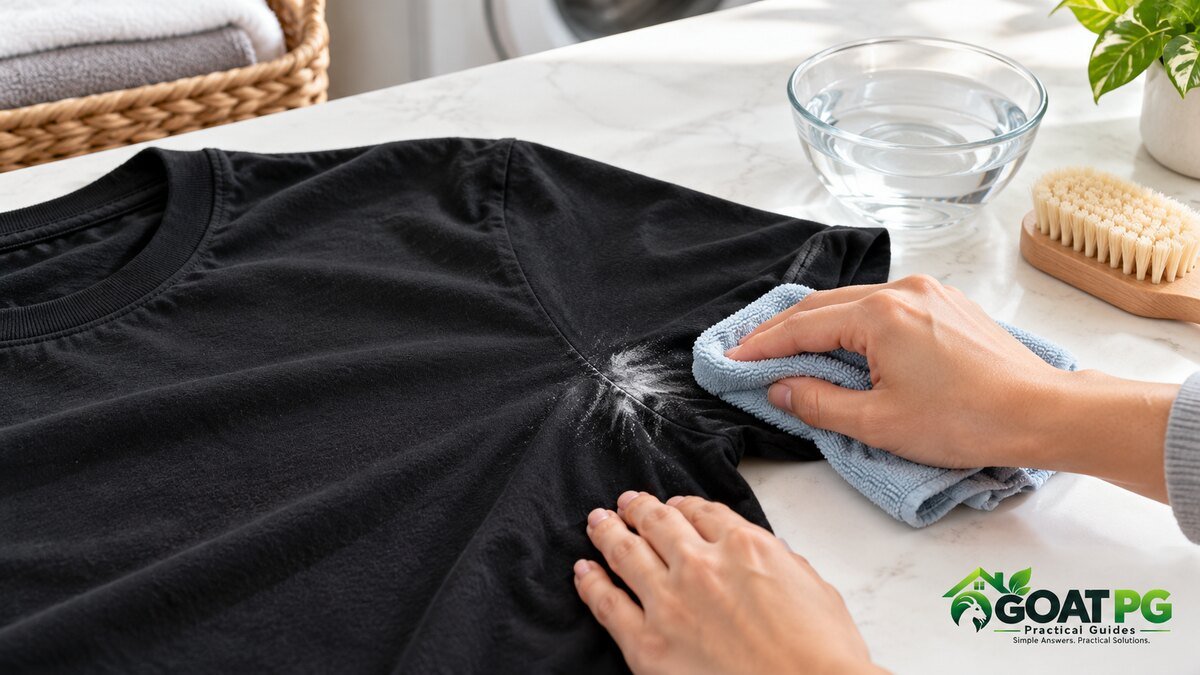
These appear when a shirt brushes against solid deodorant while you are dressing. They usually sit on the surface, look powdery or chalky, and have not yet bonded with body oil or detergent. A dry cloth may be all you need. Treating this light transfer like a deep stain can create a larger wet ring for no reason.
Waxy or Crusty Underarm Buildup
Repeated layers of antiperspirant, skin oil, sweat, and detergent can make the underarm feel stiff. The buildup may look white or gray on black fabric and may remain after a normal wash. It needs time with a fabric-safe detergent, gentle movement, and sometimes a second treatment. Scraping it aggressively can weaken the knit.
Faded, Reddish, or Orange Color Change
If the fabric feels clean but the color is lighter, bronze, red, or orange, the dye may have changed. Antiperspirant chemistry, perspiration, product buildup, or a previous cleaning attempt can contribute. A stain treatment removes soil; it does not replace lost dye. Continuing to scrub may enlarge the pale area.
Detergent Residue
White streaks in several places—not just the underarms—may come from too much detergent, an overloaded washer, or incomplete rinsing. Rewash the shirt without adding more detergent and select an extra rinse if the care label and machine allow it. If several loads smell sour or carry residue, check our guide to why a washing machine smells before treating each garment separately.
What You Will Need
- Two white or colorfast microfiber cloths
- Cool or lukewarm water
- Liquid laundry detergent suitable for dark colors
- A small bowl
- A soft laundry brush or very soft toothbrush for sturdy fabrics
- A clean white towel
- An optional color-safe oxygen laundry product, only if the care label permits it
A white cloth makes color transfer easy to spot. Avoid paper towels that shed pale lint onto black fabric. Do not combine stain removers or improvise chemical mixtures. Poison Control advises never mixing household chemicals such as bleach with ammonia or acids because dangerous gas can form; see its chlorine gas safety guidance.
How to Get Deodorant Stains Out of Black Shirts: 7 Steps
1. Read the Care Label and Check the Fabric
Before adding water, read every part of the care label. Confirm whether the shirt is machine washable, hand wash only, or dry-clean only. Note the permitted water temperature, bleach restrictions, and drying instructions. The FTC’s Care Labeling Rule exists so garments carry at least one appropriate regular-care method; use that information as your boundary.
Also identify the material. A sturdy black cotton T-shirt usually tolerates more gentle movement than silk, wool, rayon, embellished fabric, or a bonded athletic garment. If the label says dry clean only, do not use the wet routine below. Point out the mark to a professional cleaner instead.
Inspect the underarm in bright natural light. If the area is merely dusty, begin dry. If it feels stiff, plan to pretreat. If it is clean but visibly faded, skip stronger stain treatments because you may be looking at permanent color change.
2. Remove Loose Residue While the Shirt Is Dry
Lay the shirt flat and turn it inside out. Place a clean towel behind the affected area. With a dry microfiber cloth, use short, light strokes from the outside edge of the mark toward the center. For a fresh transfer line, you can also gently rub two clean sections of the same fabric together for a few seconds.
Do not stretch the knit or grind the fibers. Black garments show abrasion as a shiny patch, especially under direct light. Shake the cloth outdoors or over a laundry sink when it collects powder, then use a clean section. This dry first pass is often the entire answer for a mark created while putting on the shirt.
If the residue disappears, stop. There is no advantage in adding detergent to an already clean shirt. If a faint film remains or the underarm feels waxy, continue to the next step.
This dry-first approach is the gentlest starting point for how to get deodorant stains out of black shirts, especially when the mark appeared only moments ago while dressing.
3. Spot-Test Your Mildest Cleaning Solution
Mix a few drops of liquid laundry detergent into a small bowl of cool water. Dip the corner of a white cloth into the mixture and wring it until damp, not dripping. Dab a hidden inside seam, wait several minutes, rinse the test area, and let it dry. Check the cloth and the seam for black dye transfer or a change in sheen.
The American Cleaning Institute recommends identifying stains, pretreating before they set, and following fabric-care directions. Its laundry basics lists liquid detergent or a paste of powdered laundry detergent and water among common pretreatment choices. The correct amount and contact time still come from the product label.
Never assume a viral household remedy is color-safe. Acids, alkaline products, solvents, and abrasive powders can affect dyes, finishes, elastic fibers, and prints differently. Testing is especially important when learning how to get deodorant stains out of black shirts because a small faded patch is often more noticeable than the original white mark.
4. Pretreat From the Inside of the Shirt
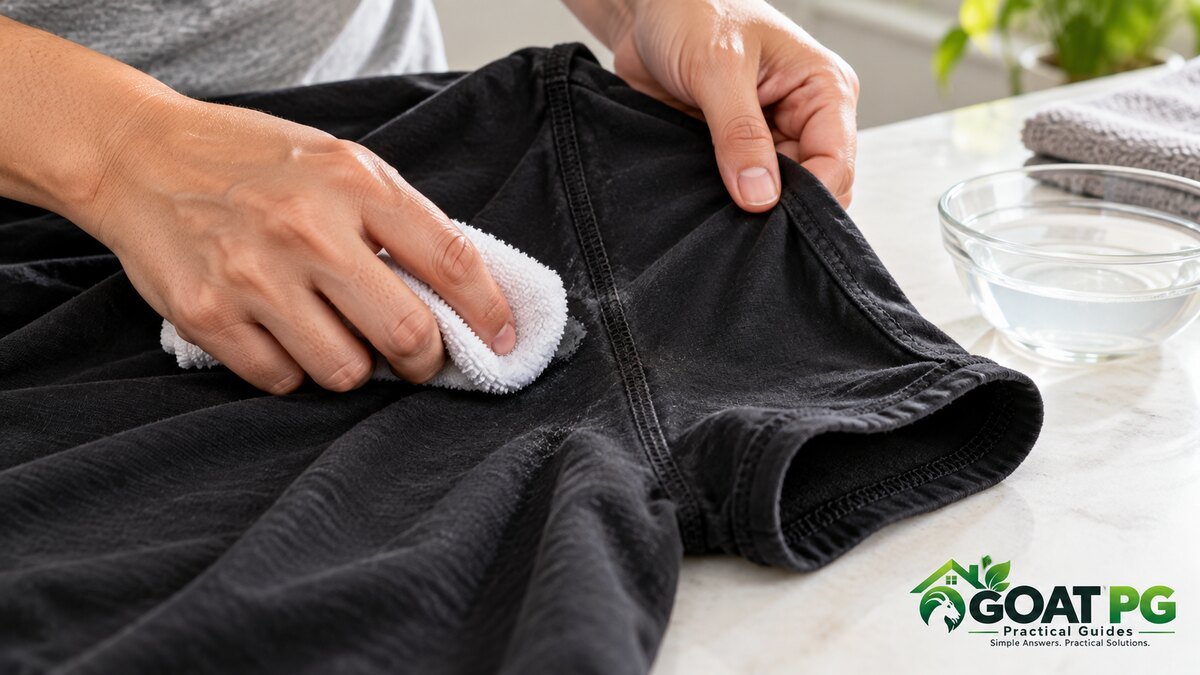
Keep the shirt inside out and the white towel behind the underarm. Apply a small amount of the diluted detergent solution to the back of the buildup. Blot, then massage the fabric gently between your fingers. Working from the back helps move residue away from the fibers instead of pushing it farther through the fabric face.
For sturdy cotton, use a soft brush with very light, short strokes following the knit. Do not scrub back and forth rapidly. For stretchy athletic fabric, skip the brush and use your fingertips or cloth because repeated friction can roughen the surface and damage odor-control or moisture-wicking finishes.
Let the detergent sit only as long as its label directs, and do not let the treated area dry out. More product is not automatically more effective. A thick layer can become another residue that is difficult to rinse from dark clothing.
5. Rinse and Inspect Before Washing
Rinse the treated area from the back with cool or lukewarm water allowed by the care label. Press the fabric gently between clean towels; do not twist the shirt. While the area is damp, feel for stiffness with your fingertips. If it still feels coated, repeat the mild detergent step once rather than moving immediately to a harsh chemical.
Hold the shirt near a window and compare the treated section with the opposite underarm. Wet black fabric naturally looks darker, so judge texture now and final color only after drying. If black dye transfers to the towel or the fabric becomes shiny, stop treatment.
An old combination of deodorant and body oil may need more than one patient cycle. That is normal. The same repeat-before-drying principle helps with greasy laundry problems; our guide to getting oil stains out of clothes after drying explains why checking between treatments matters.
6. Wash With Dark Clothes Using the Label Directions
Wash the shirt with similar dark colors. Use the detergent amount recommended for the load size, water hardness, and machine type. Overdosing can leave visible residue, while cramming the drum reduces the movement and rinsing needed to carry loosened soil away.
Select the safest cycle and temperature shown on the shirt’s care label. Turning black garments inside out reduces visible surface rubbing during the wash. Fasten zippers and hooks on other items so they do not snag the knit. Do not add chlorine bleach to a black-shirt load.
If a product labeled as color-safe oxygen bleach is allowed by the garment and product labels, test it first and follow the measured directions exactly. Do not combine it with another stain-removal method in the same container. A mild wash completed correctly is safer than a kitchen-counter chemistry experiment.
7. Air-Dry, Recheck, and Repeat if Needed
Remove the shirt promptly when the cycle ends. Do not place it in a heated dryer until you have inspected the underarms in good light. Heat can make remaining residue harder to address and may compound fabric damage. Reshape the shirt and air-dry it according to the care label.
Once completely dry, run clean fingers over the area. If the fabric feels soft and the white film is gone, the treatment worked. If it is still stiff, repeat the mild pretreatment and wash rather than escalating several chemicals at once. If the texture is normal but the color is lighter, the remaining patch is probably dye change.
That final inspection is what makes how to get deodorant stains out of black shirts a controlled process instead of guesswork. It also keeps the dryer from hiding whether your first treatment succeeded. If clothing develops a persistent odor even after correct washing, see why clothes can smell sour after washing.

Adjust the Method for Different Black Fabrics
Cotton and Cotton Blends
Washable cotton usually responds well to diluted liquid detergent, gentle finger work, rinsing, and a normal wash. Blends may contain elastane or special finishes, so the care label still controls temperature and drying. Avoid forceful brushing that creates a pale, fuzzy patch.
Polyester and Athletic Shirts
Synthetic performance fabric can hold body oil and deodorant in the underarm area, but it can also be sensitive to high heat and fabric softener. Use a detergent approved for the garment, avoid heavy scrubbing, and rinse thoroughly. Wash inside out and follow any instruction about avoiding softener.
Wool, Silk, Rayon, and Delicate Trims
These materials may change shape, lose dye, water-spot, or react poorly to ordinary laundry products. Follow the label exactly. If the garment is valuable, tailored, embellished, or dry-clean only, take it to a professional and identify the deodorant mark before cleaning.
There is no single chemical shortcut for how to get deodorant stains out of black shirts across every fiber type. The safest treatment is always limited by the most delicate fiber, trim, print, or finish in the garment.
Printed Black Shirts
Keep spot treatments away from screen printing, heat transfers, and decorative coatings unless the manufacturer permits them. Turn the shirt inside out and avoid rubbing the printed face. If the mark crosses both fabric and print, professional advice may be safer than treating both surfaces the same way.
Mistakes That Can Fade or Damage a Black Shirt
- Using heat too early: ironing or machine-drying before the mark is gone can make recovery harder.
- Starting with chlorine bleach: it can remove black dye and permanently weaken some fibers.
- Scrubbing with a rough sponge: abrasion can create a shiny or fuzzy patch even after the residue disappears.
- Skipping the care label: a treatment suitable for cotton may damage wool, silk, rayon, elastic, or a print.
- Mixing stain removers: combinations may damage fabric or release dangerous fumes.
- Using too much detergent: excess product can create new pale streaks on dark clothes.
- Judging color while wet: damp black fabric looks darker; let it dry before deciding whether the dye has changed.
- Continuing after dye transfers: black color on your white cloth is a clear signal to stop.
Another common error is treating every underarm problem as the same stain. Powder on the outside, waxy buildup inside, lingering odor, and missing dye require different responses. Correct diagnosis is the most important part of how to get deodorant stains out of black shirts.
How to Prevent White Deodorant Marks on Black Shirts
- Use the labeled amount. Extra product can create more transfer and buildup without improving performance.
- Let deodorant dry before dressing. Give roll-on, gel, or spray formulas the time stated on the package.
- Dress carefully. Roll the lower half of the shirt outward before pulling it on, then unroll it once it passes your underarms.
- Wash buildup before it hardens. Do not repeatedly rewear a shirt with visible underarm residue.
- Measure detergent. Match the dose to the load, machine, soil level, and water conditions.
- Keep dark loads roomy. Clothing needs space to move and rinse.
- Clean laundry equipment. A dirty dispenser or poorly rinsing washer can leave residue on multiple garments.
Good drying practices also protect dark clothing. A restricted dryer exhaust can lengthen drying and increase heat exposure, so follow our homeowner-safe guide on how to clean a dryer vent safely if loads take unusually long.
Once you understand how to get deodorant stains out of black shirts, prevention becomes simple: less excess product, enough drying time, prompt laundering, and a correctly measured wash routine.
When the Mark Is Probably Permanent
After the shirt is clean and fully dry, compare texture and color. Removable residue usually changes how the fabric feels: stiff, waxy, gritty, or coated. Dye loss generally feels like normal fabric but looks pale, rusty, reddish, or orange. If repeated mild washing changes nothing, more scrubbing is unlikely to help.
Your practical options are to wear the shirt as-is, have it professionally dyed, use an appropriate fabric-dye product according to its instructions, or repurpose it. A black marker usually produces an uneven patch and may transfer later. For an expensive or sentimental garment, consult a textile-care professional before attempting color restoration.
Frequently Asked Questions
Can deodorant stains come out of black shirts without washing?
A fresh surface transfer often can. Buff it lightly with a clean, dry microfiber cloth or rub two clean sections of the shirt together. If the underarm feels stiff or waxy, washing after pretreatment is more reliable.
Can I use vinegar on a black shirt?
Do not assume vinegar is safe for every black dye, fiber, elastic, print, or finish. Follow the care label and product instructions, and test any permitted treatment on a hidden seam. Never combine vinegar with chlorine bleach.
Will baking soda fade black clothes?
Abrasive rubbing and high-pH mixtures can affect some dyes and fabric finishes. A measured liquid laundry detergent made for washable dark clothing is a more predictable first step. If you use any specialty product, test it and follow its label.
Why do my black shirts turn orange under the arms?
An orange or reddish patch that remains after residue is removed often indicates a change in the black dye rather than a stain sitting on top. Perspiration, antiperspirant ingredients, heat, and previous cleaning attempts can contribute. Cleaning cannot restore dye that is no longer present.
Should I use hot water on old deodorant buildup?
Use only the temperature allowed by the care label and treatment-product instructions. Heat is not a shortcut, and the University of Georgia specifically cautions against applying heat to material with a deodorant stain. Pretreat gently, rinse, wash correctly, and air-dry for inspection.
What if the shirt still smells after the white stain is gone?
Odor can remain when body oil and perspiration are still embedded even though the visible transfer is gone. Pretreat the washable garment with a compatible laundry product, use the correct dose and cycle, and dry only when the area is clean. Persistent odor across many garments may point to washer maintenance or laundering habits.
Final Takeaway
The safest answer to how to get deodorant stains out of black shirts is to work from mild to stronger, not the other way around. Remove loose transfer while dry, test diluted detergent, treat from the inside, rinse, wash by the care label, and air-dry before judging the result.
Most fresh white marks are simple residue. Hardened buildup takes patience, while a clean but pale patch is likely dye damage. Knowing which one you have prevents needless scrubbing and gives your black shirt the best chance of returning to an even, wearable finish.