How to Unclog a Bathtub Drain Full of Hair: 7 Safe Steps
How to unclog a bathtub drain full of hair safely starts with removing the hair, not pouring more products into the pipe. Scoop out standing water, remove the stopper if its design allows, pull visible buildup with a plastic barbed drain tool, and test the flow. If the clog is deeper, use a tub-safe plunger or hand auger—only when no chemical drain cleaner is present.
This guide walks you through seven practical steps, explains which method fits each clog, and shows when the problem is no longer a simple DIY repair. The goal is a freely draining tub without damaged finishes, chemical splashes, or a hair clog pushed farther into the plumbing.
Table of Contents
The Quick Answer
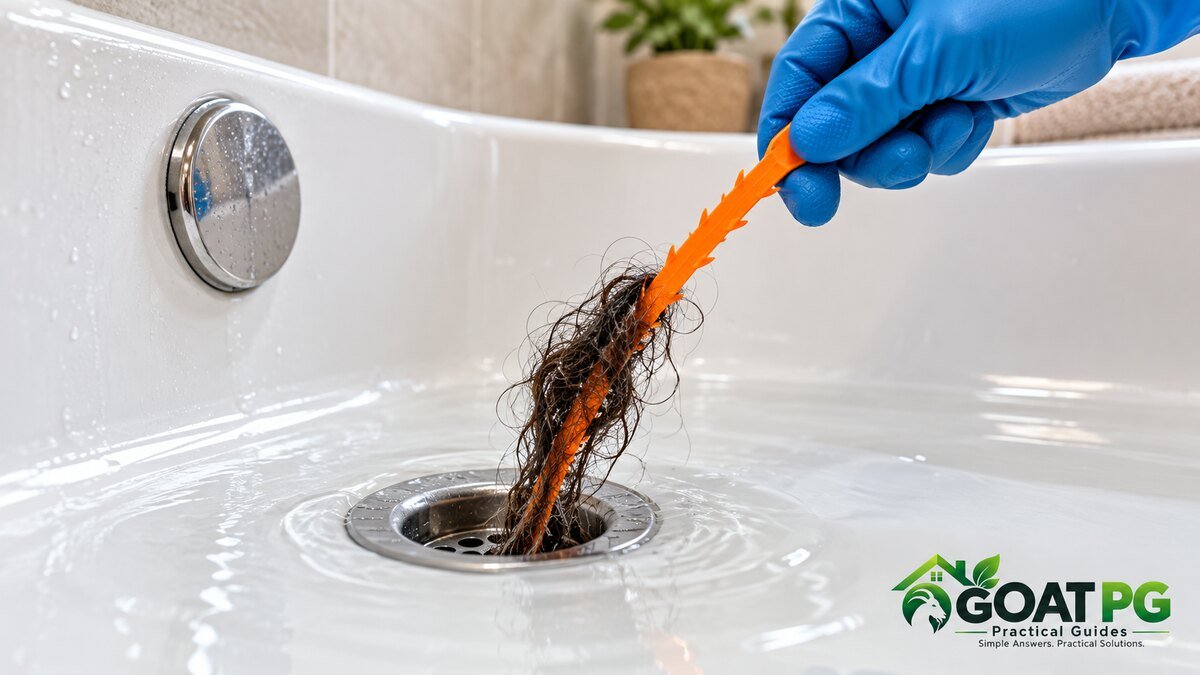
The fastest low-risk method is to remove the tub stopper, shine a flashlight into the opening, and feed a flexible plastic hair-removal strip a few inches into the drain. Twist it gently, pull it straight out, dispose of the hair in the trash, and repeat until the tool returns mostly clean. Flush with warm tap water and confirm that a small pool drains quickly.
If anyone has already poured a chemical drain opener, bleach, toilet cleaner, acid, or another strong cleaner into the tub, stop. Do not add another product, plunge, or insert a tool that could splash the chemical. Ventilate the bathroom, keep people and pets away, follow the product label, and contact a plumber or Poison Control if exposure is possible.
The EPA lists a plunger or plumber’s snake as ways to reduce reliance on drain cleaner in its household hazardous waste guidance. That mechanical-first approach is especially sensible for hair because the obstruction can often be caught and physically removed.
Before You Start: Confirm It Is a Hair Clog
A typical hair clog develops gradually. The tub drains more slowly after each shower, small bubbles may rise around the stopper, and you may see strands at the drain opening. Soap and conditioner bind the hair together, so the clog feels slippery on the outside and dense in the center.
A sudden complete blockage after a small object falls into the tub is different. So is a backup that affects the toilet, sink, and tub at the same time. Multiple slow or gurgling fixtures may point to a branch drain, vent, or main-line problem rather than hair sitting just under the tub stopper. Our guide to why a toilet bubbles explains related warning signs that should not be treated as a simple tub clog.
Pause if sewage rises into the tub, water appears when another fixture runs, or a strong sewer odor persists. These symptoms justify professional diagnosis. If the tub is merely slow and other fixtures work normally, the steps below are a reasonable homeowner starting point.
For most households researching how to unclog a bathtub drain full of hair, confirming that the problem is isolated to the tub is the best first diagnostic step.
Tools and Supplies You May Need
- Household cleaning gloves and eye protection
- A bucket, cup, or wet/dry vacuum for standing water
- Old towels to protect the floor and tub edge
- A flashlight
- A screwdriver matched to the stopper hardware, if required
- A flexible plastic barbed drain tool
- A dedicated cup plunger
- A hand-operated drain auger suitable for bathtub plumbing
- A small brush and mild dish soap for the removed stopper
- A drain hair catcher for prevention
Do not improvise with a sharp knife, stiff metal hook, or unprotected coat hanger. Metal edges can scratch the tub, damage the drain finish, puncture a flexible pipe, or become stuck. A cheap plastic hair tool is designed to bend around the trap and snag soft buildup.
Knowing how to unclog a bathtub drain full of hair is mostly about matching a simple mechanical tool to the location of the blockage.
How to Unclog a Bathtub Drain Full of Hair: 7 Steps
1. Ask What Has Already Gone Down the Drain
Before touching the drain, ask everyone in the home whether they used a drain opener or other cleaner. Look for an open bottle nearby, but do not lean over the drain to smell it. If you cannot rule out a corrosive product, treat the liquid as potentially hazardous.
Many non-enzymatic drain cleaners are corrosive. Poison Control’s drain-cleaner safety overview explains that exposure can cause serious chemical burns. Plunging after chemical use can send that liquid toward your face and skin, while an auger may bring contaminated material back out.
For an untreated hair clog, open a window or door, switch on the bathroom exhaust fan, put on gloves, and protect the floor with towels. Keep children and pets outside the room. Good preparation makes how to unclog a bathtub drain full of hair less messy and safer.
2. Remove Most of the Standing Water
If the tub contains several inches of water, scoop it into a bucket so you can reach the drain and see what you are doing. A wet/dry vacuum can help if its manufacturer allows liquid pickup; never use a regular household vacuum around standing water.
Leave just enough clean water to cover the rim of a plunger later if needed. Wipe the tub floor around the drain so your knees, hands, and tools do not slide. Place small screws and stopper parts in a bowl rather than on the curved tub edge.
Do not empty chemically contaminated water into another sink or toilet. Follow the product label and local disposal guidance, or ask a professional. The remaining steps assume no hazardous drain product is present.
3. Remove and Clean the Stopper
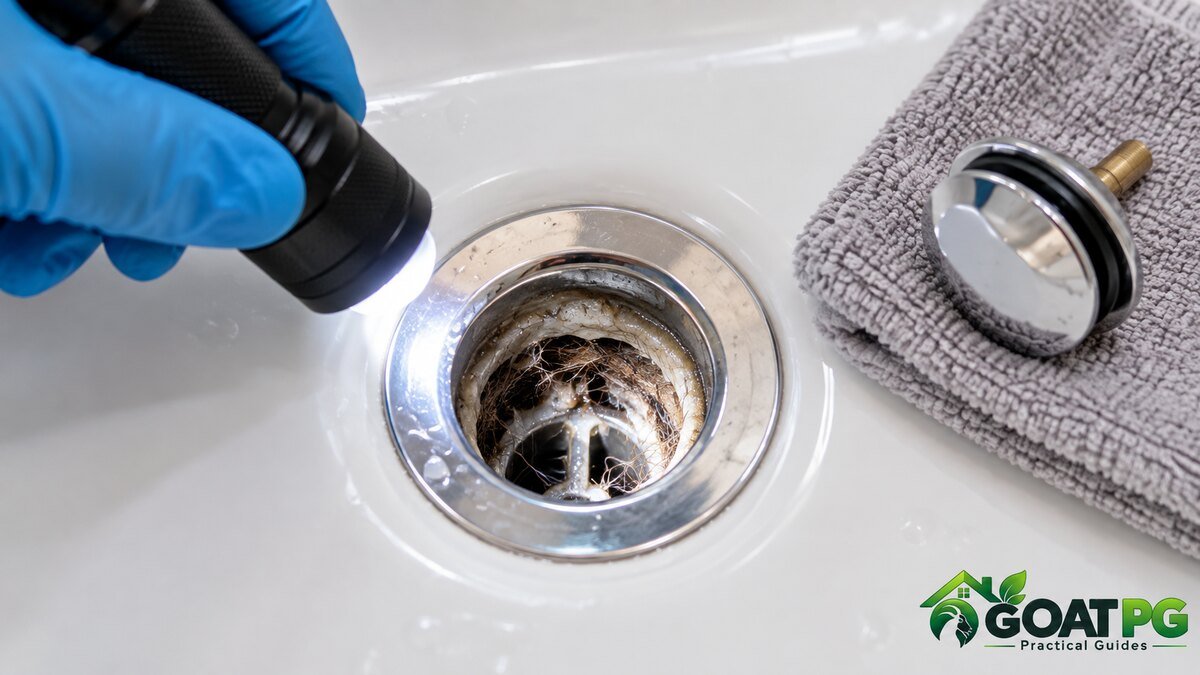
Bathtub stoppers vary. A simple lift-and-turn model may unscrew after you place it in the open position. A toe-touch model may have a removable cap, while a trip-lever tub uses a linkage behind the overflow plate. If the part does not move with light, correct pressure, identify the stopper type before forcing it.
Photograph the assembly before taking it apart. Use the correctly sized screwdriver, keep the screws together, and avoid dropping hardware into the drain. Set the stopper on a towel and clean trapped hair and soap film with mild dish soap and a small brush. Sometimes the apparent clog is concentrated around the stopper itself.
Inspect rubber seals and moving parts. A bent linkage, displaced seal, or stopper that never lifts fully can imitate a clog by restricting the opening. If the mechanism is damaged, cleaning hair alone will not restore normal flow.
4. Pull Out Visible Hair With a Plastic Drain Tool
Feed the flexible barbed strip into the opening slowly. Stop if you meet hard resistance; do not hammer it past a fitting. Move the tool up and down an inch or two, rotate it slightly, and pull it out in one controlled motion. Keep your face away from the opening.
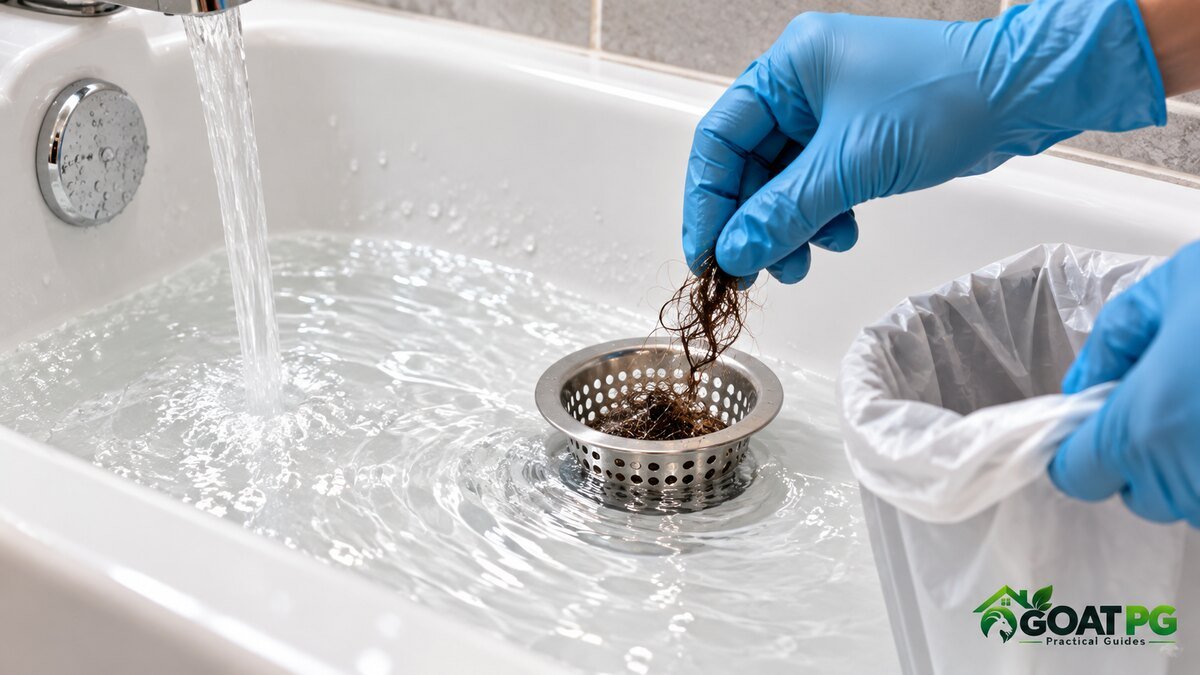
Remove the captured hair over a trash bag, not over the tub. Wipe the tool with a paper towel and repeat from a slightly different angle. Two or three passes often remove the dense plug sitting at the crossbars or just above the trap.
Never flush the extracted hair back down the drain. Hair does not dissolve in ordinary water and can catch on another rough spot farther along the line. The physical removal step is the core of how to unclog a bathtub drain full of hair.
5. Test the Drain With Warm Tap Water
Run warm—not boiling—tap water for 30 to 60 seconds. Watch how quickly the water disappears and listen for steady flow. Boiling water can damage some plastic piping, soften sealants, and stress cold porcelain or acrylic, so it is unnecessary here.
If the tub now drains normally, clean and reinstall the stopper, then move to prevention. If the water is better but still slow, make another pass with the plastic tool. A second clump may be wrapped around the drain crossbars or lodged slightly deeper.
A clear improvement after each pass confirms that how to unclog a bathtub drain full of hair is an extraction job rather than a chemical one.
If water does not move at all, stop repeatedly filling the tub. Choose the plunger or hand-auger method based on the conditions below rather than pushing more water and debris into the system.
This pause-and-test approach keeps how to unclog a bathtub drain full of hair focused on measurable improvement instead of cycling through unrelated remedies.
6. Plunge the Tub Correctly
Use a dedicated cup plunger only when no chemical cleaner is in the drain. Block the overflow opening with a wet cloth to keep pressure in the pipe. Add enough water to cover the plunger rim, center it over the drain, and make 10 to 15 firm, controlled strokes without breaking the seal.
Lift the plunger and watch the flow. One or two rounds may loosen a soft plug. Avoid violent splashing, and do not continue for many minutes if nothing changes. Excess force can disturb old connections or bring dirty water through the overflow opening.
Plunging may move a clog, but it does not guarantee that hair leaves the system. Follow with the plastic tool if material rises toward the opening. When learning how to unclog a bathtub drain full of hair, think “loosen and remove,” not merely “push away.”
7. Use a Hand Auger—or Call a Plumber
A hand-operated drain auger can reach a clog beyond the stopper area. Follow the tool maker’s directions and your tub’s service instructions. On many tubs, a plumber accesses the line through the overflow opening rather than forcing a thick cable through drain crossbars.
Feed the cable slowly, rotate the handle as directed, and stop if it binds sharply. Never power the cable with a drill unless the tool and operator are specifically qualified for that use. Withdraw it gradually, clean the cable over a protected surface, and test with warm water.
Call a licensed plumber if the cable will not advance, the clog returns quickly, multiple fixtures are affected, the tub leaks below, or you suspect an object rather than hair. A professional should also handle old, corroded, inaccessible, or previously damaged plumbing.
Which Unclogging Method Should You Use?
Use a Plastic Hair Tool When:
- The tub became slow gradually.
- You can see hair near the opening.
- No chemical drain cleaner is present.
- Other fixtures drain normally.
Use a Plunger When:
- The shallow hair tool improved flow but did not clear it.
- The overflow opening can be sealed temporarily.
- The tub and drain surfaces are in sound condition.
- No chemical product has been added.
Use a Hand Auger When:
- The obstruction appears deeper than the stopper area.
- You understand the stopper or overflow access point.
- The cable is the correct size for tub plumbing.
- You can stop without forcing it when resistance feels wrong.
Call a Plumber When:
- More than one fixture is slow, bubbling, or backing up.
- Sewage or dirty water enters the tub.
- A drain chemical is present and mechanical work may splash it.
- The tub leaks, the drain fitting moves, or pipes are corroded.
- The clog returns within days after complete hair removal.
- A hard object may be lodged in the line.
A persistent sewer odor deserves separate diagnosis. Read why a bathroom can smell like sewage before assuming that every odor will disappear when the hair is removed.
For an isolated, gradually slowing tub, how to unclog a bathtub drain full of hair should begin at the stopper and move deeper only when the evidence supports it.
The right answer to how to unclog a bathtub drain full of hair changes when the evidence points to a shared drain or main-line restriction, so treat those warning signs seriously.
Common Mistakes to Avoid
- Mixing cleaners: household chemicals can release toxic gas or react violently.
- Plunging after drain opener: pressure can splash corrosive liquid onto skin and eyes.
- Using boiling water: extreme heat may damage plastic components, finishes, or seals.
- Forcing the stopper: hidden screws or linkages can bend or break.
- Using a sharp metal hook: it can scratch surfaces, snag a pipe, or become stuck.
- Pushing the hair deeper: extraction is better than blindly compacting the clog.
- Ignoring several slow fixtures: the blockage may be beyond the bathtub branch.
- Flushing hair down the toilet: put it in the trash instead of moving it to another drain.
Poison Control advises reading product directions, ventilating the work area, and never mixing household cleaning products. Its cleaning-safety guidance is worth following in a small bathroom where fumes and splashes can be concentrated.
How to Prevent Another Bathtub Hair Clog
- Install a fitted hair catcher. Choose one that sits securely without preventing the stopper from working.
- Empty it after every shower. Put the hair in the trash rather than rinsing it through the screen.
- Brush long hair before bathing. Removing loose strands first reduces the amount reaching the tub.
- Clean the stopper weekly. Soap film and hair collect around moving parts before the drain becomes slow.
- Respond to slow flow early. A shallow buildup is easier to remove than a compacted clog.
- Avoid washing fibrous debris into the tub. Pet hair, lint, and cleaning cloth fibers can join the same plug.
- Keep products measured. Excess conditioner, bath oil, and soap residue can help hair stick together.
A drain with organic film can also attract pests. If tiny flies appear around the tub or sink, use our separate guide on how to get rid of drain flies in a bathroom; removing adult flies without cleaning their breeding film rarely solves the problem.
Prevention is the final part of how to unclog a bathtub drain full of hair: catch loose strands before they enter the pipe and respond as soon as drainage begins to slow.
What If the Tub Is Still Draining Slowly?
Confirm that the stopper opens fully and is reassembled correctly. Then compare nearby fixtures. If only the tub is slow, a deeper branch clog, mineral buildup, a damaged stopper assembly, or an improperly sloped pipe may be limiting flow. If the sink and toilet also react, the issue may be farther downstream.
At this stage, how to unclog a bathtub drain full of hair becomes a diagnosis question: either a deeper hair mass remains, or the original assumption was incomplete.
Do not keep repeating random methods. Write down what you tried, whether flow improved, and whether other fixtures changed. That information helps a plumber diagnose the line without repeating unsafe steps.
Low water flow from the showerhead is a different issue from slow drainage. If the tub empties normally but the shower feels weak, see why shower water pressure can be low.
Frequently Asked Questions
What dissolves hair in a bathtub drain?
Some chemical products are formulated to break down organic material, but they can be corrosive and create hazards for users and plumbers. For an ordinary reachable hair clog, physically pulling the hair out with a plastic tool is direct, inexpensive, and avoids leaving a strong chemical in the pipe.
Can baking soda and vinegar remove a hair clog?
The fizz may loosen some surface residue, but it is not a reliable way to dissolve a dense rope of hair. Never add either ingredient if bleach, drain opener, toilet cleaner, or another product may already be in the drain. Mechanical removal better matches the problem.
Can I use a wire coat hanger?
A stiff metal hanger can scratch the tub and drain, damage pipe surfaces, push the clog deeper, or become trapped. Use a flexible plastic hair-removal tool or a correctly sized drain auger designed for plumbing.
Should I pour boiling water into the bathtub drain?
No. Warm or hot tap water allowed by your plumbing is sufficient for the final flow test. Boiling water may stress acrylic, porcelain, plastic piping, sealants, or older joints and does not remove a dense hair plug by itself.
How many times should I use the plastic drain tool?
Make a few controlled passes from different angles and stop when the tool returns mostly clean. If the tub remains blocked after visible hair is removed, switch to the appropriate next method rather than scraping the pipe repeatedly.
Why does the bathtub clog again so quickly?
You may have removed only the shallow part of a deeper clog, the stopper may not open fully, or a branch line may be restricted. Rapid recurrence—especially with gurgling or other slow fixtures—is a good reason to call a plumber.
Is it safe to snake a drain after using drain cleaner?
No DIY mechanical work is advisable while a corrosive chemical may be present because the cable or plunger can splash it. Keep away from the drain, ventilate, follow the product label, and tell the plumber exactly what was used and when.
Final Takeaway
The safest method for how to unclog a bathtub drain full of hair is simple: check for previous chemicals, remove standing water, clean the stopper, pull out the hair with a flexible tool, and test with warm tap water. Use a plunger or hand auger only when the conditions are appropriate.
Stop when the symptoms point beyond a shallow hair clog. Multiple affected fixtures, sewage, recurring blockages, leaks, or chemical exposure are professional-plumbing problems. Once the drain flows freely, a fitted hair catcher and quick weekly cleaning can keep the same clog from returning.