How to Get Rid of Drain Flies in Bathroom: 7 Safe Steps
Learning how to get rid of drain flies in bathroom fixtures starts with finding the wet organic film where they breed. Swatting the tiny adults may make the room look better for an hour, but it does not remove eggs and larvae hidden inside a drain, overflow channel, floor drain, or leaking pipe.
Drain flies are small, fuzzy, moth-like insects that often rest on bathroom walls near sinks and showers. They are usually a nuisance rather than an emergency, but a recurring infestation deserves attention because it can point to a dirty drain, standing water, or a plumbing leak. This guide shows you how to identify the source, clean it safely, and know when the problem needs a plumber or pest professional.
Quick answer: What gets rid of drain flies?
Here is the short version of how to get rid of drain flies in bathroom drains without relying on risky chemical mixtures.
The most reliable way to get rid of drain flies is to remove the slimy organic buildup that feeds their larvae. Identify the active drain, remove hair and debris, scrub the inside of the drain and overflow passage with a stiff drain brush, rinse, and keep the area clean and dry. An enzyme or biological drain cleaner can help break down remaining organic film when its label allows that use.
Bleach, boiling water, aerosol spray, and vinegar traps do not solve the breeding source. They may kill a few adults or rinse the surface, but flies can return while larvae remain in the drain film.
Table of Contents
Are they really drain flies?
Identification is the first checkpoint in how to get rid of drain flies in bathroom spaces because several tiny household flies look similar.
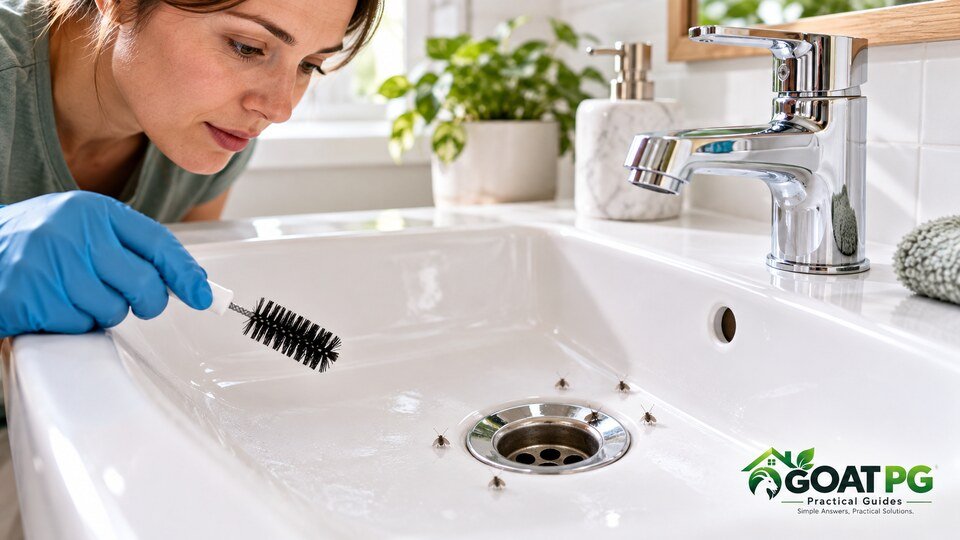
Correct identification matters because fruit flies, fungus gnats, and phorid flies need different control. Drain flies, also called moth flies, are usually about one-eighth inch long. Their dark bodies and rounded wings are covered with fine hairs, giving them a fuzzy appearance. They often make short, weak flights and then rest on a nearby wall.
The University of Minnesota Extension notes that moth flies commonly occur in bathrooms, basements, and kitchens and breed in moist organic material, including the gelatinous film inside sinks, showers, and tub drains.
Fruit flies are typically tan or brown with smoother bodies and are more likely to circle fruit, recycling, or food residue. If the insects gather around produce rather than plumbing, use our separate guide on how to get rid of fruit flies in the kitchen.
How to find which drain is breeding flies
Before learning how to get rid of drain flies in bathroom areas, find the exact source. A bathroom may have several possibilities: the sink drain, sink overflow, shower drain, tub drain, floor drain, toilet seal area, or a rarely used fixture.
Use a simple tape test
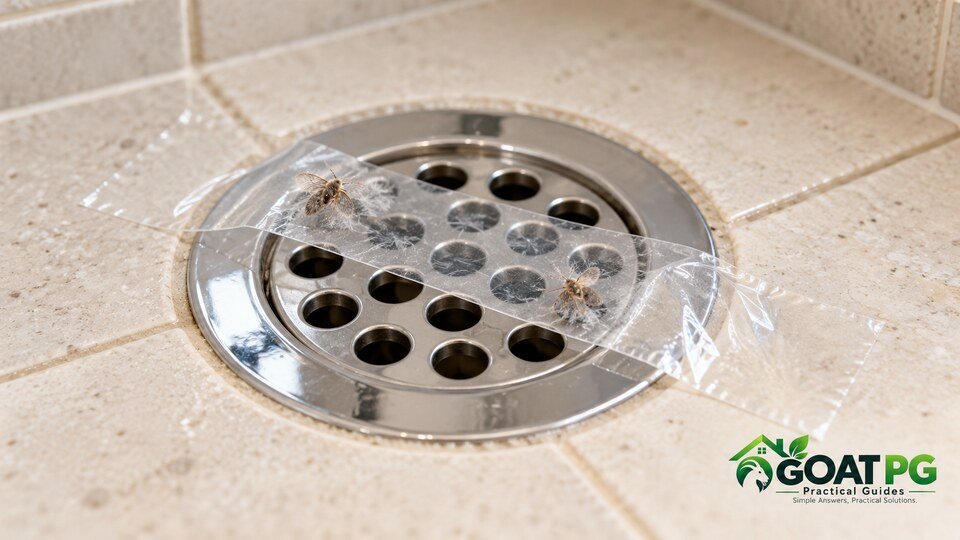
Dry the drain rim and place several strips of clear tape across part of the opening with the sticky side facing down. Do not seal the drain completely; leave small gaps for airflow. Leave the tape overnight when the fixture will not be used. In the morning, check for small fuzzy flies stuck to the underside.
Repeat the test for two or three nights if necessary. A negative result on one night does not prove the drain is clear. You can also cover a floor drain with an inverted clear container and inspect it later.
Inspect less obvious wet areas
Look beneath the sink for a slow leak, check the cabinet base, inspect the toilet base for moisture, and examine any condensate pan, mop bucket, or rarely used drain. If the bathroom also has a sewer odor, review our guide to why a bathroom smells like sewage. A dry trap or damaged pipe may require a different fix.
How to get rid of drain flies in bathroom drains: 7 steps
1. Remove the stopper, grate, and visible debris
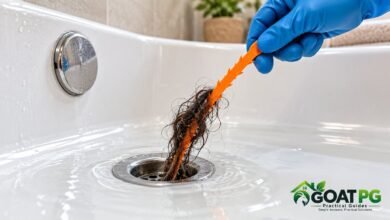
Put on gloves. Lift the sink stopper or drain cover according to the fixture instructions. Pull out hair, soap residue, and other visible material with a plastic drain tool or paper towel. Place the waste in a sealed bag rather than rinsing it deeper into the pipe.
If the stopper mechanism is unfamiliar or corroded, do not force it. Photograph its position and consult the fixture manual before disassembly.
2. Scrub the drain walls mechanically
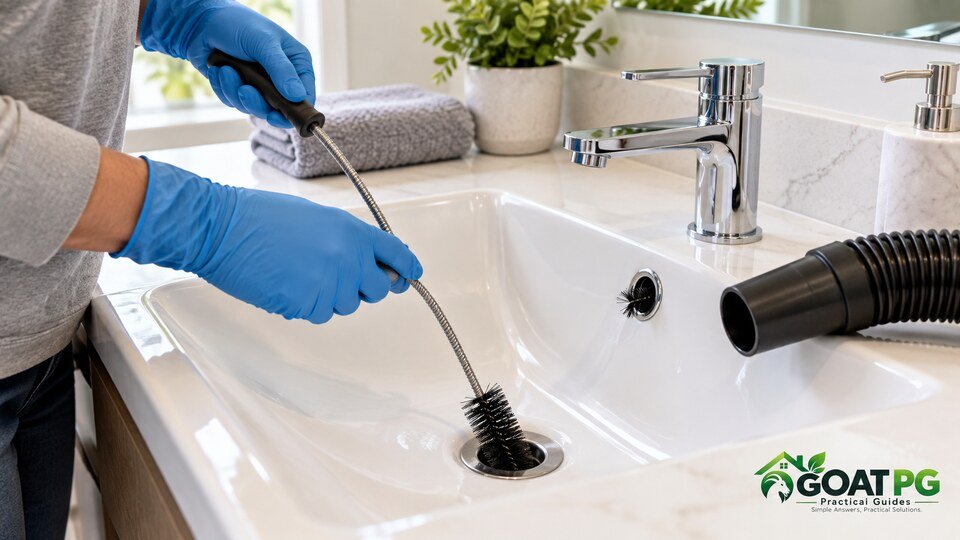
Insert a long, stiff-bristle drain brush and scrub the inner walls, especially the first several inches where organic film collects. Move the brush around the full circumference instead of pushing straight down. Rinse and repeat until the brush returns noticeably cleaner.
Penn State Extension describes removal of the breeding material as the most economical and sanitary control method. The goal is not merely to open the drain; it is to dislodge the gelatinous film that feeds larvae.
3. Clean the overflow channel
Bathroom sinks and tubs often have an overflow opening that stays damp and collects residue. Use a narrow flexible brush suitable for the fixture. Work gently so you do not detach hidden tubing. If you cannot access the channel safely, have a plumber clean it.
4. Flush away loosened material
Run warm tap water to carry loosened debris through the trap. Avoid pouring boiling water into a porcelain sink or plastic drain system; rapid temperature changes can damage some materials, and hot water alone does not reliably remove the film attached to pipe walls.
If the drain is slow, address the clog according to the fixture and pipe type. Never mix drain cleaners, bleach, ammonia, vinegar, or other chemicals. Dangerous gases and splashes can result.
5. Apply a labeled enzyme or biological drain cleaner
After physical cleaning, an enzyme or microbial drain product may help digest remaining organic residue. Choose a product labeled for the fixture and purpose, and follow its directions exactly. Some need several overnight applications and should not be followed immediately by hot water.
If you use any pesticide product, follow the U.S. Environmental Protection Agency guidance: use only products intended for the pest and location, read the entire label, and keep them away from children and pets.
6. Clean nearby surfaces and remove adult flies
Wipe the sink, shower walls, drain rim, and nearby baseboards with a cleaner suitable for the surface. Vacuum resting adults or use a sticky card placed where children and pets cannot reach it. This reduces the visible population while source cleaning interrupts the life cycle.
Do not spray insecticide into a drain unless the product label specifically permits that use. Spraying bathroom air or walls may kill a few adults but will not remove larvae in the pipe.
7. Repeat and monitor for two weeks
Clean the active drain again after several days if film returns. Continue the tape test and record where flies appear. Adults already present may survive briefly after the source is cleaned, so improvement is usually gradual rather than instant.
If numbers do not clearly decline within about one to two weeks of thorough cleaning, look for another source or hidden plumbing problem.
Common drain-fly mistakes to avoid
Many quick fixes advertised for how to get rid of drain flies in bathroom areas treat only the adults and leave the breeding film untouched.
Pouring bleach down the drain
Bleach may disinfect surfaces it contacts, but it moves quickly through the pipe and does not reliably remove the attached organic film. It also creates a serious hazard if mixed with acids, ammonia, or another drain product.
Using vinegar and baking soda as the only treatment
The foaming reaction can loosen light residue, but it is not a substitute for scrubbing. Drain fly larvae can remain protected in thick film above the waterline or inside an overflow passage.
Sealing the drain without cleaning it
A cover may temporarily keep adults in the pipe, but the breeding material remains. Use covers only for monitoring or as part of a cleaning plan.
Cleaning only the sink you use most
Rarely used drains are common sources because their traps can lose water and their walls stay coated. Check floor drains, guest-bath fixtures, and overflow channels.
Assuming every tiny fly is a drain fly
Phorid flies can be associated with serious sewer leaks, while fungus gnats often come from wet houseplant soil. Identification changes the solution. If the insects run rapidly across surfaces, appear in large numbers away from a drain, or persist after cleaning, ask a pest professional to identify them.
Why do drain flies keep coming back?
If your first attempt at how to get rid of drain flies in bathroom fixtures fails, a second wet source is often the reason.
- Organic film remains. A quick rinse cleaned the opening but not the pipe walls or overflow.
- Another drain is active. Adults can move between nearby fixtures.
- A drain is rarely used. Stagnant water and residue create a stable breeding area.
- There is a plumbing leak. Wet material under a cabinet, floor, or slab can support flies.
- The drain line is damaged. Cracked or disconnected sewer piping can create a concealed source.
- Moisture stays high. Poor ventilation slows drying. If humidity lingers after showers, see why your bathroom fan is not removing moisture.
When should you call a plumber or pest professional?
Sometimes the safest answer to how to get rid of drain flies in bathroom plumbing is to correct a hidden leak or damaged drain line.
DIY cleaning is reasonable when the flies clearly come from an accessible sink, tub, or shower drain. Call a plumber when drains back up, multiple fixtures gurgle, sewage odor persists, water appears under the floor, or a toilet seal seems to leak. If plumbing makes a toilet bubble, our guide to toilet bubbling causes explains why the symptom can signal a vent or sewer-line problem.
Call a licensed pest professional when you cannot identify the insect, the infestation is widespread, or flies continue after every accessible drain has been cleaned. In an apartment, notify property management because the source may be in a shared line or neighboring unit.
Large numbers suddenly emerging from a wall, floor crack, or toilet area deserve prompt inspection. They may indicate a broken pipe or contaminated water hidden from view.
How to prevent drain flies from returning
After learning how to get rid of drain flies in bathroom drains, a simple cleaning routine can keep the organic film from rebuilding.
- Remove hair and soap residue from sink, tub, and shower strainers every week.
- Brush frequently used bathroom drains monthly or whenever film appears.
- Run water in rarely used fixtures regularly so traps do not dry out.
- Repair dripping faucets, loose toilet seals, and cabinet leaks promptly.
- Keep mop heads, sponges, and cleaning cloths dry between uses.
- Run the bathroom exhaust fan during showers and for a suitable period afterward.
- Keep floor drains accessible rather than covering them with stored items.
- Monitor with a tape test at the first sign of fuzzy flies instead of waiting for a large population.
Frequently asked questions
These common questions clarify how to get rid of drain flies in bathroom fixtures and keep them from returning.
How long does it take to get rid of drain flies?
Once the breeding film is removed, the population should begin to decline within several days. A few adults may remain for one to two weeks. Continued activity after that suggests incomplete cleaning or another breeding source.
Will drain flies go away on their own?
Not while a suitable wet breeding source remains. Adults have short lives, but new flies keep emerging from eggs and larvae in the organic film.
Do drain flies bite?
Drain flies do not normally bite people. They are mainly a nuisance. Their presence still justifies cleaning because they breed in wet, decaying material.
Can drain flies come from the toilet?
They may appear near a toilet if there is residue, a leaking seal, a seldom-used fixture, or a nearby floor drain. A correctly functioning toilet bowl and trap are less typical breeding sites than a slimy sink or shower drain.
Does boiling water kill drain flies?
Boiling water may kill insects it contacts, but it does not reliably remove the breeding film and may damage some fixtures or piping. Mechanical brushing and source correction are more dependable.
Are drain flies a sign of a sewer problem?
Usually they come from ordinary drain buildup, but a persistent or heavy infestation can be associated with a sewer leak or damaged pipe. Seek professional inspection when flies emerge away from accessible drains or occur with sewage odor, wet flooring, backups, or repeated gurgling.
Final takeaway
The lasting method for how to get rid of drain flies in bathroom drains is careful source removal followed by monitoring.
Knowing how to get rid of drain flies in bathroom fixtures means treating the breeding source, not only the adults. Confirm the active drain, remove hair and debris, scrub away the organic film, clean the overflow, use a labeled enzyme product if needed, and monitor for at least several days.
If careful cleaning does not reduce the flies, inspect other drains and moisture sources. Persistent activity with sewer odors, backups, or hidden dampness is a reason to call a plumber or pest professional rather than keep pouring products into the drain.