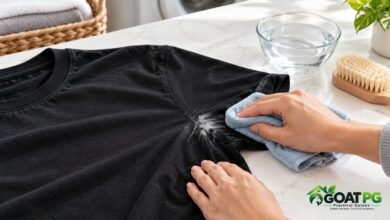
How to Get Oil Stains Out of Clothes After Drying: 7 Steps
How to get oil stains out of clothes after drying is a frustrating question because dryer heat can make a greasy mark harder to lift. The good news is that a washable shirt, pair of pants, or table linen is not automatically ruined. A careful second treatment can often loosen the remaining oil without damaging the fabric.
The safest approach is to check the care label, absorb any residue, pretreat with a suitable laundry product, rewash, and let the item air-dry while you inspect it. Do not put the garment back in the dryer until the stain is gone. This guide explains the full process, what changes for different fabrics, and when a stain needs professional care.
Quick answer
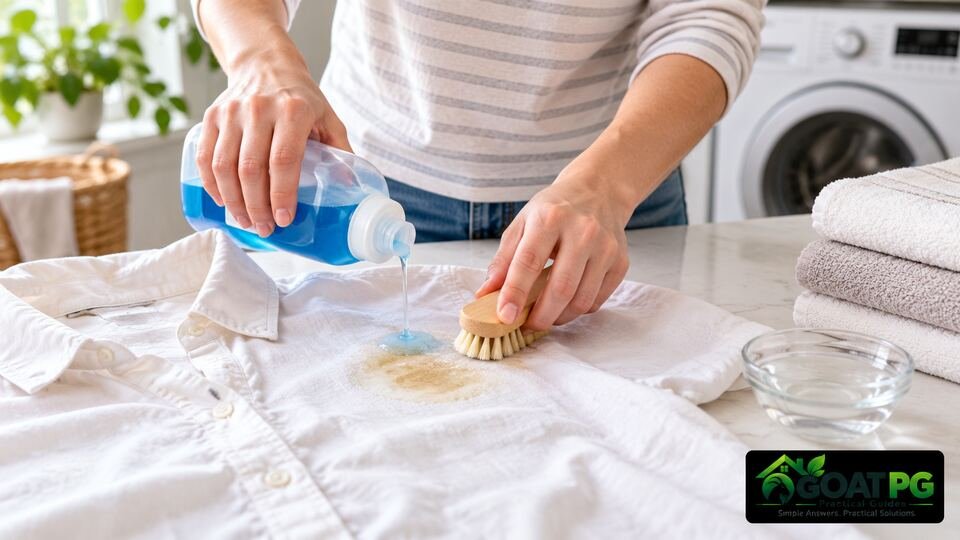
To remove a dried-in oil stain, place the garment on a clean towel, apply an absorbent powder if the area still feels greasy, brush it away, then work liquid laundry detergent or a prewash stain remover into the mark. Let the product sit for the time stated on its label, wash at the warmest temperature allowed by the garment care label, and air-dry. Repeat before machine-drying if any shadow remains.
Table of Contents
Why are oil stains harder to remove after drying?
Cooking oil, butter, cosmetics, body oils, and automotive grease do not dissolve readily in water. When a stained item goes through a heated dryer, the oil can spread deeper into the fibers and the remaining mark may oxidize or darken. Dryer heat does not make every oil stain permanent, but it removes the advantage of treating a fresh spill.
That is why learning how to get oil stains out of clothes after drying requires patience rather than a harsher chemical. You are trying to loosen and suspend the oily residue so the wash water can carry it away. One controlled treatment is safer than scrubbing aggressively or mixing several household products.
Polyester and other synthetic fibers can hold oily soils especially well. Cotton is often more forgiving, while wool, silk, acetate, leather, and garments labeled dry-clean-only need specialized care. Always let the care label set the limits for water temperature, bleach, agitation, and drying.
What you need
- A clean white towel or absorbent cloth
- An absorbent powder such as cornstarch or baking soda
- A soft toothbrush or small laundry brush
- Heavy-duty liquid laundry detergent or a prewash stain remover
- A basin or sink for rinsing, if the care label allows it
- Your usual washer and a drying rack
Use a product intended for washable fabric and follow its directions. The American Cleaning Institute stain guide recommends pretreating grease and oil stains with a prewash stain remover or liquid laundry detergent, then laundering in the hottest water safe for the fabric.
Dishwashing liquid is often suggested online because it is designed to cut food grease. However, it can foam excessively in a washing machine and may not be suitable for every color, finish, or fiber. If you use a tiny amount as a spot treatment, choose a clear dye-free formula, test a hidden area first, rinse it out thoroughly, and never pour it directly into the washer.
How to get oil stains out of clothes after drying: 7 steps
1. Read the care label and identify the fabric
Confirm that the item is washable. Note the maximum water temperature and any warnings about bleach or tumble drying. If the label says dry clean only, or the garment is silk, wool, leather, suede, heavily embellished, or structurally tailored, stop and take it to a professional cleaner. Tell the cleaner what caused the stain and that the item has already been dried.
For a washable item, test your chosen detergent or stain remover on an inside seam. Wait, rinse, and check for fading, texture change, or color transfer before treating the visible area.
2. Place the stain face up on a clean towel
Work on a washable counter or protected surface with good lighting. Put a white towel beneath the stained area so residue does not transfer to another part of the garment. Avoid colored towels that could release dye.
Look at the edges of the mark. A translucent or darker ring often indicates remaining oil. If the area contains dried food, gently lift the solid material with the edge of a spoon. Do not scrape delicate fibers or rub the stain outward.
3. Absorb the remaining oil
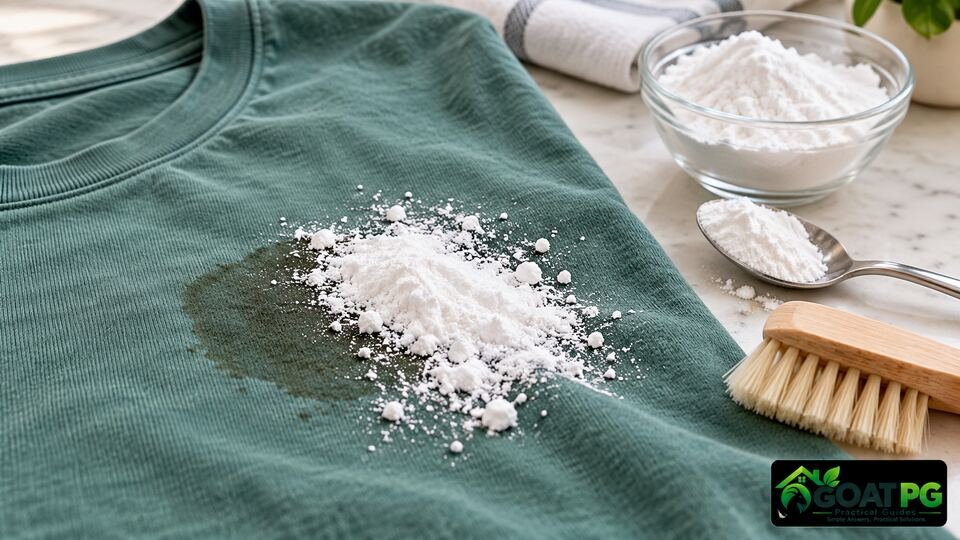
Cover the dry stain with a layer of cornstarch or baking soda. Leave it in place for at least 30 minutes; a heavy, old mark may benefit from several hours. The powder will not erase a heat-set stain by itself, but it can pull surface grease away and make the detergent treatment more effective.
Brush the powder into a trash can with a clean soft brush. Do not shake oily powder across the room or into the washer. If the powder clumps or becomes discolored, apply a fresh layer once more.
4. Pretreat with liquid laundry detergent
Apply enough heavy-duty liquid laundry detergent to cover the stain. Gently work it into both sides of sturdy fabric with your fingers or a soft brush. Use light strokes from the outside edge toward the center so the oily ring does not spread.
Let the detergent remain on the fabric for about 5 to 10 minutes, unless the product label specifies a different time. Do not let the product dry on the garment. A commercial prewash stain remover can be used instead when its label lists grease or oil and confirms compatibility with the fabric.
The University of Georgia Extension also advises pretreating grease before laundering and using a heavy-duty liquid detergent for washable fabric. Its guidance for grease stain removal notes that a second treatment may be necessary when the stain remains.
5. Wash at the warmest safe temperature
Wash the garment separately or with similar colors, using the warmest water permitted by the care label. “Hottest safe” does not mean automatically selecting the hottest washer setting. High heat can shrink, fade, or damage some textiles, so the garment label always takes priority.
Use the normal amount of laundry detergent for the load size and soil level. Too much detergent can leave residue and does not guarantee better stain removal. If your washer has been leaving odors or buildup on clothes, clean and maintain it using our guide to why a washing machine smells before relying on another wash cycle.
6. Inspect the item while it is wet
Remove the garment when the cycle ends and examine the stain under bright light. Wet fabric can hide a faint oily shadow, so compare it with the surrounding area from several angles. Smell is not a reliable test because fragrance from the detergent may cover residual grease.
If the mark remains, repeat the pretreatment and wash. Do not iron the area or place the garment in a heated dryer. One or two additional careful cycles are usually safer than increasing the chemical strength.
7. Air-dry before making the final decision
Hang the garment or lay it flat according to the care label. Once completely dry, inspect the area again. Only return it to the dryer when there is no visible ring, dark patch, or greasy feel.

If your dryer is also taking unusually long to dry normal loads, do not compensate with repeated hot cycles. Check the airflow and lint system using our guide to why a dryer takes so long. Poor airflow is a safety and efficiency issue separate from stain treatment.
What if the oil stain is still visible?
A faint stain after the first attempt does not mean the garment is lost. Repeat the detergent pretreatment, allow the correct contact time, and rewash. For a colorfast washable item, an oxygen-based laundry booster may help with the discolored shadow left by food, sauce, or oxidized oil. Use it only when both the garment label and product directions allow it.
Do not apply chlorine bleach simply because the garment is white. Some white fabrics contain spandex, finishes, stitching, or blended fibers that chlorine bleach can weaken or yellow. Never mix bleach with ammonia, vinegar, acids, or other cleaners.
Old motor oil, machine grease, paint, and unknown shop chemicals need extra caution. Some residues are flammable or may require a specific solvent. Do not machine-dry a garment that smells like fuel or solvent. Follow the product safety information or ask a professional cleaner whether the item can be treated safely.
How to adjust the method for different fabrics
Cotton and linen
Washable cotton and linen usually tolerate detergent pretreatment and moderate brushing well, but dyed fabric can fade and hot water can shrink it. Test first and follow the temperature on the care label.
Polyester and performance fabric
Synthetic fibers attract oily soils, so the stain may need repeated pretreatment. Use a detergent that lists oily soil removal and avoid fabric softener during the treatment wash because it can coat fibers. Brush lightly to protect knits and performance finishes.
Denim
Turn dark denim inside out for washing and use the label-approved temperature. Treat only the stained area and test for dye transfer. Air-drying helps you see whether the mark is gone before additional heat is applied.
Wool, silk, rayon, acetate, and delicate blends
These materials can shrink, distort, lose dye, or develop water rings. Avoid vigorous rubbing and improvised chemical treatments. Follow the care label and use a professional cleaner when the item is valuable or the label restricts washing.
Common mistakes that make oil stains worse
- Putting the item back in the dryer too soon. Heated drying can make the remaining stain more difficult to remove.
- Scrubbing aggressively. Hard brushing can spread the oil, roughen fibers, and create a pale worn spot.
- Ignoring the care label. A stain-free garment is not a success if the treatment shrinks or discolors it.
- Using too many products at once. Mixing cleaners can damage fabric or create dangerous fumes.
- Using a colored cloth to blot. Dye may transfer and create a second stain.
- Applying heat with an iron. Ironing before the oil is gone can deepen the mark.
- Overloading the washer. The garment needs water and movement for loosened soil to rinse away.
How to prevent oil stains from setting
Blot fresh spills instead of rubbing them, and keep stained clothing out of the hamper until you have checked it. Pretreat before washing, then inspect every stain before it enters the dryer. A small dot can be easy to miss on wet fabric, so use bright light.
Keep a simple stain kit near the laundry area: white cloths, a soft brush, an absorbent powder, and a compatible prewash product. Wash kitchen towels separately when they contain heavy food grease, and never dry material contaminated with fuel or flammable solvents.
If clean laundry develops a sour odor while waiting to be folded, the cause may be moisture or washer buildup rather than oil. See why clothes smell sour after washing. For absorbent bath linens, our guide to why towels smell after washing covers detergent residue, slow drying, and fabric-softener buildup.
Frequently asked questions
Can an oil stain be removed after it has been through the dryer?
Often, yes. Dryer heat makes removal harder, but many washable fabrics respond to absorbent powder, detergent pretreatment, rewashing, and air-drying. Results depend on the type of oil, fabric, color, dryer temperature, and how long the stain has been present.
Does baking soda remove dried oil stains from clothes?
Baking soda can absorb some surface oil, but it usually needs to be followed by a fabric-safe detergent or stain remover and a wash cycle. Treat it as a preparation step rather than a complete solution.
Should I use hot or cold water for an oil stain?
Use the warmest water allowed by the garment care label and recommended by the stain-treatment product. Hotter is not always better: it may shrink, fade, or damage some fabrics. The American Cleaning Institute recommends the hottest water safe for the fabric after pretreatment.
Can dish soap be used on an oil stain?
A tiny amount of clear grease-cutting dish liquid may help on a washable, colorfast item, but test it first and rinse thoroughly before machine washing. Do not add dish liquid to the washer because excess suds can cause problems. A laundry detergent or prewash product is the more predictable choice.
How many times can I repeat the treatment?
Two or three gentle attempts are reasonable for a sturdy washable garment if the color and texture remain unchanged. Stop when the fabric begins to fade, pill, stretch, or weaken. Valuable and delicate items should be taken to a professional cleaner sooner.
Why does the stain disappear when wet and return after drying?
Water temporarily darkens the surrounding fabric and can hide the contrast. Once the garment dries, remaining oil changes how light passes through the fibers, so the translucent ring becomes visible again. Air-drying lets you check this without adding more dryer heat.
Bottom line
The safest method for how to get oil stains out of clothes after drying is to slow down: check the care label, absorb surface grease, pretreat with an appropriate laundry product, wash at the warmest safe temperature, and air-dry for inspection. Repeat a gentle treatment if needed, but avoid aggressive scrubbing, chemical mixtures, and more heat. When the garment is delicate, dry-clean-only, or contaminated with an unknown solvent, professional cleaning is the smarter choice.