How to Get Rid of Fruit Flies in the Kitchen: 9 Easy Steps
How to get rid of fruit flies in the kitchen starts with finding what they are breeding in—not simply trapping the adults you can see. These tiny flies multiply around fermenting fruit, sticky drink residue, damp food waste, recycling, and organic film in drains or garbage disposals. Remove the source, clean the overlooked spots, and the population usually drops quickly.
This practical guide gives you a safe nine-step plan, explains how to tell fruit flies from other small kitchen flies, and shows you when a recurring problem may need professional attention. You do not need to fog the room or spray pesticide around food-preparation surfaces.

Quick answer
To get rid of fruit flies, refrigerate or discard overripe produce, empty and wash trash and recycling containers, clean sticky spills, scrub drain surfaces, wash damp mops and cloths, and use a simple vinegar trap to reduce the remaining adults. Keep sanitation consistent for at least a week because new adults may continue emerging after the original breeding source is removed.
Table of Contents
First, make sure they are fruit flies
Not every tiny flying insect near a sink is a fruit fly. Correct identification matters because the breeding source changes by species.
- Fruit flies are usually tan or light brown, often with red eyes, and hover around ripe produce, sweet liquids, recycling, and fermented food residue.
- Drain flies look fuzzy or moth-like and often rest on walls near sinks, floor drains, or showers.
- Fungus gnats are slender and dark, with long legs, and are commonly associated with damp potting soil.
- Phorid flies have a hump-backed appearance and often run across surfaces before flying. A persistent population can point to hidden decaying material or a plumbing problem.
The University of Maryland Extension describes fruit flies as kitchen pests that develop around fermenting materials. If most activity is limited to a drain, compare the insects carefully rather than assuming the drain itself is the only source.
How to get rid of fruit flies in the kitchen in 9 steps
1. Remove ripe, damaged, or leaking produce
A reliable plan for how to get rid of fruit flies in the kitchen begins at the fruit bowl. Start with the fruit bowl, vegetable baskets, pantry shelves, and any produce stored in bags. Eat, refrigerate, or discard items that are overripe, split, bruised, or leaking. Check onions, potatoes, tomatoes, bananas, melons, and fruit brought in from a garden.
Look beyond the obvious bowl. A single grape behind a cabinet, a potato at the back of a drawer, or juice under a storage basket can support continued breeding. Wash the container and the counter beneath it before returning fresh produce.
2. Empty and wash the trash container
Trash sanitation is essential when learning how to get rid of fruit flies in the kitchen. Take out food waste, then inspect under the liner and around the lid, rim, hinges, and foot pedal. A clean-looking liner can hide liquid in the bottom of the bin. Wash the container with ordinary dish soap and water, rinse it, and let it dry before installing a new bag.
During an active problem, empty food waste daily. A covered kitchen compost pail should also be washed and emptied often, or stored according to the system recommended for your local compost program.
3. Rinse recycling before storing it
Rinsing recycling is another important part of how to get rid of fruit flies in the kitchen. Soda cans, juice bottles, wine bottles, beer containers, and food jars can hold enough residue to attract fruit flies. Rinse them, drain them upside down, and keep the recycling bin clean and dry. If possible, store rinsed containers in a covered bin away from the food-preparation area until collection day.
Do not forget reusable beverage containers and the tray beneath a bottle-return bag. Sweet liquid trapped in a seam can be easy to miss.
4. Find hidden spills and forgotten food
A hidden spill can defeat an otherwise good plan for how to get rid of fruit flies in the kitchen. Pull out removable drawers and inspect under small appliances. Check beside the refrigerator, under the toaster, around the coffee maker, below pet bowls, and under a rolling cart. Also inspect mop heads, damp dishcloths, reusable grocery bags, and cleaning buckets.
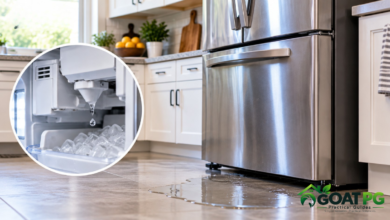
A refrigerator drip pan, ice-maker leak, or food spill under the appliance may be hidden from view. If you find unexplained water nearby, see our guide to why a refrigerator may leak water. For persistent food odors inside the appliance, use the checklist in why a refrigerator smells bad.
5. Clean the sink, disposal, and drain surfaces
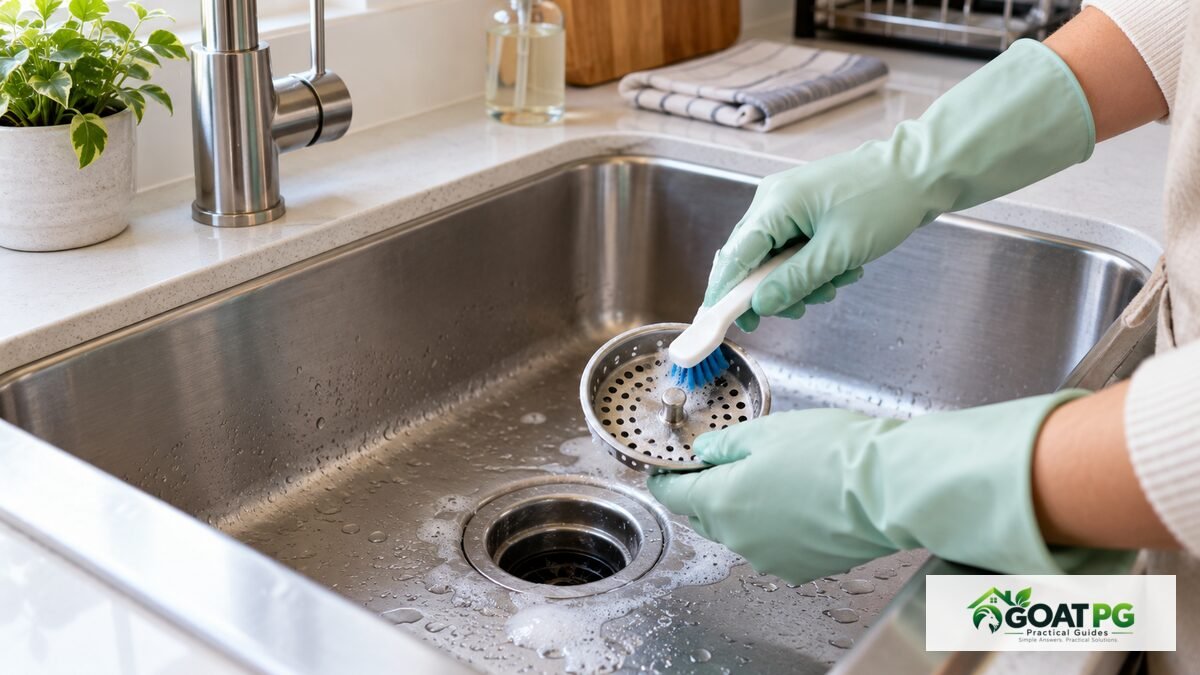
For drains, how to get rid of fruit flies in the kitchen means removing the organic film rather than masking it. Fruit flies can use wet organic residue around a sink, strainer, garbage-disposal splash guard, overflow opening, or accessible drain surface. Remove and wash the strainer. Scrub the underside of the disposal guard only after switching the unit off and following the manufacturer’s safety instructions. Never place your hand inside a garbage disposal.
Mechanical cleaning matters more than simply pouring a liquid down the drain. Use a suitable drain brush on accessible surfaces, remove food residue, and flush according to your plumbing and appliance instructions. Never mix bleach, ammonia, vinegar, drain opener, or other cleaning chemicals; dangerous gases or reactions can result.
If the sink also has a persistent odor, follow our separate troubleshooting guide for a kitchen sink that smells bad. A drain that backs up or empties slowly may need plumbing attention rather than repeated home remedies.
6. Clean the dishwasher filter and door seals
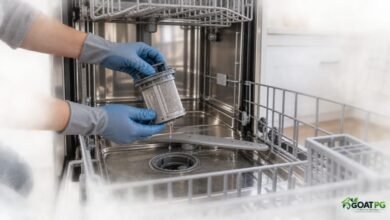
Food particles can collect in the filter, door gasket, utensil basket, and lower edges of a dishwasher. With the machine off, remove and clean the filter according to the owner’s manual, wipe the gasket, and check for standing water or trapped debris.
If the dishwasher retains water after a cycle, do not keep adding cleaners. Our guide to a dishwasher that is not draining covers safe checks and signs that service is needed.
7. Wash damp cloths, mops, and sponges
A sour dishcloth, wet mop, or sponge containing food residue can become a small breeding source. Launder washable cloths on an appropriate cycle, rinse mop heads thoroughly, and let them dry completely. Replace items that cannot be cleaned or that remain odorous.
Hang cloths where air can circulate instead of leaving them balled up in a sink. Clean the caddy or tray beneath sponges because it may hold diluted food residue even when the sponge looks clean.
8. Set a simple monitoring trap
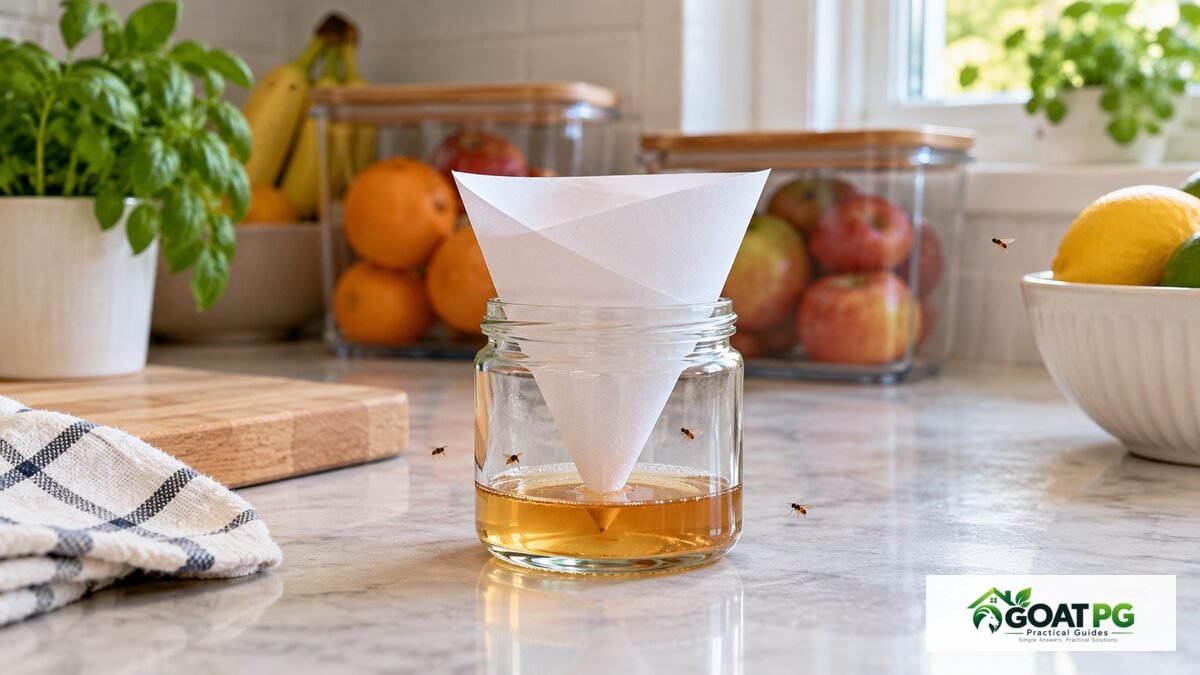
A trap helps reduce adult numbers and shows where activity is strongest, but it will not solve the problem without sanitation. Add a small amount of apple cider vinegar or wine to a jar, then use a paper funnel with a small opening or add one drop of dish soap to reduce surface tension. Place the trap where flies gather, away from children’s and pets’ reach.
Refresh it regularly and keep it away from uncovered food. Several small traps can help you compare the sink, recycling area, fruit-storage area, and trash bin. The Cornell Integrated Pest Management program stresses finding the source, because traps mainly capture adults.
9. Keep the kitchen dry and repeat the inspection
The final part of how to get rid of fruit flies in the kitchen is keeping surfaces clean and dry. Wipe counters and the sink dry overnight, refrigerate produce when practical, store dry goods in closed containers, and clean spills as soon as they happen. Repeat the inspection after two or three days. If one area still has far more flies, search within a few feet for a missed source.
When learning how to get rid of fruit flies in the kitchen, consistency is more effective than one intense cleaning session. Eggs and larvae already present may continue developing, so maintain the routine long enough to interrupt the life cycle.
Why do fruit flies keep coming back?
The most common reason is a breeding source that was overlooked. Frequent culprits include residue under a trash-can liner, a forgotten onion, a recycling bin, liquid beneath an appliance, a damp mop, or food film inside a drain component. New produce can also bring eggs or larvae into the home.
Another possibility is mistaken identity. If the flies are fuzzy and concentrated around a drain, they may be drain flies. If they cluster around houseplants, fungus gnats are more likely. Texas A&M AgriLife Extension notes that traps and sprays give only temporary relief when the breeding site remains.
What not to do
- Do not rely only on traps. They reduce adults but do not remove eggs and larvae in the source.
- Do not spray pesticide around exposed food. If a product is used, follow its label exactly and keep it away from food-preparation surfaces.
- Do not mix household chemicals. Combining cleaners can release toxic gas or cause burns.
- Do not pour repeated drain chemicals into plumbing. They may not reach the breeding film and can damage some materials or create a safety hazard.
- Do not assume every small fly is a fruit fly. Identification prevents wasted effort.
When should you call a professional?
Consider a licensed pest-management or plumbing professional if the infestation continues after one to two weeks of thorough sanitation, flies appear from a wall or floor opening, a drain line is damaged, sewage odor is present, or there is unexplained moisture beneath cabinets or appliances. A persistent phorid-fly problem can be associated with hidden decaying organic material and deserves careful investigation.
For apartments or rental homes, document the locations and dates, then notify the property manager if the suspected source is inside shared plumbing, a wall cavity, or a neighboring unit. Avoid opening building materials or using pesticides in shared spaces without authorization.
How to prevent the next infestation
- Check produce before storing it and use ripe items promptly.
- Refrigerate fruit that does not need to ripen on the counter.
- Wash produce bowls and pantry baskets regularly.
- Empty food waste and rinse recycling frequently.
- Clean coffee, juice, and beverage spills immediately.
- Wash reusable bottles and pet bowls.
- Keep mops, cloths, and sponges clean and dry.
- Inspect under appliances during routine kitchen cleaning.
- Repair leaks and slow drains instead of masking odor or moisture.
Frequently asked questions
What kills fruit flies instantly?
A swatter or vacuum can remove individual adults, and a vinegar trap can capture many of them. However, instant adult control is temporary. The lasting solution is to remove fermenting food and wet organic residue where eggs and larvae develop.
How long does it take to get rid of fruit flies?
You may notice a large reduction within a few days after removing the source, but some adults can continue emerging. Maintain cleaning, food storage, and monitoring for at least a week. A population that does not decline suggests a missed source or a different fly species.
Does apple cider vinegar get rid of fruit flies?
It attracts and traps adult fruit flies, especially when used with a funnel or a small drop of dish soap. It does not clean the breeding site, so use it as a monitoring and reduction tool alongside sanitation.
Are fruit flies coming from my sink drain?
They may develop in organic residue around a drain, disposal, or overflow, but the adults may also gather near a sink because water is available there. Inspect produce, trash, recycling, appliances, cloths, and drains before deciding on the source.
Can fruit flies make you sick?
Fruit flies are mainly a nuisance, but they move between decaying material and food surfaces. Discard contaminated food when appropriate, clean preparation areas, and correct the sanitation problem rather than tolerating a large population.
Bottom line
The reliable answer to how to get rid of fruit flies in the kitchen is source removal. Refrigerate or discard damaged produce, wash waste and recycling containers, clean hidden spills and drain surfaces, dry damp cleaning tools, and use traps only as support. If the numbers do not fall after consistent cleaning, verify the insect and investigate plumbing or concealed moisture with a qualified professional.