9 Signs of Water Damage Behind Walls (Act Fast)
Signs of water damage behind walls are not always as obvious as a dripping pipe or a puddle on the floor. A hidden leak can quietly soak drywall, insulation, wood framing, and trim long before the source becomes visible. Catching the warning clues early can mean the difference between a focused repair and a much larger restoration project.
This guide walks you through nine practical warning signs, how to inspect the area without making the damage worse, and what to do next. If you see water close to an outlet, light switch, appliance connection, or electrical panel, do not touch the wet area. Turn off power from a dry, safe location if you can do so confidently, and call a qualified professional.
Quick answer: what should you look for?
The most common signs of water damage behind walls include yellow or brown stains, bubbling paint, soft drywall, warped trim, a persistent musty odor, unexplained indoor humidity, faint dripping sounds, a rising water bill, and mold that keeps returning. One clue alone does not always prove there is a hidden leak, but several clues in the same area deserve prompt investigation.
9 signs of water damage behind walls
1. Yellow, brown, or copper-colored stains
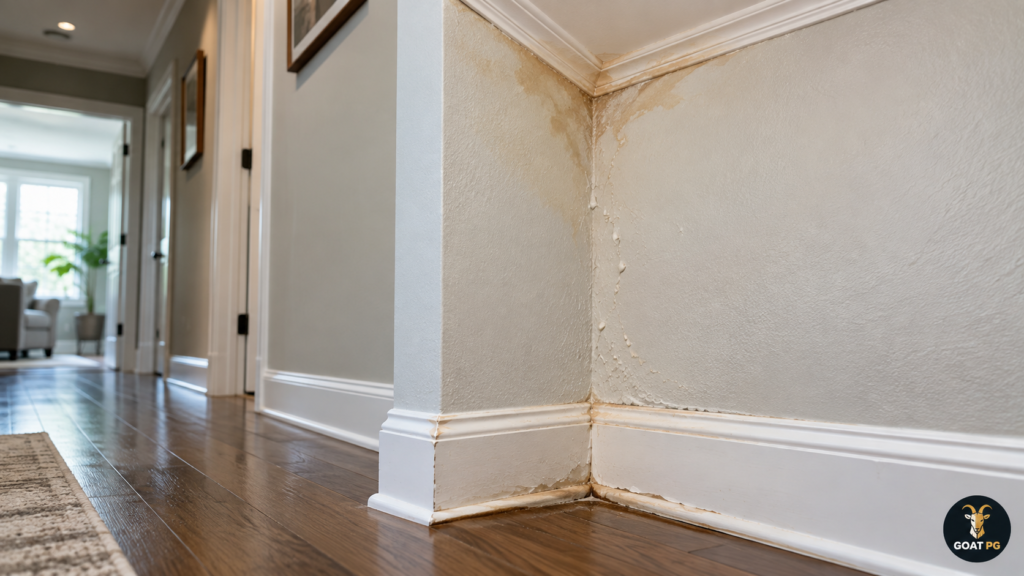
Among the signs of water damage behind walls, discoloration is one of the easiest clues to spot. Water can carry dust, rust, tannins, or building residue to the surface, leaving a ring or uneven patch. A ceiling stain may point to a roof, plumbing, or upstairs bathroom leak, while a mark low on a wall may come from a supply line, drain, appliance, or exterior opening.
Do not assume an old-looking stain is harmless. Lightly mark its edge with a pencil and note the date. If it expands, darkens, or feels damp after rain or after a fixture is used, moisture is probably still entering the assembly.
2. Bubbling, peeling, or blistered paint
Some signs of water damage behind walls begin at the finish layer. Paint normally bonds to a dry, stable surface. When moisture moves through drywall or plaster, the finish may lose adhesion and form bubbles, flakes, or blisters. Wallpaper can loosen at seams or develop ripples for the same reason.
Resist the urge to scrape and repaint immediately. A fresh coat may hide the symptom for a short time, but it will not stop the source. First identify and correct the leak, then confirm that the wall materials are dry enough to repair.
3. Soft, swollen, or crumbling drywall
Physical signs of water damage behind walls include drywall that feels spongy, bows outward, dents with very light pressure, or crumbles at an edge. Baseboard-level swelling often appears after a slow leak travels down inside the wall cavity. In more severe cases, screws or fasteners may show through because the board has changed shape.
Use only gentle pressure on a suspicious wall. Do not punch, drill, or cut into it: plumbing and electrical wiring may be hidden directly behind the surface, and opening a contaminated cavity can spread dust or mold spores.
4. Warped baseboards, trim, or flooring
Wood and fiberboard products swell when they stay wet. Look for trim pulling away from the wall, joints that no longer line up, lifted laminate, cupped wood flooring, or caulk that has split for no obvious reason. Damage at the wall-floor junction can be especially useful because gravity often carries hidden moisture downward.
Compare the affected area with trim on a nearby dry wall. A small difference in shape or texture may be easier to notice side by side.
5. A musty smell that keeps returning
Odor is one of the signs of water damage behind walls that people often notice before a stain appears. A persistent earthy or musty smell can signal damp materials even when the wall looks normal. The smell may become stronger after rain, when the HVAC system runs, or when a closed room has been shut overnight. Follow your nose carefully, but do not place your face against a damaged surface.
If the odor is widespread rather than limited to one wall, use the troubleshooting steps in our guide to why a house smells musty after rain. For a smaller enclosed space, our article on why a closet smells musty explains how airflow and stored fabrics can complicate the diagnosis.
6. Unexplained humidity or condensation
A hidden leak continually adds moisture to indoor air. You may notice that one room feels clammy, a dehumidifier fills faster than usual, or nearby windows stay fogged while the rest of the house is comfortable. A basic hygrometer can help you compare rooms over several days.
Condensation alone does not prove there is a wall leak. Cooking, showers, drying laundry indoors, and poor ventilation can also raise humidity. If glass is the main wet surface, start with our guide to condensation on bedroom windows before assuming a pipe is leaking.
7. Dripping, hissing, or running-water sounds
A faint drip, hiss, or trickle when no fixture is in use deserves attention. Listen during a quiet period, then turn off faucets, the dishwasher, washing machine, ice maker, and irrigation system. If the sound continues, note where it is loudest and whether it changes when the home’s main water valve is closed.
Never open the wall simply to chase a sound. A plumber can isolate supply-line pressure loss and inspect likely routes with less disruption.
8. A water bill that rises without explanation
Among the measurable signs of water damage behind walls, an unexpected increase in water use may be the first clue of a hidden supply leak. Compare the same billing periods year over year and account for guests, irrigation, seasonal use, or a recently installed appliance.
You can also perform a basic meter check: make sure every water-using fixture and appliance is off, record the meter, wait without using water, and check it again. Movement may indicate a leak, although toilet valves, irrigation equipment, and water treatment systems can also cycle automatically.
9. Mold or mildew that returns after cleaning
Surface mildew in a humid bathroom is not always evidence of a leak inside the wall. However, repeated spotting in the same location—especially alongside stains, softness, or odor—suggests that the moisture source has not been corrected.
The U.S. Environmental Protection Agency emphasizes that moisture control is the key to mold control. Its brief guide to mold, moisture, and your home explains why wet materials should be addressed promptly. People with asthma, allergies, immune suppression, or other health concerns should avoid disturbing suspect mold and seek appropriate professional advice.
What causes hidden water damage?
The location and timing of symptoms often narrow the possibilities. Common sources include:
- Supply-line leaks: pinholes, loose fittings, damaged valves, or frozen-pipe cracks can release water under pressure.
- Drain or waste-line leaks: symptoms may appear only when a sink, shower, tub, toilet, or appliance drains.
- Roof and flashing problems: stains may worsen during wind-driven rain or snowmelt.
- Failed exterior seals: gaps around windows, doors, vents, siding penetrations, and masonry can admit rain.
- Bathroom waterproofing failures: damaged grout, caulk, shower pans, or plumbing connections can wet adjacent walls.
- Appliance connections: refrigerators, dishwashers, and washing machines can leak slowly behind cabinets or walls. If water is appearing near the kitchen appliance, see why a refrigerator may leak water.
- Condensation: cold pipes, poorly insulated ducts, or thermal bridges can create moisture without a plumbing break.
How to check for water damage safely
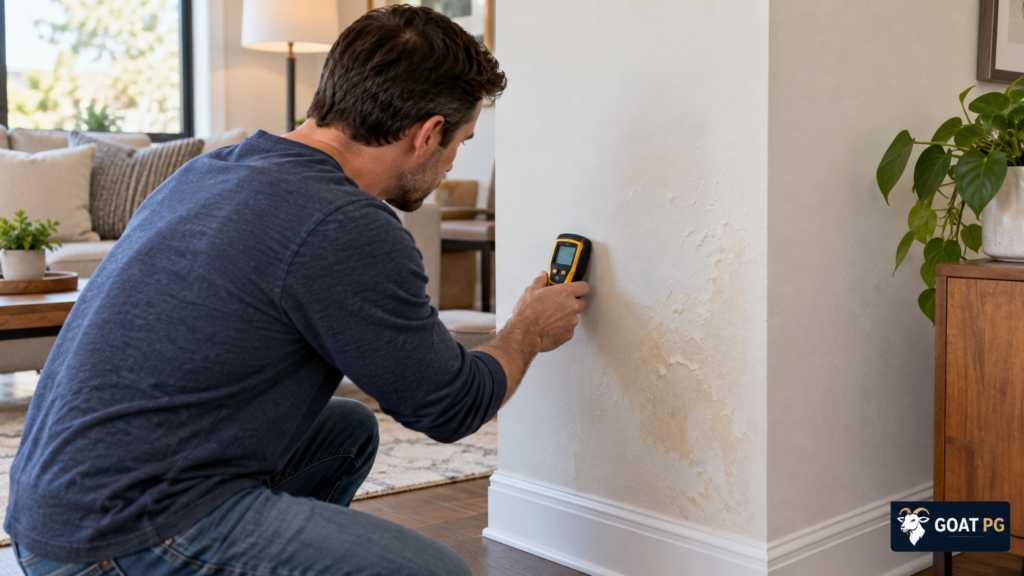
When checking signs of water damage behind walls, start with observation, not demolition. Photograph the area in good light and record when the symptom appears. Check the rooms above, below, and on the other side of the wall. Look under nearby sinks and around appliance hoses, shutoff valves, toilets, tubs, and exterior openings.
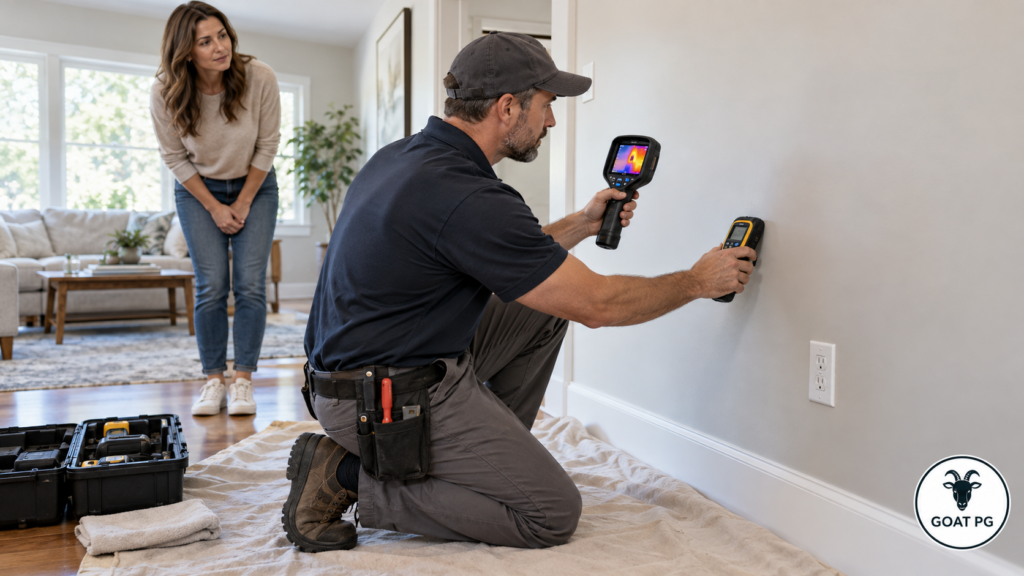
A pinless moisture meter can compare a suspicious area with a known-dry section of the same material. Treat the reading as a comparison rather than a final diagnosis: metal fasteners, foil-backed insulation, wall composition, and calibration can affect results. An infrared camera may reveal temperature differences, but it does not see water directly and can produce false positives from air leaks or insulation gaps.
Avoid cutting inspection holes until utilities have been located and electrical hazards have been addressed. Do not use a household vacuum on suspect mold, and do not point fans into a contaminated wall cavity. If drywall is sagging, keep people and pets away because wet material can fall.
What to do when you find warning signs
- Protect people first. Keep away from wet electrical components, sagging ceilings, contaminated water, and unstable materials.
- Stop the source if it is safe. Close a local shutoff valve or the main water valve for an active plumbing leak. Do not climb onto a wet roof or dismantle energized equipment.
- Document the condition. Take dated photos and notes before moving possessions or opening finishes. This can help a contractor—and may help with an insurance conversation.
- Move dry belongings. Relocate furniture, boxes, and fabrics only when the area is safe. Do not carry visibly contaminated materials through clean rooms without containment.
- Call the right professional. A plumber handles supply and drain leaks; a roofer or building-envelope specialist evaluates rain entry; a water-restoration contractor manages larger wet areas and drying.
- Dry and verify. Repairing the source is only half the job. Materials should be dried or removed as appropriate, and moisture readings should return to a normal comparison range before finishes are replaced.
The EPA’s mold cleanup guidance advises acting quickly on wet materials and fixing the water problem. The correct drying method depends on the water source, the materials involved, how long they were wet, and whether contamination is present.
Can you dry a wet wall without removing drywall?
Sometimes, but not always. A small, clean-water event caught quickly may be dried with controlled airflow and dehumidification after the source is stopped. Drywall that remains structurally sound can occasionally be retained if the cavity and insulation can dry completely and moisture is verified.
Removal is more likely when drywall is soft, swollen, delaminated, contaminated by sewage or floodwater, wet for an extended period, or concealing saturated insulation. Painting over a damp wall traps the problem and makes future inspection harder. A restoration professional can determine whether selective openings are needed and can document drying progress.
When should you call a professional?
Arrange professional help promptly if water is near electricity, the ceiling is bulging, the source is unknown, the leak is active, multiple rooms are affected, materials have been wet for more than a short period, or there is a strong odor or extensive visible mold. Also seek help if the water may contain sewage, chemicals, or outdoor flood contamination.
For a minor stain with no active wetness, you can monitor and investigate calmly—but do not ignore change. A plumber, leak-detection specialist, roofer, electrician, industrial hygienist, or restoration contractor may be appropriate depending on the evidence. Ask what they will inspect, how they will limit unnecessary demolition, and how they will confirm the area is dry before rebuilding.
How to prevent hidden wall damage
- Inspect supply hoses, valves, sink cabinets, and appliance connections regularly.
- Replace damaged caulk and address failed window or exterior seals before rainy weather.
- Keep gutters and downspouts clear and direct water away from the foundation.
- Use bathroom and kitchen exhaust fans that vent outdoors.
- Insulate cold pipes where condensation is a recurring problem.
- Know where the main water shutoff is and make sure household members can identify it.
- Consider leak sensors near water heaters, washing machines, refrigerators, and other high-risk areas.
- Investigate recurring stains and odors instead of repeatedly covering them with paint or fragrance.
Frequently asked questions
How can I tell whether a wall stain is active?
Mark the edge lightly, photograph it, and compare it after rain or after nearby plumbing is used. A moisture meter comparison can add useful evidence. Expansion, darkening, softness, or a rising reading suggests ongoing moisture.
Will a moisture meter find a leak behind drywall?
It can identify unusual moisture patterns, but it cannot prove the exact source. Fasteners, pipes, wall coverings, and insulation can influence readings. Use it with visual clues, timing, plumbing tests, and professional inspection when needed.
Does a musty smell always mean mold behind the wall?
No. Damp carpet, stored fabric, dust, drains, and poor ventilation can also smell musty. However, an odor concentrated near a stained or soft wall is a reasonable reason to investigate hidden moisture.
Can I paint over water stains after the leak is fixed?
Only after the source is repaired, damaged material is addressed, and the wall is fully dry. Then clean and prepare the surface, use a suitable stain-blocking primer, and repaint. Painting too soon can trap moisture and allow the stain to return.
Are signs of water damage behind walls an emergency?
They are urgent when there is active flowing water, electrical exposure, a sagging ceiling, contaminated water, structural movement, or rapidly spreading damage. Otherwise, arrange prompt inspection and prevent further wetting rather than waiting for the problem to become obvious.
Bottom line
The most reliable approach to signs of water damage behind walls is to combine clues: appearance, texture, smell, sound, humidity, timing, and water-use data. Do not start by opening the wall. Protect people, stop the source when safe, document what you see, and bring in the appropriate professional when the cause or extent is uncertain. Early action usually gives you more repair options and a better chance of keeping the damage contained.