Why Is My Smoke Detector Chirping? 8 Causes and Safe Fixes
Why is my smoke detector chirping? A short, repeated chirp usually means the alarm needs attention—not that you should remove it from the ceiling and forget about it. Common causes include a low or loose battery, an expired alarm, dust inside the sensing openings, a power interruption, or a fault code specific to the model.
First, make sure the sound is truly a maintenance chirp. If the alarm is loud and repeating, announces smoke, fire, or carbon monoxide, or you see or smell signs of danger, get everyone outside and call emergency services from a safe location. Do not spend time troubleshooting a possible emergency.
Chirping versus a full smoke or carbon monoxide alarm
Alarm patterns are not universal. A single brief chirp separated by long pauses often indicates a battery, end-of-life, or fault condition. A loud repeating pattern or voice alert may indicate smoke, fire, or carbon monoxide. Combination alarms can use different patterns for different hazards.
Read the label and the exact manufacturer manual for your model. If you cannot confidently identify the signal, treat it seriously: leave the building and contact the fire department or emergency services for guidance. Never assume a sound is harmless because you do not see smoke.
Why is my smoke detector chirping? 8 common causes
1. The replaceable battery is low
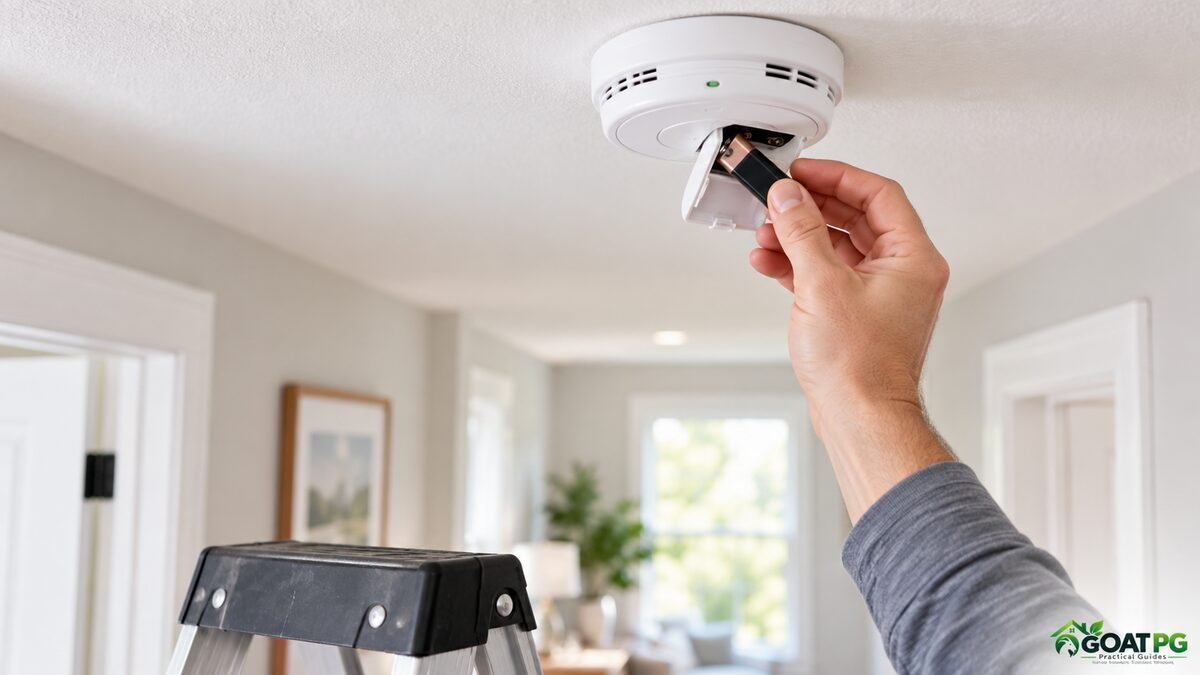
A weakening battery is one of the most common reasons for a periodic chirp. Replace it with the exact battery type listed on the alarm or in its manual. Do not mix an old battery with a new one, and do not use a rechargeable battery unless the manufacturer specifically allows it.
Check the battery’s expiration date and remove any protective tab or packaging. Insert it in the correct direction and close the battery compartment completely.
2. A hardwired alarm has a weak backup battery
Hardwired smoke alarms usually receive household electrical power, but many also contain a backup battery. The alarm can chirp when that backup battery is low even though the ceiling light and other electrical devices work normally.
Use the replacement specified by the manufacturer. If the alarm continues chirping, has no accessible replaceable battery, or shows a wiring fault, contact a qualified electrician or the alarm manufacturer.
3. The battery is loose or the drawer is not fully closed
A fresh battery will not solve the problem if its contacts do not connect or the battery door remains partly open. Remove and reinstall the battery according to the manual. Check that the terminals are clean, the battery sits flat, and the drawer or cover clicks shut.
Do not bend contacts, wedge the compartment closed, or tape over a damaged latch. Replace a damaged alarm with a compatible approved unit.
4. The alarm needs the manufacturer’s reset procedure
Some alarms retain a small electrical charge or fault memory after a battery change or brief power interruption. The correct reset procedure varies. It may involve removing power and holding the test button for a specified time, but you should follow only the instructions for your exact model.
For a hardwired unit, turning off a circuit or disconnecting wiring introduces electrical risk. If the manual requires work beyond a simple accessible battery replacement, use a qualified electrician.
5. The smoke alarm has reached the end of its service life
Smoke alarms do not last forever. The U.S. Fire Administration advises replacing smoke alarms 10 years from the manufacture date. Some sealed-battery units also chirp to indicate end of life.
Look for the manufacture or replace-by date on the back or side of the unit. If it is expired, the date is unreadable, or the manual identifies the pattern as an end-of-life signal, replace the entire alarm. Do not install a new battery in an expired unit and assume it is protected.
6. Dust, insects, or debris are affecting the unit
Dust and small insects can enter the openings of some alarms. Follow the manual’s cleaning method, which may allow gentle vacuuming around the outside vents with a soft brush attachment. Never spray water, household cleaner, compressed air, or insecticide into the alarm unless the manufacturer explicitly permits it.
If dust returns quickly throughout the room, see why your house gets dusty so fast for HVAC filter, entryway, fabric, and cleaning checks.
7. Temperature, steam, or humidity is affecting the alarm
Alarms installed near bathrooms, cooking areas, heating vents, ceiling fans, windows, or poorly insulated spaces may experience steam, drafts, or temperature changes. Depending on the model, these conditions can contribute to nuisance alarms or trouble signals.
Do not relocate an alarm randomly. Placement rules protect sleeping areas and escape routes. Compare the location with the manufacturer instructions and local fire code, and ask the fire department’s nonemergency line or a qualified professional if the position seems unsuitable.
Persistent window moisture can signal a broader humidity issue. Our guide to condensation on bedroom windows explains ventilation, indoor moisture, and failed window-seal clues.
8. There is a power, wiring, interconnection, or device-identification problem
A hardwired alarm may chirp after a power outage, tripped circuit, loose connector, or electrical fault. In an interconnected system, the unit making the sound may not be the one that first detected a problem.
The sound might also come from a carbon monoxide alarm, security sensor, leak detector, appliance, or forgotten alarm stored in a drawer. Identify the exact device before replacing parts. Do not open a hardwired junction box or alter wiring unless you are qualified.
How to stop a smoke detector from chirping safely
1. Confirm there is no emergency
Look and smell for smoke only as you leave; do not search the home during a possible fire. If a smoke or carbon monoxide alarm is sounding, follow your escape plan, stay outside, and call emergency services.
2. Locate the exact alarm
Stand quietly and wait for the next chirp. Check smoke alarms, combination smoke/CO alarms, security sensors, and other devices. In an interconnected system, indicator lights or the manual may help identify the initiating or faulted unit.
3. Read the label and manual
Find the brand, model number, manufacture date, power type, and sound-pattern chart. The manual is the safest source for battery type, cleaning, reset, and replacement instructions.
4. Use safe access
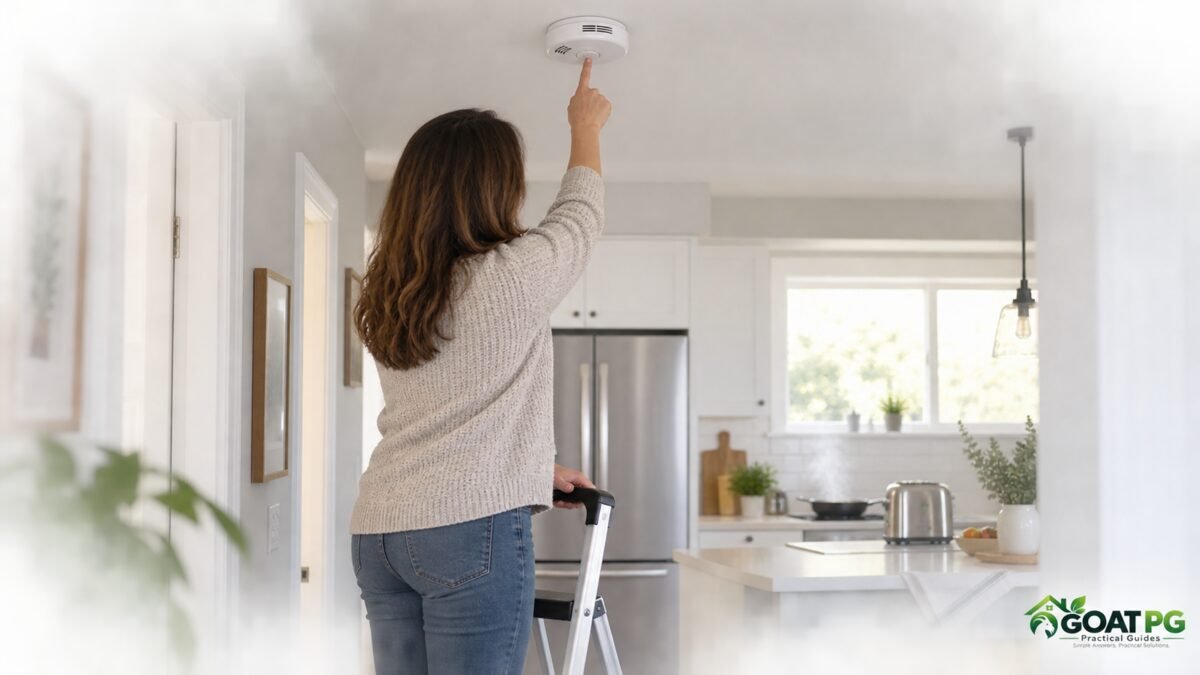
Use a stable step stool or ladder on a level surface and have another adult nearby when appropriate. Do not stand on furniture. If the alarm is on a high or vaulted ceiling, contact a professional or local fire department nonemergency service rather than taking a fall risk.
5. Replace the battery if the model allows it
Use a new battery of the specified type, observe polarity, and close the compartment. Sealed 10-year alarms are not designed for ordinary battery replacement; replace the whole unit when its instructions require it.
6. Clean only as directed
Remove loose dust from exterior openings using the method in the manual. If the alarm is sticky, painted, corroded, water-damaged, or contaminated by construction debris, replacement may be safer than aggressive cleaning.
7. Test the alarm
Use the test button according to the manufacturer’s instructions. Warn other occupants first because interconnected alarms may all sound. If the test fails, replace the alarm or arrange professional service immediately.
8. Replace an expired or faulty unit
Match the new alarm to local requirements and the existing interconnection system. Only qualified electricians should install hardwired smoke alarms, according to the U.S. Fire Administration.
What not to do
- Do not permanently remove the battery to silence the chirp.
- Do not cover the alarm with tape, plastic, paint, or fabric.
- Do not disconnect a hardwired alarm and leave the ceiling unprotected.
- Do not install a different battery chemistry unless the manual approves it.
- Do not spray cleaner, air freshener, insecticide, or lubricant into the unit.
- Do not ignore a carbon monoxide voice alert or alarm pattern.
- Do not rely on a phone app as a replacement for required working alarms.
The U.S. Fire Administration warns that an alarm with a dead or missing battery provides no protection. It recommends monthly testing and replacing the entire smoke alarm every 10 years, while following the manufacturer’s instructions for the specific power type.
Why does the smoke detector chirp at night?
A marginal battery may trigger its warning when the room becomes cooler, but nighttime chirping can also come from an expired unit or fault condition. Replace the battery only if the model has a replaceable one, then follow the manual’s reset and test steps. Do not wait until morning by disabling the alarm.
When to call an electrician, fire department, or manufacturer
Contact a qualified electrician if a hardwired alarm loses power, shows heat damage, has loose wiring, repeatedly trips a circuit, or continues signaling after manufacturer-approved maintenance. Contact the manufacturer when the sound pattern is unclear or a recently installed unit reports a fault.
Your local fire department’s nonemergency line may provide guidance about alarm placement, replacement programs, or safe installation. Use emergency services when an alarm indicates smoke, fire, or carbon monoxide or when anyone has symptoms such as headache, dizziness, nausea, confusion, or breathing difficulty.
Frequently asked questions
Why is my smoke detector chirping after I changed the battery?
The battery may be installed incorrectly, the compartment may not be closed, the alarm may require its model-specific reset, or the unit may have reached end of life. Check the date and manual before trying another battery.
Can I remove the smoke alarm until I buy a new battery?
No. That leaves the area without protection. Install the correct fresh battery immediately or replace the alarm. If you cannot safely reach it, contact someone qualified to help.
Do hardwired smoke alarms have batteries?
Many have backup batteries, though designs vary. Some use replaceable batteries and others have sealed backup power. Check the label and manual for the exact model.
How often should smoke alarms be replaced?
The U.S. Fire Administration recommends replacing smoke alarms 10 years from the manufacture date. Follow any earlier replacement or fault instruction provided by the manufacturer.
Why are several alarms chirping?
They may share the same age, backup-battery schedule, power interruption, or interconnection fault. Identify each signal and check each unit’s date and manual. A qualified electrician can inspect a hardwired interconnected system.
Bottom line
If you are wondering, “Why is my smoke detector chirping?” start by confirming that the sound is not an emergency alarm. Then identify the exact device, follow its manual, replace an approved battery if applicable, clean only as directed, and check the manufacture date. Never silence a safety alarm by removing its power and leaving it disabled.