Why Is My House So Dusty? 10 Causes and Practical Fixes
Why is my house so dusty even when I clean regularly? The usual answer is not one single source. Dust enters through doors and windows, rides in on shoes and pets, sheds from fabrics, settles from the air, and can be redistributed by cleaning tools or a poorly maintained HVAC system.
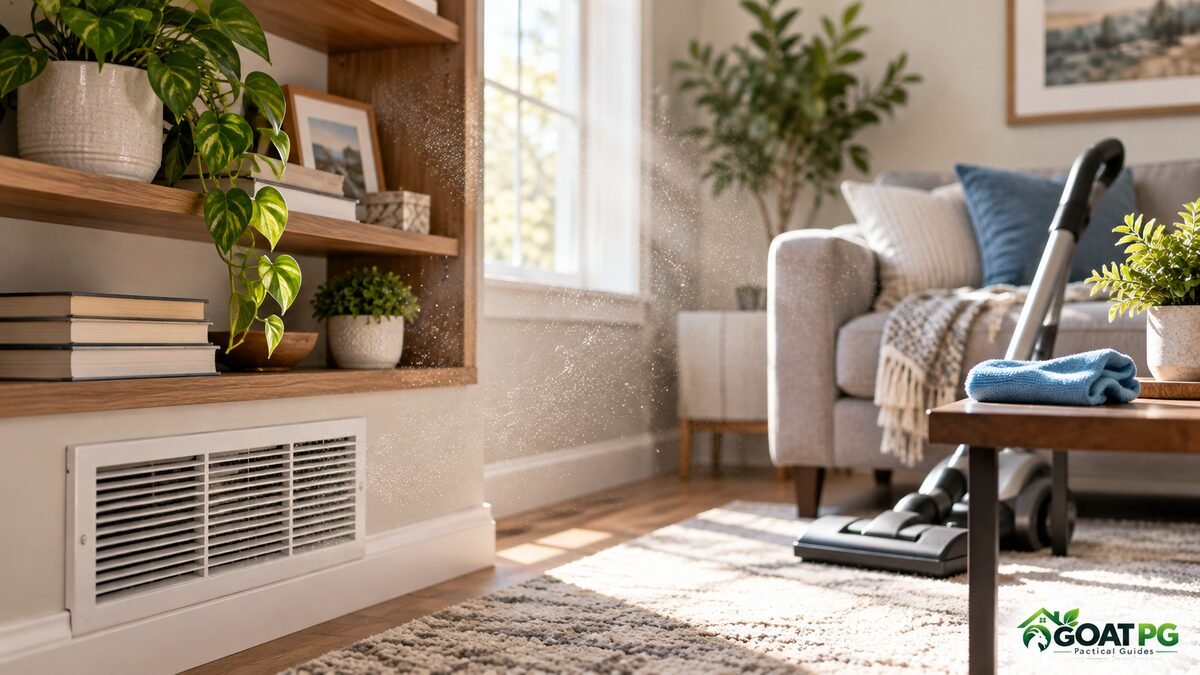
You cannot make a lived-in home completely dust-free, but you can reduce how quickly dust returns. The most effective approach is to find the main source, stop particles from spreading, and clean in an order that removes dust instead of moving it from one surface to another.
What is household dust?
Household dust is a changing mixture of tiny particles. It may include outdoor soil and pollen, fibers from clothing and furniture, pet hair and dander, cooking particles, crumbs, and material created by normal wear inside the home. The exact mix depends on the building, climate, occupants, pets, ventilation, and nearby outdoor activity.
A gray layer that forms slowly is usually ordinary dust. A sudden coating of white powder, black soot, sawdust, or debris from one vent deserves closer attention because it may point to construction work, combustion, deteriorating material, or an HVAC problem.
Why is my house so dusty? 10 common causes
1. Outdoor dirt is entering at doors and windows
Every open door or window allows some outdoor particles to enter. Drafts around frames can also carry dust indoors even when they are closed. Homes near busy roads, construction, dry landscaping, or agricultural areas may notice faster buildup during certain weather conditions.
Use doormats on both sides of frequently used entrances, remove outdoor shoes, and check weatherstripping for visible gaps. Do not permanently seal required ventilation openings.
2. Shoes, clothing, bags, and pets carry particles inside
Dirt does not need to blow through a window. It also arrives on footwear, jackets, backpacks, pet paws, and shopping bags. High-traffic entryways then spread it to other rooms.
Create a simple landing zone near the door. Store shoes there, shake or brush dirty items outdoors when appropriate, and wipe muddy pet paws before they cross the house.
3. The HVAC filter is dirty, missing, or incorrectly fitted
A central heating and cooling system moves large volumes of air. If the filter is overdue for replacement, installed backward, missing, or leaving a gap around its frame, particles can circulate more easily.
Use the filter type and replacement schedule recommended by the equipment manufacturer. A very restrictive filter is not automatically better; it can reduce airflow if the system is not designed for it. Ask an HVAC professional which efficiency rating your equipment can safely handle.
4. Air is leaking around ducts or return grilles
Leaks on the return side of a duct system may draw dusty air from an attic, basement, crawl space, or wall cavity. Gaps around a filter rack or return grille can have a similar effect. Warning signs include dust concentrated near vents, visible gaps, or an unusual increase after the system turns on.
Duct diagnosis is not a reason to enter an unsafe attic or open sealed equipment. A qualified HVAC technician can inspect pressure, filter fit, and accessible duct connections.
5. Dry dusting and some vacuums put particles back into the air
A feather duster or dry cloth often lifts dust without capturing all of it. Likewise, a vacuum with a poor seal, damaged filter, or overfilled bin may exhaust fine particles back into the room.
Use a clean, slightly damp microfiber cloth on compatible hard surfaces. Maintain the vacuum according to its manual, empty it before it is overfilled, and check that filters and seals are correctly installed.
6. Carpets, curtains, bedding, and upholstery hold dust
Soft materials trap fibers and particles, then release some of them when people walk, sit, make the bed, or open curtains. Bedrooms may become dusty quickly because they contain bedding, clothing, rugs, and upholstered furniture in a small area.
Wash bedding on the care-label schedule, vacuum suitable upholstery and rugs, and clean curtains or blinds as their manufacturer recommends. If the room also smells stale, see why a bedroom smells musty before trying to cover the odor with fragrance.
7. Pets add hair, dander, and outdoor debris
Even a clean pet contributes hair and skin particles, and paws can carry soil and pollen indoors. Pet beds and favorite furniture collect more material than many owners expect.
Groom pets using veterinarian-appropriate methods, wash washable pet bedding, and vacuum the areas they use most. Do not use scented powders or essential oils around animals unless a veterinarian confirms they are safe.
8. Renovation or repair work is creating fine debris
Drywall sanding, drilling, cutting wood, replacing flooring, and other projects can create dust that travels beyond the work area. It may settle for days if it entered the HVAC system or soft furnishings.
Isolate the work zone, follow the tool and material safety instructions, and use proper dust collection. In an older home, do not sand, scrape, or vacuum unknown painted or textured materials until you understand the risk of lead or asbestos and local testing requirements.
9. Clutter creates more surfaces and harder-to-clean spaces
Open shelves, decorative objects, piles of paper, exposed cables, and items stored under furniture create edges where dust collects. They also make thorough cleaning slower, so hidden buildup is more likely.
You do not need a minimalist home. Group small items in washable containers, keep floors accessible, and rotate cleaning of shelves and storage areas.
10. Cleaning order is working against you
Dust falls while you clean. If you vacuum first and wipe a ceiling fan afterward, the floor becomes dirty again. Cleaning without allowing airborne particles to settle can also make it look as if dust returned immediately.
Work from high surfaces to low surfaces, finish with the floor, and clean one room at a time. Use slow movements rather than snapping cloths or shaking bedding indoors.
How to reduce dust in your house
1. Find the rooms where dust returns fastest
Clean several test surfaces, then compare them after two or three days. A room near an exterior door suggests outdoor entry. Dust concentrated around supply registers suggests an HVAC or airflow issue. Heavy buildup in a bedroom often points toward fabrics, bedding, or an overfilled closet.
2. Clean from top to bottom
Start with ceiling fans, high shelves, door frames, and the tops of cabinets. Continue with furniture and baseboards, then vacuum or mop the floor last. This sequence captures particles that fall during the job.
3. Capture dust instead of scattering it
Use a slightly damp microfiber cloth where the surface allows it. Fold the cloth into sections and switch to a clean area as it becomes dirty. Rinse or wash reusable cloths after use and dry them completely. If cleaning cloths develop odors, our guide explains why towels smell after washing and how drying habits contribute.
4. Maintain the vacuum
Check the brush roll, hose, bin, bag, filters, and seals. Use attachments suited to the surface and move slowly enough for the machine to collect debris. A vacuum marketed with a high-efficiency filter still needs a well-sealed body and regular maintenance.
5. Check the HVAC filter and fit
Turn the system off as the manufacturer directs before opening the filter compartment. Confirm the filter size, orientation arrow, and fit. Replace or clean it only according to the equipment instructions. If dust bypasses the edges or the system loses airflow, call an HVAC professional.
6. Reduce what enters at the door
Use effective entry mats, remove shoes, and sweep the threshold regularly. Repair worn weatherstripping around exterior doors and windows while preserving required ventilation and safe equipment clearances.
7. Wash dust-holding fabrics
Follow care labels for bedding, washable curtains, throws, pet beds, and removable cushion covers. Do not overload the washer, and dry items fully before returning them to the room.
8. Consider filtration as a supplement
The U.S. Environmental Protection Agency explains that portable air cleaners and HVAC filters can reduce some indoor particles, but they cannot remove every pollutant. Choose a portable unit sized for the room and maintain it according to its manufacturer.
Filtration works best after reducing the main sources. The EPA describes source control, ventilation, and filtration as the three basic strategies for improving indoor air quality. An air cleaner cannot compensate for active renovation dust, an open leak, or a badly fitted HVAC filter.
A practical weekly dust-control routine
- Clear entry mats and the area around exterior doors.
- Wipe frequently used hard surfaces with a suitable microfiber cloth.
- Vacuum high-traffic floors, rugs, and pet areas.
- Check ceiling fans, vents, and window sills for buildup.
- Wash bedding and cleaning cloths according to their care labels.
- Empty the vacuum and inspect its filter when required.
- Look at the HVAC filter on the schedule recommended for your system.
Homes with pets, nearby construction, open windows, allergies, or heavy traffic may need some tasks more often. Other rooms may need less frequent attention.
When excessive dust needs professional help
Contact an HVAC professional if dust blows visibly from vents, the filter does not fit, debris appears only when the system runs, or you suspect a disconnected return duct. Speak with a qualified building professional if powder appears after ceiling or wall damage.
Stop disturbing unknown material if you suspect lead paint, asbestos-containing material, or contamination from fire or sewage. Specialized testing and cleanup may be required. For persistent cough, wheezing, or allergy symptoms, seek advice from a healthcare professional rather than relying only on cleaning products or an air purifier.
Frequently asked questions
Why does dust come back one day after cleaning?
Airborne particles may still be settling, or your cleaning method may be redistributing them. Check outdoor entry points, fabrics, the vacuum, HVAC filter fit, and the order in which you clean.
Does opening windows reduce dust?
It can improve ventilation when outdoor air is clean, but it may increase indoor dust when pollen, smoke, traffic particles, or construction debris are present. Consider outdoor conditions before opening windows.
Will an air purifier remove all house dust?
No. A suitable purifier can capture some airborne particles in the room where it operates, but much household dust has already settled on surfaces. Source control and regular cleaning are still necessary.
Should I clean air ducts because my house is dusty?
Not automatically. First check the filter, filter fit, visible registers, cleaning methods, and entry points. If you see debris blowing from vents or suspect leakage or contamination, ask a qualified HVAC professional to inspect the system.
Is dust worse in carpeted homes?
Carpet can hold particles that hard flooring would leave visible, but actual buildup depends on traffic, vacuum performance, pets, outdoor entry, and maintenance. Clean each floor type using methods recommended by its manufacturer.
Bottom line
If you keep asking, “Why is my house so dusty?” look beyond the nearest shelf. Control dirt at entrances, capture dust with appropriate tools, maintain fabrics and filters, and investigate unusual buildup near vents. Small changes at the main source usually work better than dusting the same surfaces every day.