Why Is My Bathroom Fan Not Removing Moisture? 9 Causes and Fixes
A bathroom fan not removing moisture usually has one of a few causes: it is not running long enough, the grille is clogged with dust, the duct or exterior flap is restricted, the room cannot draw in replacement air, or the fan is too small for the space. A fan that makes noise is not necessarily moving enough air.
Start with simple, low-risk checks. Run the fan during the shower and afterward, confirm that air is actually being pulled through the grille, and look for obvious dust or a stuck exterior vent cover. If the fan is wired incorrectly, vents into an attic, or needs ductwork changes, use a qualified electrician or HVAC professional.
Signs your bathroom fan is not removing moisture
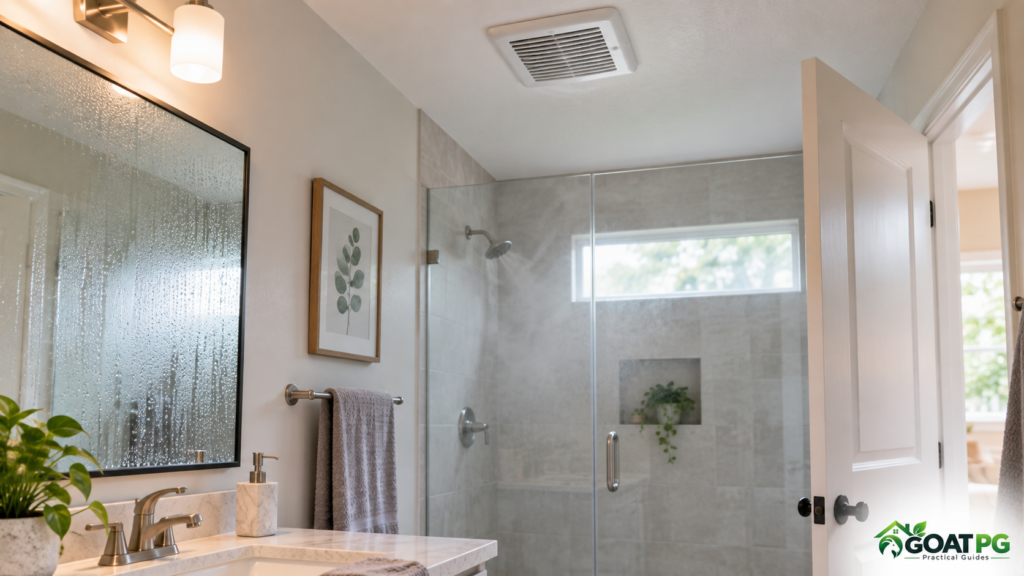
A mirror that fogs briefly does not always mean the fan has failed. Pay attention to how long the room stays wet and whether moisture is beginning to damage surfaces. Common warning signs include:
- Steam remains in the room long after a shower.
- Water collects on the ceiling, walls, or window.
- Paint peels or drywall becomes soft.
- The fan sounds normal but barely holds a light tissue near the grille.
- The room develops a persistent damp odor.
- The exterior vent flap does not open while the fan runs.
- Mildew returns soon after cleaning.
If odor is the main symptom, use our related guide to diagnose why your bathroom smells damp. Moisture may also come from a plumbing leak, wet towels, or a cold surface—not only from the exhaust fan.
Why is my bathroom fan not removing moisture?
1. The fan is switched off too soon
A bathroom fan needs time to remove moisture that remains in the air and on wet surfaces. Run it while bathing or showering and continue afterward until the room feels dry and the mirror begins to clear. A timer or humidity-sensing switch can make consistent operation easier.
There is no single perfect run time for every bathroom. Shower length, climate, room size, duct design, and fan capacity all affect drying. If the room is still humid after a reasonable period, look for another cause instead of simply leaving an ineffective fan running for hours.
2. The grille is blocked with dust
Dust and lint can coat the cover and reduce the open area through which air enters. A clogged grille may also make the fan louder. Switch the fan off at the breaker before removing a cover or cleaning near electrical parts. Follow the manufacturer’s instructions, use a vacuum or damp cloth on removable non-electrical parts, and let everything dry fully before reassembly.
Do not spray cleaner into the motor housing. If the cover will not release easily or wiring is visible, stop and call a professional.
3. The exterior vent flap is stuck
The duct should normally terminate outdoors. At the exterior outlet, a flap or damper should open when the fan runs and close when it stops. Paint, debris, insects, corrosion, or a damaged hood can prevent movement.
Inspect only from a safely accessible location. Do not climb onto a roof or unstable ladder. If the outlet is high, hidden, or difficult to reach, have an HVAC professional check it.
4. The duct is blocked, crushed, or disconnected
A long duct with several bends creates resistance. Crushed flexible duct, heavy dust, a disconnected joint, or a closed damper can reduce airflow even when the motor sounds strong. A disconnected duct may also dump moist air into a ceiling cavity or attic.
The U.S. Environmental Protection Agency recommends using bathroom exhaust fans to move moisture outdoors, not into an attic. Duct inspection and repair may require safe attic access and knowledge of local building rules, so this is usually a professional task.
5. The bathroom cannot get enough replacement air
For the fan to exhaust air, new air must enter the bathroom. A tightly sealed door with almost no undercut can restrict that flow. The Home Ventilating Institute notes that bathroom doors commonly need clearance at the floor to provide makeup air.
As a quick diagnostic test, run the fan with the bathroom door slightly open. If airflow improves noticeably, ask a qualified professional about a permanent, code-appropriate way to provide replacement air. Do not cut a door or wall without checking fire, privacy, and ventilation requirements.
6. The fan is undersized
Fan capacity is measured in cubic feet per minute, or CFM. The Home Ventilating Institute’s consumer guidance recommends at least 50 CFM for bathrooms up to 50 square feet and about 1 CFM per square foot for bathrooms from 50 to 100 square feet. Large bathrooms and enclosed fixture areas may need additional capacity.
The rating on the box assumes test conditions. Long ducts, tight bends, small duct diameter, and restrictive caps can reduce real-world airflow. A contractor can calculate the needed capacity and confirm that the duct matches the fan.
7. The fan is poorly positioned
A fan placed far from the shower or behind a beam may pull dry air from the doorway while steam collects elsewhere. Fans approved for the location are generally most effective near the main moisture source, but electrical and building-code restrictions apply around tubs and showers.
Relocating a fan is not a simple cosmetic change. It can involve wiring, ceiling work, duct routing, and wet-location ratings, so use a licensed professional.
8. The motor or impeller is failing
A worn motor may hum, rattle, start slowly, or spin without reaching normal speed. A loose or damaged impeller can also move less air. Turn the unit off if it smells hot, sparks, trips a breaker, or makes a new grinding sound.
Some fan assemblies allow a manufacturer-approved motor module to be replaced, while others require a complete new unit. Match parts to the exact model and let an electrician handle any uncertain wiring.
9. The moisture source is larger than the fan can handle
Very long hot showers, a leaking supply pipe, wet bath mats, towels that stay bunched up, or humid outdoor air can keep the room damp. Spread towels so they dry, wipe standing water from shower walls, repair leaks, and avoid leaving saturated fabrics in the room.
If towels develop a sour odor even after laundering, see why towels smell after washing for washing-machine, detergent, and drying checks.
How to test bathroom fan airflow safely
- Close exterior windows in the bathroom and switch the fan on.
- Hold a single square of light tissue near the grille without pushing it inside.
- Notice whether the grille gently holds the tissue.
- Repeat with the bathroom door slightly open.
- If safely accessible from ground level, look for movement at the exterior vent flap.
This is only a basic comparison, not a measurement of CFM. A tissue that stays in place shows suction at the grille, but it does not prove the system is correctly sized or vented outdoors. An HVAC technician can measure airflow with appropriate equipment.
Safe fixes you can try first
- Run the fan during the shower and until the room clears afterward.
- Open the door slightly as a temporary airflow test.
- With power isolated, clean an accessible removable grille according to the manual.
- Spread wet towels and bath mats so they dry fully.
- Use a squeegee to remove water from shower walls and glass.
- Check for visible leaks around the toilet, sink, tub, and shower.
- Confirm that the exterior flap is not visibly stuck, if it is safely reachable.
A dehumidifier can help a persistently humid home, but it should not be used to hide a disconnected exhaust duct or active leak. Keep the unit outside splash zones and follow its electrical and drainage instructions.
When to call an electrician or HVAC professional
Arrange professional help if the fan trips a breaker, smells hot, sparks, has exposed wiring, or stops unexpectedly. An HVAC contractor should inspect a fan that has weak measured airflow, a blocked or disconnected duct, an inaccessible exterior outlet, or moisture entering the attic.
Also get help when paint continues to peel, the ceiling feels soft, water stains spread, or visible growth covers a large or recurring area. Fix the moisture source before repairing finishes.
Frequently asked questions
Why is my bathroom fan running but the mirror still fogs?
The fan may be undersized, restricted by dust or ductwork, short of replacement air, or too far from the shower. Brief fogging can occur even with a working fan, but the room should begin clearing after the shower.
How long should I leave the bathroom fan on?
Run it during bathing and afterward until humidity and visible condensation fall. The exact time varies by bathroom, fan, climate, and shower habits. A timer or humidity sensor can help.
Should a bathroom fan vent into the attic?
No. Moist air should be ducted outdoors through an appropriate termination. Venting into an attic can move the moisture problem into insulation and structural materials.
Does opening the bathroom door help?
It can improve replacement airflow and is useful as a diagnostic test. If the fan works much better with the door open, ask a professional about a permanent solution that meets local requirements.
Can I replace a bathroom exhaust fan myself?
Some simple motor modules are designed for straightforward replacement, but new wiring, duct changes, wet-location installation, and ceiling alterations should be handled by qualified professionals. Always follow the exact manufacturer instructions and local code.
Bottom line
A bathroom fan not removing moisture needs more than a longer run time if airflow is restricted or the system is poorly sized. Start with the grille, replacement air, exterior flap, and everyday moisture sources. For duct, wiring, placement, or sizing problems, professional inspection is the safest route.