How Often Should You Change Your Air Filter? 8 Warning Signs
How often should you change your air filter? For most homes with a central furnace, air conditioner, or heat pump, a practical starting point is to inspect the filter every month and replace it at least every three months. That is a baseline, not a deadline: pets, wildfire smoke, renovation dust, allergies, and heavy heating or cooling use can make a filter dirty much sooner.
The right schedule depends on what the filter looks like, what the equipment manufacturer recommends, and how your household uses the system. A clean filter supports normal airflow, while a heavily loaded filter can make the blower work harder. This guide helps you set a realistic replacement routine, recognize warning signs, and install the new filter safely.
Instead of treating how often should you change your air filter as a fixed calendar rule, combine the monthly inspection with the maximum interval listed for your filter and equipment.
Quick answer
If you want a simple answer to how often should you change your air filter, check it once a month and plan to replace a typical disposable filter every 1 to 3 months. ENERGY STAR recommends checking monthly during heavy-use seasons and changing the filter at least every three months. Replace it sooner if it is visibly dirty, airflow has weakened, or your home has pets, smoke, construction dust, or a household member who is sensitive to airborne particles.
Table of Contents
How often should you change your air filter? A practical schedule
No single number fits every filter and every home. The schedule printed on the filter package is useful, but conditions inside the house matter more than the calendar alone. Start with the ranges below, then shorten or lengthen the interval based on monthly inspections and the instructions for your HVAC system.
| Home condition | Starting schedule | What to do |
|---|---|---|
| Typical home, average use | Every 2 to 3 months | Inspect monthly and replace sooner if dirty |
| One pet | About every 1 to 2 months | Watch for hair and dust loading |
| Multiple pets or shedding breeds | About every month | Check more often during shedding seasons |
| Allergy or asthma concerns | Often every 1 to 2 months | Follow medical advice and system specifications |
| Wildfire smoke or heavy outdoor pollution | As soon as visibly loaded | Inspect frequently during and after the event |
| Renovation, sanding, or drywall work | During and after the project | Keep dust out of the system and replace when work ends |
| Vacation home with little system use | Potentially longer | Still inspect before the next heavy-use season |
These are planning ranges, not substitutes for the equipment manual. ENERGY STAR’s heating and cooling guidance says to check the filter every month, especially in winter and summer, replace it when it looks dirty, and change it at least every three months. A filter manufacturer may specify a different interval for a particular product.
How often should you change your air filter during mild weather? Use the shortest applicable interval and let monthly inspections guide the final timing.
When deciding how often should you change your air filter, use the shortest applicable interval. A home with two dogs, summer wildfire smoke, and a frequently running air conditioner will load a filter faster than an unoccupied home in mild weather.
Six factors that change the replacement interval
1. Filter thickness and design
Thin 1-inch disposable filters usually have less surface area than deeper media filters, so they may need attention sooner. A 4- or 5-inch filter can sometimes last longer, but only if the system is designed for it. Do not force a thicker filter into a narrow slot or assume that a more expensive product automatically lasts longer.
2. Pets and household activity
Pet hair, dander, tracked-in soil, cooking particles, candles, and frequent opening of doors can all increase the load. Large households also tend to create and stir up more dust. If you are already asking how often should you change your air filter because surfaces get dusty soon after cleaning, begin with monthly checks.
Dust can have several sources besides the HVAC system. Our guide to why a house gets so dusty covers entryway dirt, bedding, leaky ducts, outdoor particles, and cleaning habits.
3. Heating and cooling runtime
A filter collects particles only while air moves through it. Long summer cooling cycles and cold-weather heating cycles send more air through the media, which can load it faster. Check monthly during seasons when the equipment runs for many hours a day.
System runtime is one reason how often should you change your air filter can differ between neighboring homes that use the same filter size.
4. Smoke, pollen, and outdoor air
Wildfire smoke, seasonal pollen, road dust, and nearby construction can shorten filter life. The U.S. Environmental Protection Agency advises changing filters periodically and replacing them when they appear dirty; heavy pollution and longer system runtime can make that happen more quickly.
5. Renovation or repair work
Drywall sanding, cutting wood, removing old flooring, and other dusty work can overwhelm a filter. Seal off registers in the work zone when appropriate, follow contractor guidance, and avoid running the HVAC system when airborne construction dust is heavy. Inspect the filter during the project and replace it afterward.
6. Moisture and equipment problems
A filter is not a solution for a leak, condensation problem, or mold source. If a filter is damp, shut the system off and investigate why. Water near electrical or HVAC equipment calls for professional help. Related guides explain signs of hidden water damage and why condensation forms on bedroom windows.
Eight signs your HVAC filter needs changing
A calendar is only a starting point for how often should you change your air filter. The following signs help you decide whether the filter has reached the end of its useful life sooner than expected.
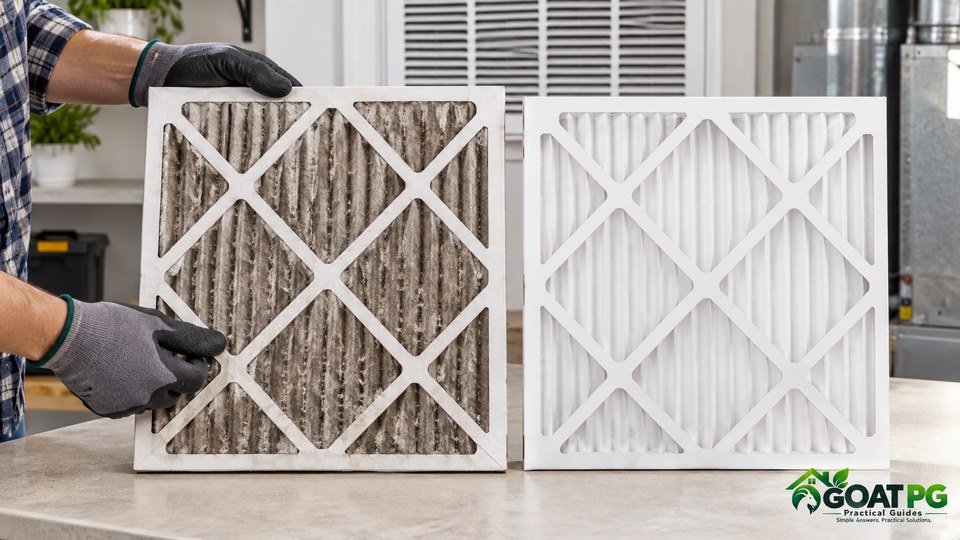
1. The filter is visibly gray or packed with dust
Hold the filter in good light without shaking it. A used filter will not remain perfectly white, but thick gray loading, matted pet hair, or debris covering most of the pleats means it is time to replace it. Appearance is more useful than trying to judge the filter by smell.
2. Airflow from the vents feels weaker
A dirty filter can restrict airflow, but it is not the only possible cause. Closed dampers, blocked returns, duct issues, a dirty coil, or a blower problem can create similar symptoms. Replace a dirty filter first; if airflow remains weak, arrange professional diagnosis rather than removing the filter and running the system unprotected.
3. The system runs longer than usual
Long cycles can happen during extreme weather, but a clogged filter adds resistance. If the thermostat setting, outdoor conditions, and household routine have not changed, inspect the filter. A persistent problem may require HVAC service.
4. Dust returns quickly after cleaning
Rapid dust buildup may mean the filter is full, installed incorrectly, poorly fitted, or bypassed by air around the frame. It can also point to leaky ducts or other sources. Check the size, direction, and fit when installing the replacement.
5. Energy use rises without an obvious reason
A dirty filter can make the system work harder, but utility bills also change with weather, rates, thermostat settings, and equipment condition. Treat a sudden increase as a clue, not proof. Inspect the filter and compare usage with similar weather periods.
6. The old filter is bent, collapsed, or damp
A distorted filter may be the wrong size, installed backward, or subjected to excessive pressure. A wet filter needs immediate attention because moisture should not be sitting in the return path. Replace it and identify the cause before normal operation resumes.
7. Allergies seem worse indoors
Changing a loaded filter may help reduce particles, but filters do not eliminate every indoor pollutant or cure allergy and asthma symptoms. The EPA explains that HVAC filters can supplement source control and ventilation, but they cannot remove all pollutants. Seek medical advice for persistent or severe symptoms.
8. The replacement reminder has arrived
A phone or thermostat reminder prevents a forgotten filter from staying in place for six months or a year. Record the installation date on the frame or in a maintenance app. The reminder is your cue to inspect, not a command to discard a filter that the manufacturer says is reusable.
How to replace a central HVAC filter safely
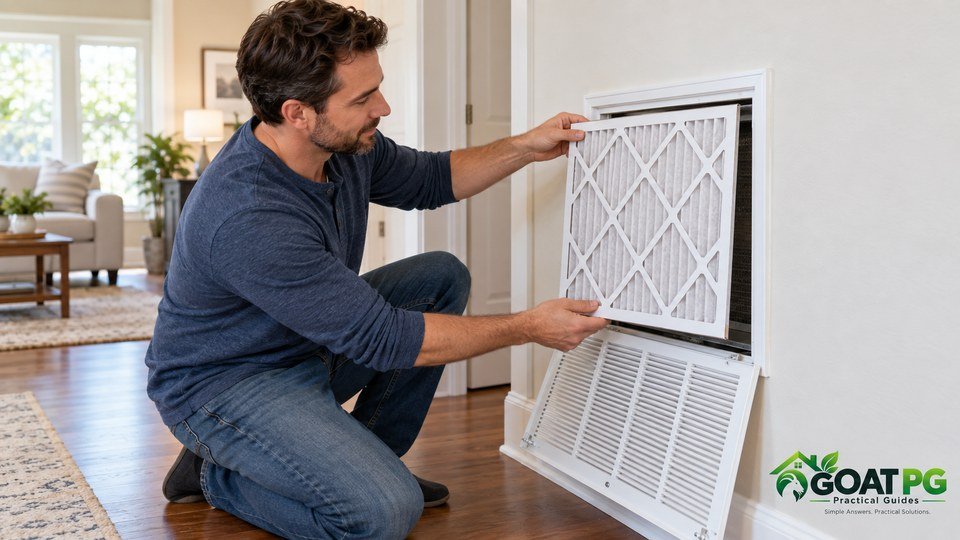
- Turn the system off. Use the thermostat’s off setting and follow the equipment manual. Do not open service panels that expose electrical components.
- Find the filter location. Common locations include a large return grille, a slot beside the air handler, or the furnace cabinet. If you cannot identify it, consult the manual or an HVAC professional.
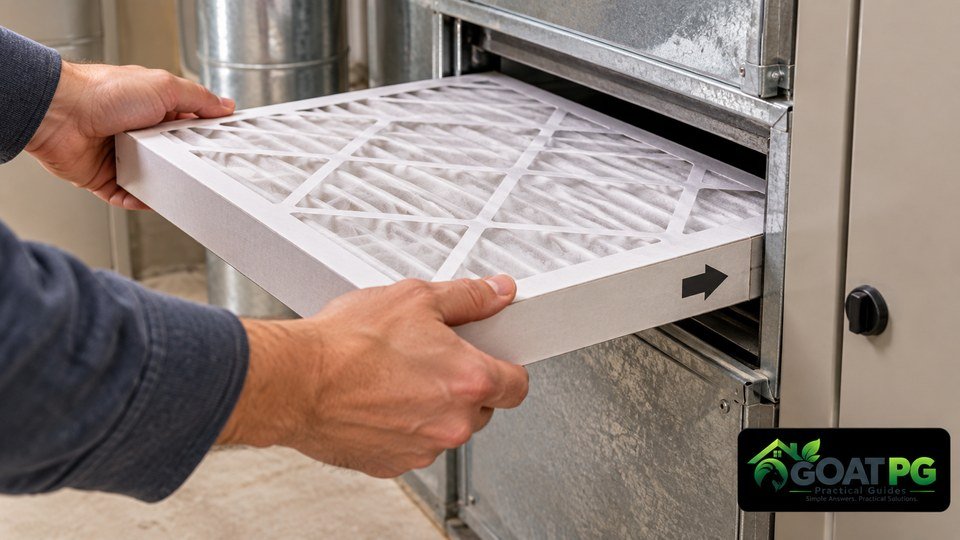
- Note the size and airflow direction. Photograph the old filter before removal. Match all three dimensions exactly and locate the arrow printed on the frame.
- Remove the old filter gently. Avoid shaking captured dust through the room. Place it directly in a trash bag. During heavy smoke conditions, follow current local and EPA guidance for protective equipment.
- Clean the accessible grille. Vacuum loose dust from the return grille or wipe it with a lightly damp cloth. Do not spray cleaner into ducts or equipment.
- Install the new filter. The airflow arrow normally points toward the blower and away from the return-air opening. The filter should fit without crushing, bending, or large gaps.
- Close the grille or filter cover. Make sure all latches are secure, then restore normal thermostat operation.
- Record the date. Set a monthly inspection reminder and keep the model, size, and manufacturer instructions for the next replacement.
How to choose the right replacement filter
Use the exact dimensions and filter type specified for your equipment. A higher efficiency rating is not automatically better if the blower and filter slot cannot handle the added resistance. The EPA recommends checking the HVAC manual or consulting a professional before changing filter efficiency, and choosing as efficient a filter as the system can accommodate.
The EPA’s explanation of MERV ratings notes that filters require periodic replacement and that manufacturer maintenance instructions should be followed. If you want to move to MERV 13 or another higher-efficiency filter, confirm compatibility with the system rather than relying on a universal online chart.
Washable filters are different from disposable pleated filters. Clean a reusable filter only as its manufacturer directs, allow it to dry completely, and never reinstall it wet. Do not wash a disposable filter; water can damage the media and frame.
Common air-filter mistakes to avoid
- Waiting only for a calendar date. A filter may load early during smoke, shedding, or heavy system use.
- Installing it backward. Follow the airflow arrow and the equipment manual.
- Buying the wrong dimensions. A loose fit lets air bypass the media; forcing an oversized filter damages it.
- Choosing the highest MERV rating without checking compatibility. Excessive resistance can reduce airflow in a system not designed for that filter.
- Running the system with no filter. This can allow dust to reach equipment and ductwork.
- Spraying fragrances or cleaners on the filter. Chemicals can be distributed through the home and may damage the media.
- Ignoring a wet filter. Find and correct the moisture source instead of installing another filter and hoping the problem disappears.
- Expecting filtration to fix a musty home. Moisture control is essential; see why a house smells musty after rain for leak and humidity checks.
Frequently asked questions
How often should you change your air filter with pets?
Begin by checking it every month. One pet may lead to replacement every one or two months, while multiple shedding pets can require monthly changes. The actual condition of the filter and the manufacturer’s instructions matter more than a fixed pet-based rule.
How often should you change your air filter in summer?
Inspect it monthly during the cooling season because long air-conditioning cycles move more air through the filter. If it looks dirty after one month, replace it. If it remains relatively clean and the manufacturer allows a longer interval, continue monthly checks.
How often should you change your air filter in winter?
Check it monthly when the furnace or heat pump runs heavily. Homes in mild climates may load filters more slowly, but holiday cooking, candles, closed windows, and more time indoors can add particles. Replace the filter when dirty and respect the manufacturer’s maximum interval.
How often should you change your air filter with allergies?
Monthly inspection is a sensible starting point, and replacement may be needed every one or two months when the filter loads quickly. Filtration is only one part of indoor-air management, so reduce pollutant sources, ventilate appropriately, and follow advice from a qualified medical professional for ongoing symptoms.
How often should you change your air filter in an apartment?
Use the equipment or lease instructions and check the filter monthly. Ask the property manager who is responsible for supplying and replacing it. Cooking, pets, smoke, nearby construction, and system runtime can shorten the interval just as they do in a detached home.
Can an HVAC filter last six months?
Some deep media filters in compatible systems may have longer manufacturer-rated intervals, but a thin disposable filter in an active household often will not. Verify the filter type, equipment manual, and visible condition. Do not assume six months based only on advertising.
Should I change the filter if it does not look dirty?
Follow the manufacturer’s maximum interval even when the surface looks fairly clean. Fine particles can load the media without creating an evenly dark appearance. If the system has barely run, the manual may permit a longer interval, but keep inspecting monthly.
Which way should the airflow arrow point?
The arrow generally points in the direction the air travels: toward the blower or air handler and away from the return grille. Photograph the old filter before removing it, and check the equipment label or manual if the direction is not obvious.
Does changing the air filter remove a musty smell?
Replacing a dirty filter may remove some captured particles, but it will not fix a moisture source, active mold growth, a dry drain trap, or a hidden leak. The EPA emphasizes source control and ventilation. Investigate the cause if the odor persists.
Is a more expensive filter always better?
No. The best filter is properly sized, compatible with the system, and maintained on schedule. A very restrictive filter can create airflow problems in equipment not designed for it. Confirm the allowed efficiency range before upgrading.
Bottom line
The safest answer to how often should you change your air filter is to inspect it every month and replace it at least every three months, or sooner when it is visibly dirty or household conditions demand it. Let the system manual and filter instructions set the limits. Pets, smoke, renovation dust, and long heating or cooling cycles usually shorten the interval. A correct size, proper airflow direction, and a simple reminder are more valuable than chasing a universal number.
When someone asks how often should you change your air filter, the most reliable answer is a repeatable inspection routine supported by the manufacturer’s instructions—not a one-size-fits-all number.