Why Is My Refrigerator Leaking Water? 9 Causes and Safe Fixes
If you’re wondering why is my refrigerator leaking water, don’t ignore the puddle. A small leak can come from something as simple as a poorly seated water filter, but it can also point to a clogged defrost drain, damaged water line, or another problem that needs repair.
The good news is that you can often narrow down the cause by looking at where the water appears.
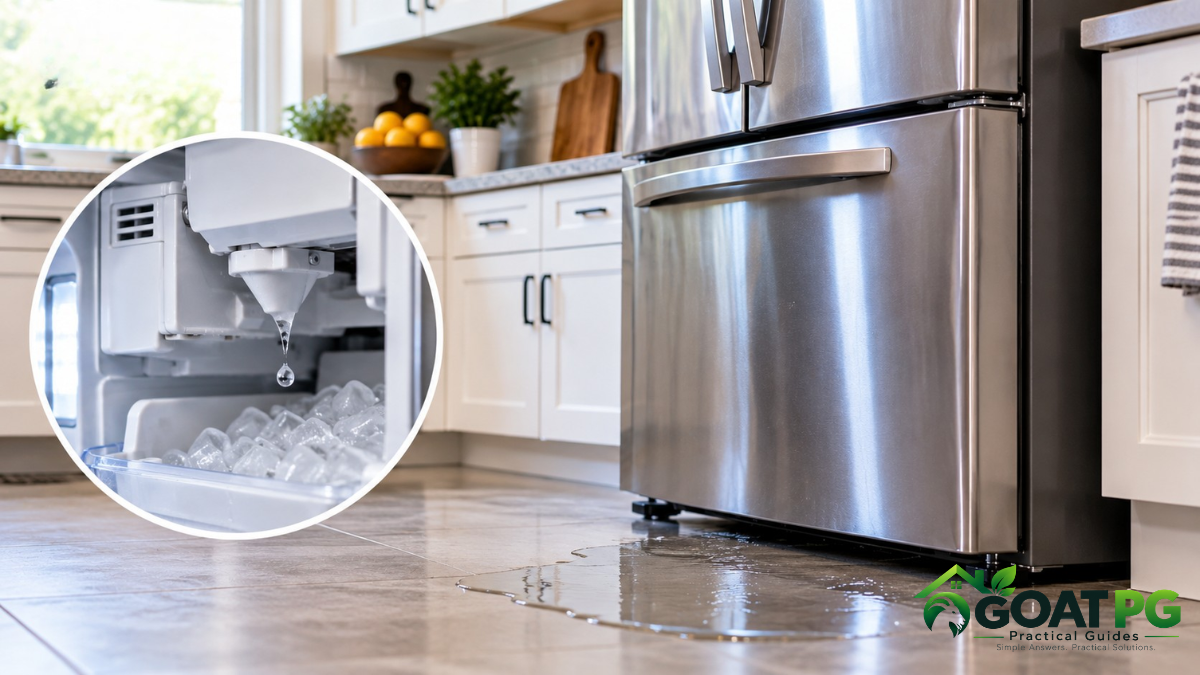
Water inside the refrigerator usually suggests a different problem from water behind the appliance or underneath it. Before taking anything apart, use the steps below to identify the likely source safely.
Quick answer: A refrigerator commonly leaks because of a clogged or frozen defrost drain, loose or damaged water-supply line, improperly installed water filter, dispenser problem, overflowing drain pan, or an appliance that is not positioned correctly.
First: Where Is the Water Coming From?
Before trying to fix anything, determine where you see the water.
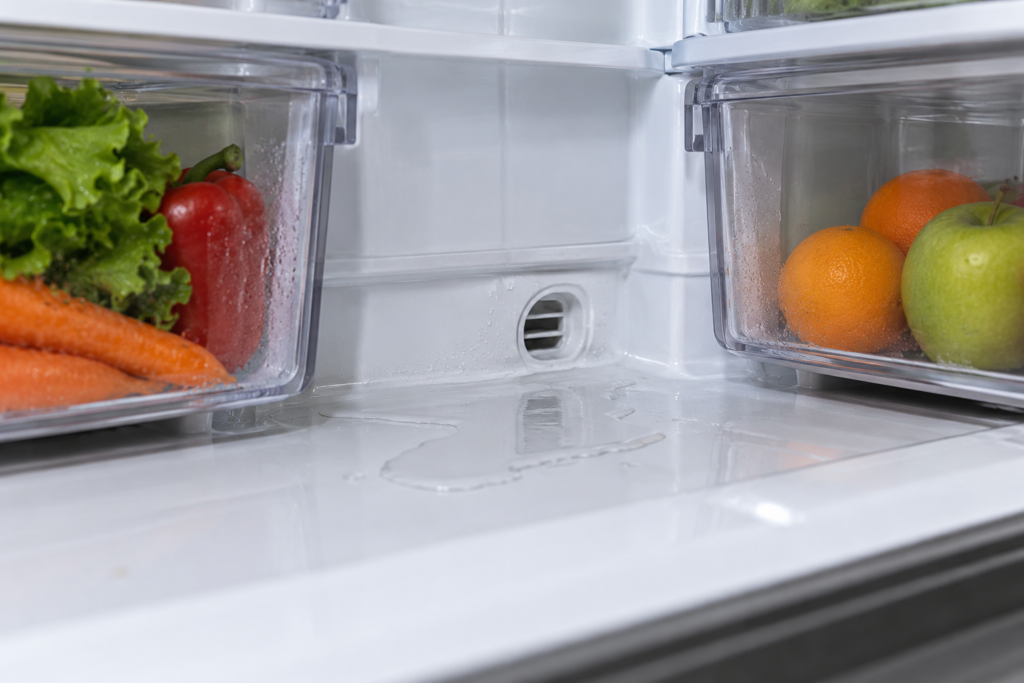
Water under the crisper drawers
Water collecting beneath the vegetable drawers can be associated with a blocked defrost drain on some refrigerator designs.
Water underneath the refrigerator
Check the defrost drainage system, drain pan, water line, and connections.
Water behind the refrigerator
A water-supply line or connection deserves immediate attention, especially on refrigerators with an ice maker or water dispenser.
Water near the filter
If the leak appeared shortly after changing the filter, start by checking whether the filter is installed and seated correctly.
Water near the dispenser
A few drops immediately after dispensing may not indicate a serious problem, but persistent dripping should be investigated.
Knowing the location can save you from unnecessarily disassembling parts of the appliance.
1. The Defrost Drain Is Clogged or Frozen
One of the first places to investigate is the defrost drainage system.
Many self-defrosting refrigerators periodically melt frost that develops during normal operation. That water is directed through a drain and eventually reaches a pan beneath the appliance, where it can evaporate.
If the drain becomes blocked by debris or ice, water may back up.
You might notice:
- Water beneath the crisper drawers
- Ice on the freezer floor
- Water running down an interior wall
- A puddle eventually appearing on the kitchen floor
Check your refrigerator’s owner’s manual before attempting to access the drain because its location and accessibility vary considerably between models.
Important: Avoid forcing sharp objects into a frozen drain. You could damage tubing or other refrigerator components.
2. The Water Supply Line Is Leaking
If your refrigerator has an ice maker or water dispenser, it may be connected to your home’s water supply.
Carefully inspect the accessible line and connections for:
- Moisture
- Loose connections
- Cracks
- Kinks
- Damaged tubing
- Water accumulating behind the refrigerator
If you discover an active supply-line leak, shut off the refrigerator’s water supply according to the appliance manufacturer’s instructions.
Unplugging the refrigerator may also be appropriate before inspecting areas where water and electrical components could come into contact.
Don’t attempt plumbing repairs you are not qualified or comfortable performing.
3. The Water Filter Is Installed Incorrectly
Did the refrigerator start leaking shortly after you replaced its water filter?
The filter should be one of the first things you check.
A filter that isn’t fully seated, is damaged, or is incompatible with the refrigerator can allow water to escape around the filter housing.
Remove and reinstall the filter only according to the instructions for your specific model.
Inspect it for visible damage while it is removed.
If you’re unsure which filter your refrigerator requires, use the model number and manufacturer documentation rather than choosing one based only on appearance.
4. The Water Dispenser Is Dripping
A refrigerator dispenser can release a few drops after use, particularly after installation or certain filter changes.
Persistent dripping is different.
Possible factors include:
- Air remaining in the water system
- A filter installation issue
- Water-system problems
- A component that requires service
Follow the manufacturer’s flushing procedure if you recently installed the refrigerator or changed its filter.
If the dispenser continues dripping long afterward, further troubleshooting may be necessary.
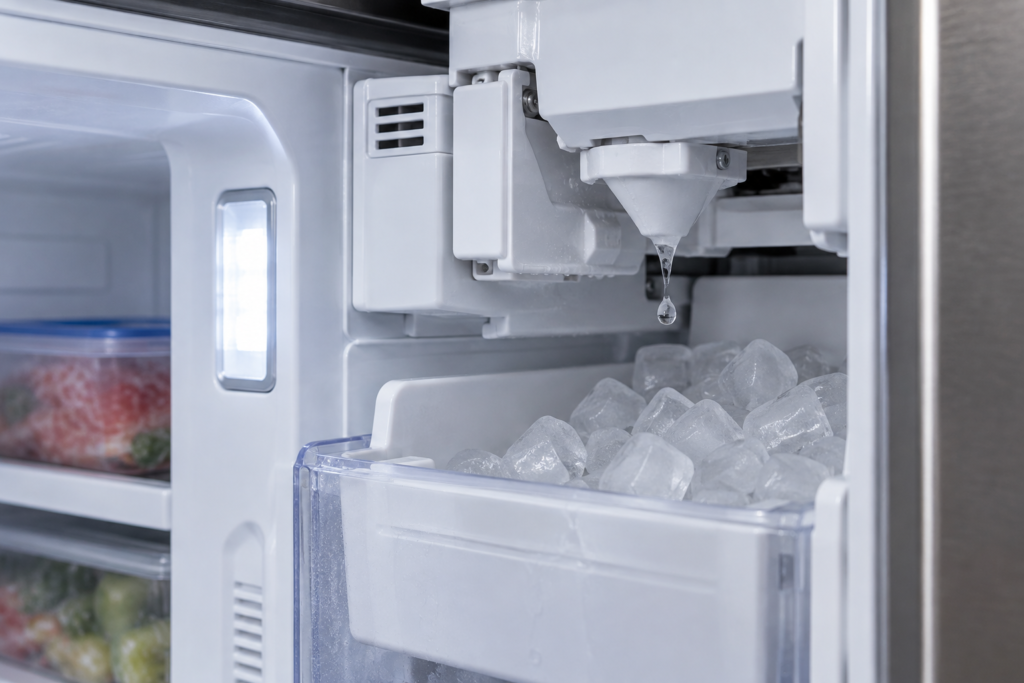
5. The Ice Maker Is Leaking
Sometimes the refrigerator itself isn’t the direct source of the water the ice maker system is.
Inspect accessible areas around the ice maker for signs of:
- Water where it shouldn’t be
- Ice buildup
- Loose water connections
- A misaligned fill area
- Unusual amounts of water in or around the ice bin
Because ice-maker designs vary, consult your owner’s manual before adjusting or removing components.
6. The Drain Pan Has a Problem
Defrost water commonly travels to a pan underneath the refrigerator.
Normally, you don’t need to empty this pan because the water gradually evaporates.
A problem may occur if the pan is:
- Cracked
- Damaged
- Displaced
- Overflowing because of another drainage issue
Check your owner’s manual to determine whether the pan on your model is safely accessible.
Finding water around the pan doesn’t automatically mean the pan itself is defective. Water may be arriving there because of another problem.
7. The Refrigerator Is Not Positioned Correctly
The refrigerator’s installation can also affect drainage.
If the appliance isn’t positioned according to the manufacturer’s requirements, water may not travel through the drainage system as intended on some models.
Use a level to check the appliance, but don’t automatically assume the refrigerator should be perfectly level in every direction.
Some manufacturers specify a particular front-to-back position to help the doors close or the appliance operate correctly.
Always follow your model’s installation instructions.
8. The Door Is Not Closing Properly
A door that doesn’t seal correctly allows warm, humid room air to enter the refrigerator.
That can increase condensation and frost.
Look for:
- Food containers preventing the door from closing
- Dirty door gaskets
- Damaged or loose seals
- Shelves or drawers sitting out of position
- A refrigerator that has been overloaded
Clean the gasket gently according to the manufacturer’s recommendations and make sure nothing is interfering with the door.
If the gasket is torn or badly deformed, it may need replacement.
9. It May Be Condensation, Not a Plumbing Leak
Not every pool of water comes from a broken pipe.
Moisture can develop when humid air enters the refrigerator and condenses on cold surfaces.
This may become more noticeable when:
- The refrigerator door is frequently opened
- A door is left partly open
- Warm food is placed inside
- Containers of liquid are left uncovered
- The room is unusually humid
- The door gasket isn’t sealing properly
A small amount of occasional condensation is very different from a growing puddle that repeatedly returns.
If you’re also dealing with unwanted odors, read our guide on Why Does My Refrigerator Smell Bad? 10 Causes and Safe Fixes.
How to Find the Source of a Refrigerator Leak
Instead of randomly replacing parts, work systematically.
Step 1: Dry the existing water
Use towels to completely dry the floor and accessible wet surfaces.
This makes fresh water easier to trace.
Step 2: Look inside the refrigerator
Check underneath drawers, around the filter, below the dispenser area, and inside the freezer.
Step 3: Inspect behind the refrigerator carefully
If your refrigerator is designed to be moved safely, follow the manufacturer’s instructions.
Don’t pull aggressively on the appliance because doing so can damage a short water line, flooring, or electrical connection.
Step 4: Check the water connection
If the refrigerator uses a water supply, look for moisture around accessible tubing and fittings.
Step 5: Observe when the water returns
Timing can provide useful clues.
For example, does water appear:
- After using the dispenser?
- After the ice maker fills?
- After replacing the filter?
- Gradually throughout the day?
- Inside the refrigerator before reaching the floor?
These observations can make professional diagnosis much easier if service becomes necessary.
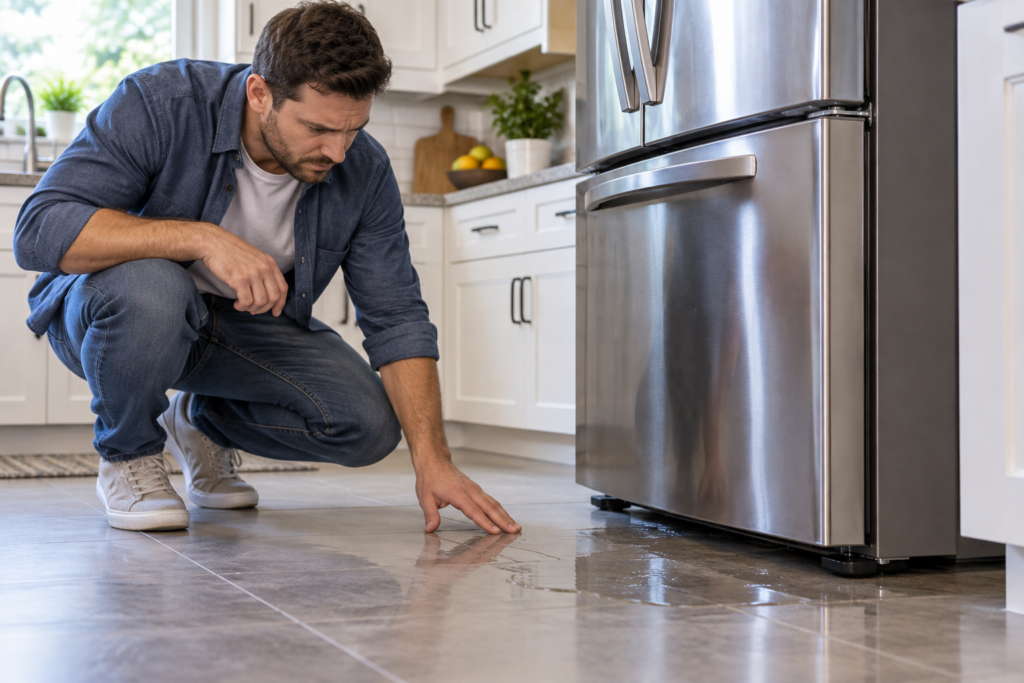
What Should You Do When You Find Water Under the Refrigerator?
Clean it up promptly.
Water sitting underneath an appliance can damage certain flooring materials and may eventually create additional moisture problems.
If water is actively coming from the supply line, turn off the refrigerator’s water supply if you can do so safely.
If water is approaching an outlet, plug, electrical component, or damaged electrical cord, do not stand in the water or handle wet electrical equipment.
Use the appropriate electrical shutoff procedure and seek qualified assistance when necessary.
Once the immediate problem is controlled, identify the source before returning the appliance to normal use.
When Should You Call a Refrigerator Technician?
Some refrigerator leak checks are straightforward. Others require access to internal components.
Consider professional service when:
- The leak returns after basic troubleshooting
- You cannot identify where the water originates
- The defrost drain requires significant disassembly
- An internal water valve appears to be leaking
- The supply system is damaged
- Electrical components have become wet
- The ice maker appears defective
- The appliance is under warranty
- You’re uncomfortable moving or disassembling the refrigerator
A technician can diagnose the actual failure rather than relying on trial-and-error replacement of parts.
How to Prevent Refrigerator Water Leaks
A few habits can reduce the likelihood of future problems.
Keep the refrigerator clean
Food debris can end up in places where it interferes with drainage or door closure.
Check the door regularly
Make sure containers and drawers don’t prevent the door from closing completely.
Replace filters correctly
Use a filter compatible with your exact refrigerator model and follow the manufacturer’s installation procedure.
Watch the water line
When safely accessible, occasionally inspect the line and connections for signs of moisture or damage.
Don’t ignore small leaks
A few unexplained drops today can become a larger problem later.
Finding the source early is usually easier than dealing with water damage afterward.
Frequently Asked Questions
Why is my refrigerator leaking water onto the floor?
Common possibilities include a blocked defrost drain, leaking water-supply line, filter problem, ice-maker leak, or an issue involving the drain pan. The location of the first visible water is an important diagnostic clue.
Why is there water under my refrigerator drawers?
On some self-defrosting refrigerators, water beneath the crisper or vegetable drawers can be a sign that defrost water isn’t draining correctly.
Can a clogged defrost drain cause a refrigerator to leak?
Yes. If defrost water cannot travel through the drain as designed, it can back up and collect inside the appliance or eventually reach the floor.
Why did my refrigerator start leaking after I changed the water filter?
The filter may not be seated correctly, or there may be a problem with the filter or its installation. Remove and reinstall it according to your model’s instructions and inspect it for damage.
Is a leaking refrigerator dangerous?
The water itself may simply be a maintenance problem, but water near electrical equipment creates an additional hazard. Avoid handling wet electrical components and seek qualified help when necessary.
Should I unplug a refrigerator that is leaking water?
If water is approaching electrical components or you need to inspect certain parts, disconnecting power may be appropriate but only if you can do so safely without touching wet electrical equipment. Follow the manufacturer’s instructions.
How much does it cost to repair a leaking refrigerator?
The cost varies widely depending on the cause, refrigerator model, required parts, labor rates, and location. Identifying whether the problem is a simple installation issue or a failed component is necessary before estimating repair costs.
Final Thoughts
If you’re asking why is my refrigerator leaking water, start with the location of the puddle rather than immediately assuming an expensive component has failed.
A clogged defrost drain, water-line problem, incorrectly installed filter, dispenser issue, or ice-maker leak can all produce similar symptoms.
Dry the area, trace where fresh water first appears, check only the components that are safely accessible, and use your refrigerator’s model-specific manual whenever possible.
If the source remains unclear or water has reached electrical components stop troubleshooting and contact a qualified professional.
Related Guides
- Why Does My Refrigerator Smell Bad? 10 Causes and Safe Fixes
- Why Is My Dishwasher Not Draining? 9 Causes and Safe Fixes
- Why Does My Kitchen Sink Smell Bad? 8 Causes and Fixes
Sources
For model-specific troubleshooting, consult your refrigerator owner’s manual first. Manufacturer guidance from Whirlpool and GE Appliances also identifies defrost-drain blockages, water-line problems, filter installation, leveling, and related water-system issues as potential causes of refrigerator leaks.