Why Is My Shower Water Pressure Low? 10 Causes and Safe Fixes
Why is my shower water pressure low? The most common cause is a clogged showerhead, but the restriction may also be in the hose, cartridge, mixing valve, partially closed shutoff valve, pressure regulator, water heater, or household supply. Start by deciding whether the problem affects only one shower, all hot water, or every fixture in the home.
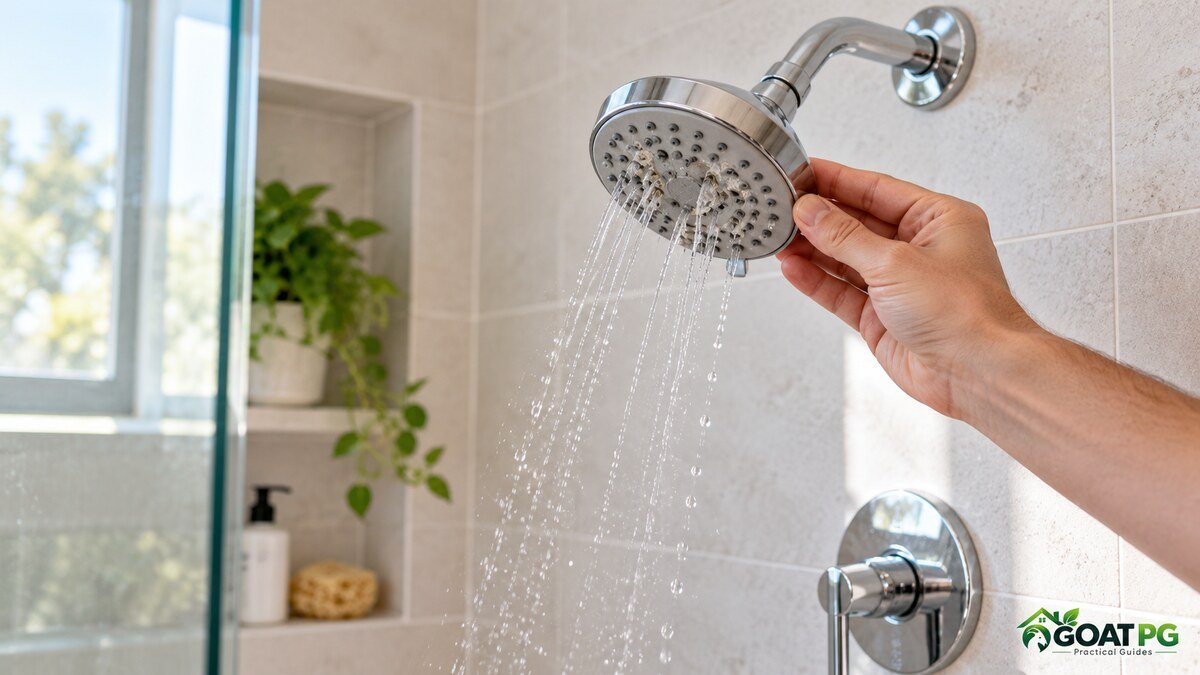
Low pressure and low flow can feel similar, but they are not always the same problem. Pressure is the force moving water through the plumbing, while flow is the amount of water reaching the showerhead. A clogged fixture can reduce flow even when the home’s supply pressure is normal. This guide helps you separate a simple showerhead problem from a broader plumbing issue and explains which checks are safe for a homeowner.
In this guide
Quick answer: what to check first
- Compare other fixtures. Test the bathroom sink and another shower with cold and hot water.
- Look at the spray pattern. Uneven jets or water shooting sideways suggest clogged nozzles.
- Check recent changes. Note whether the problem began after plumbing work, a water outage, a new showerhead, or a sudden freeze.
- Reduce simultaneous demand. Stop the dishwasher, washing machine, irrigation, and other showers, then test again.
- Inspect for leaks. Look for damp areas, running toilets, water-meter movement, or an unexplained increase in water use.
If pressure dropped suddenly throughout the home, you hear water running inside a wall, see active water damage, or suspect a broken service line, close the main shutoff if it is safe and you know how, then contact a licensed plumber or the water utility. Do not open walls or adjust a pressure regulator without the correct training and tools.
First determine where the pressure loss occurs
Only one shower is weak
An isolated problem usually points to the showerhead, handheld hose, local shutoff, cartridge, or mixing valve. This is the best-case scenario because you can begin with accessible parts rather than the entire plumbing system.
All hot water is weak
If cold flow is normal but hot flow is weak at several fixtures, the restriction may be near the water heater, a hot-water shutoff, a mixing valve, or hot-water piping. Do not change the water-heater temperature or remove heater components as a pressure test. Scalding, gas, electrical, and water-damage risks make this a professional diagnosis.
Every fixture is weak
Whole-house symptoms suggest a partially closed main valve, failing pressure-reducing valve, municipal supply problem, well-system issue, major leak, or aging pipework. Ask a neighbor whether they have the same problem and check the utility’s service alerts before paying for interior repairs.
10 reasons your shower water pressure is low
1. Mineral buildup is blocking the showerhead
Calcium, magnesium, rust, and small debris can block spray holes or the inlet screen. The spray becomes thin, uneven, or angled even though nearby faucets seem normal. Homes with hard water may see deposits return more quickly.
Clean only with methods approved for the showerhead’s finish. Strong acids, abrasive pads, and metal tools can damage coatings and rubber nozzles. If mineral deposits also cover the enclosure, our guide to removing hard-water stains from glass safely explains a surface-friendly approach.
2. The inlet screen or flow-control insert is obstructed
Many showerheads contain a small screen that catches debris. Sediment released after water-main work or plumbing repairs can collect there. A water-saving insert may also become clogged. Consult the manufacturer’s instructions before opening the fixture, and do not remove a flow-control component merely to defeat water-efficiency requirements.
The U.S. Environmental Protection Agency notes that standard showerheads use 2.5 gallons per minute, while WaterSense-labeled models use no more than 2.0 gallons per minute and must meet performance criteria for spray force and coverage. A lower rated flow does not automatically mean a poor shower when the product is correctly installed.
3. A handheld shower hose is kinked or deteriorated
A flexible hose can twist, flatten, or develop an internal obstruction. Straighten visible kinks and check whether the hose bends sharply near its connections. If the outer layer is cracked, bulging, or leaking, replace the hose with a compatible part rather than trying to patch a pressurized line.
4. The shower cartridge is clogged or worn
The cartridge behind the handle controls water volume and temperature. Sediment, mineral deposits, or worn seals can restrict one side of the supply or make the handle difficult to turn. A cartridge problem is more likely when the showerhead is clean but the flow remains weak, the temperature is unstable, or the handle behaves differently than before.
Cartridge removal varies by valve model and requires shutting off the correct water supply. An incorrect part or installation can cause leaks inside the wall, so use the manufacturer’s instructions or call a plumber.
5. The pressure-balancing or thermostatic valve is sticking
Modern shower valves limit sudden temperature changes when another fixture uses water. Mineral buildup or worn internal parts can prevent the valve from moving correctly and restrict the shower. If pressure changes sharply when a toilet flushes or an appliance fills, the valve may need inspection.
6. A shutoff valve is partly closed
A main valve, branch valve, or water-heater valve may not have been fully reopened after maintenance. Do not force a stiff, corroded, or leaking valve. Old valves can fail when disturbed. If you are unsure which valve controls the line, ask a plumber to identify and operate it safely.
7. Several fixtures are using water at once
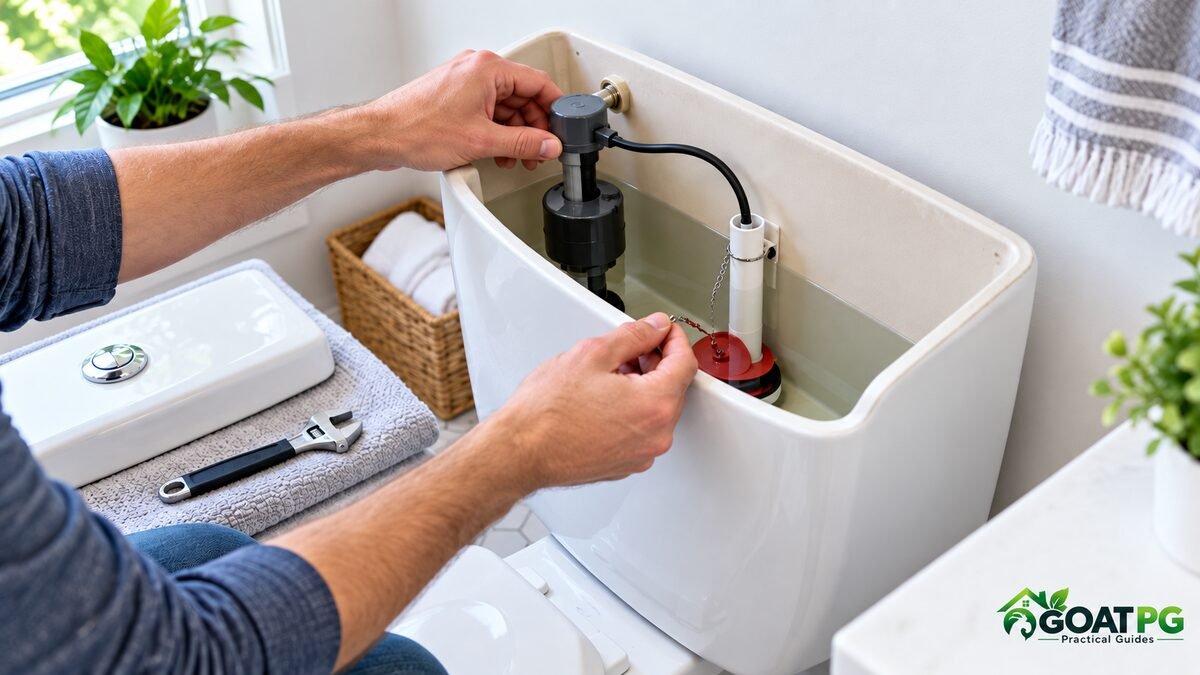
The shower may weaken while a washing machine fills, irrigation runs, or another person uses a shower. This does not necessarily indicate a defective fixture; the available supply is being divided. Test the shower when other water uses are off. A toilet that refills continuously can also consume water unnoticed—see why a toilet keeps running for the common causes.
8. The home’s pressure regulator is failing
Some homes use a pressure-reducing valve where the service line enters the building. A failing or incorrectly adjusted regulator can cause low, high, or fluctuating pressure throughout the house. Adjustment is not a trial-and-error repair: excessive pressure can damage fixtures and supply lines. A plumber can test static and flowing pressure with a gauge and compare the readings with local requirements.
9. A leak is reducing available flow
Leaks may occur at a visible fixture, under a sink, in a crawlspace, below the slab, or underground. Warning signs include meter movement when all water is off, damp drywall, warm floor areas, moldy odors, reduced pressure, or an unexplained bill increase. A small shower leak does not always explain whole-house pressure loss, but a larger supply leak can.
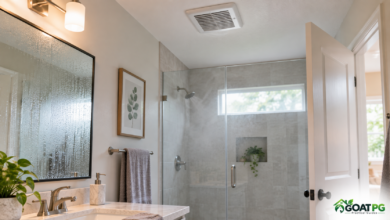
Moisture left after showers can also create a separate ventilation problem. If mirrors and walls stay wet for a long time, review why a bathroom fan is not removing moisture.
10. The supply system or pipes are restricted
Older galvanized steel pipes can corrode internally and lose usable diameter. Scale, debris, undersized branch lines, a weak well pump, clogged well filter, low pressure tank, or a municipal supply issue can create similar symptoms. These problems are not solved by installing a more aggressive showerhead. A plumber or qualified well professional should identify the system-level cause.
How to clean a showerhead safely
- Read the care instructions. Confirm whether the finish and internal parts tolerate vinegar or a mild descaler.
- Turn off the shower. Let hot surfaces cool and protect the tub or shower floor from dropped tools.
- Clean rubber nozzles. Gently rub flexible tips with a soft cloth or brush.
- Remove the head only if appropriate. Support the shower arm so you do not loosen the pipe inside the wall. Use padded tools to protect the finish.
- Inspect the inlet screen. Rinse loose debris without puncturing or discarding parts.
- Soak only as directed. Keep exposure short enough to protect plated finishes and internal seals.
- Rinse and reinstall. Use the specified washer and thread-sealing method. Do not overtighten.
- Test for leaks. Run cold water first, then verify the connection and spray pattern.
If the finish is natural stone, brass, specialty plating, or another acid-sensitive material, avoid improvised cleaners. Contact the manufacturer for a compatible method.
Should you remove the showerhead flow restrictor?
Removing a flow-control part is rarely the best first step. It may violate product instructions or local efficiency rules, increase water and water-heating costs, and fail to solve an upstream restriction. Clean the screen and nozzles, confirm the supply condition, and choose a properly designed replacement if the existing fixture does not perform well.
EPA WaterSense-labeled showerheads are independently certified to use no more than 2.0 gallons per minute while meeting criteria for spray force and coverage. See the official EPA WaterSense showerhead guidance when comparing replacements.
When to call a plumber
- The pressure dropped suddenly throughout the home.
- Only hot water is weak at several fixtures.
- You suspect a concealed, slab, service-line, or underground leak.
- The main valve or pressure regulator is corroded, leaking, or difficult to move.
- Old galvanized pipes appear restricted.
- A shower cartridge or valve requires opening the wall or model-specific tools.
- The pressure is excessively high, low, or unstable on a gauge test.
- A well pump, pressure tank, or filtration system is involved.
Describe when the problem started, which fixtures are affected, whether hot and cold behave differently, and whether the utility recently performed work. These details help the plumber isolate the cause faster.
How to prevent weak shower flow
- Wipe flexible spray nozzles before deposits harden.
- Clean the inlet screen according to the manufacturer’s schedule.
- Use cleaners that are compatible with the fixture finish.
- Repair running toilets and visible leaks promptly.
- Avoid forcing old shutoff valves during routine cleaning.
- Keep appliance and fixture manuals with model numbers for replacement parts.
- Have recurring whole-house pressure changes professionally tested.
- Choose certified fixtures designed to maintain useful spray performance at an efficient flow rate.
Frequently asked questions
Why is my shower pressure low but the sink is fine?
The restriction is probably local to the shower. Check the showerhead nozzles, inlet screen, handheld hose, cartridge, and mixing valve before investigating the whole house.
Why is only the hot shower water weak?
A restriction may be affecting the hot side of the cartridge, mixing valve, water-heater outlet, or hot-water piping. Because water-heater work involves scalding and utility hazards, use a qualified plumber when the issue affects multiple hot-water fixtures.
Can a clogged showerhead reduce pressure?
It reduces the flow reaching the spray nozzles, which feels like low pressure at the shower. Cleaning the head may restore the spray even when household supply pressure has not changed.
Why did my shower pressure suddenly drop?
Sudden changes can follow a water outage, plumbing work, debris entering the fixture, a valve being partly closed, a failed regulator, or a leak. Test other fixtures and contact the utility or a plumber if the entire home is affected.
Will a new showerhead fix low pressure?
It can help when the old head is clogged, damaged, or poorly designed. It will not repair a closed valve, leaking pipe, failed regulator, restricted plumbing, or weak well system. Diagnose the location of the problem before buying parts.
Bottom line
If you are asking, “Why is my shower water pressure low?” begin by comparing other fixtures and testing hot and cold water. Clean the showerhead and inlet screen, inspect a handheld hose, reduce simultaneous water demand, and look for leaks. When the problem affects the whole home, only hot water, concealed plumbing, a regulator, or a well system, arrange a professional diagnosis instead of adjusting components at random.