Why Does My Toilet Keep Running? 9 Causes and Easy Fixes
Why does my toilet keep running? In most tank-style toilets, water continues flowing because the flapper is not sealing, the chain is holding it open, the tank water is set too high, or the fill valve cannot shut off correctly. The noise may be constant, or the toilet may refill for a few seconds every so often—a pattern often called a phantom flush.
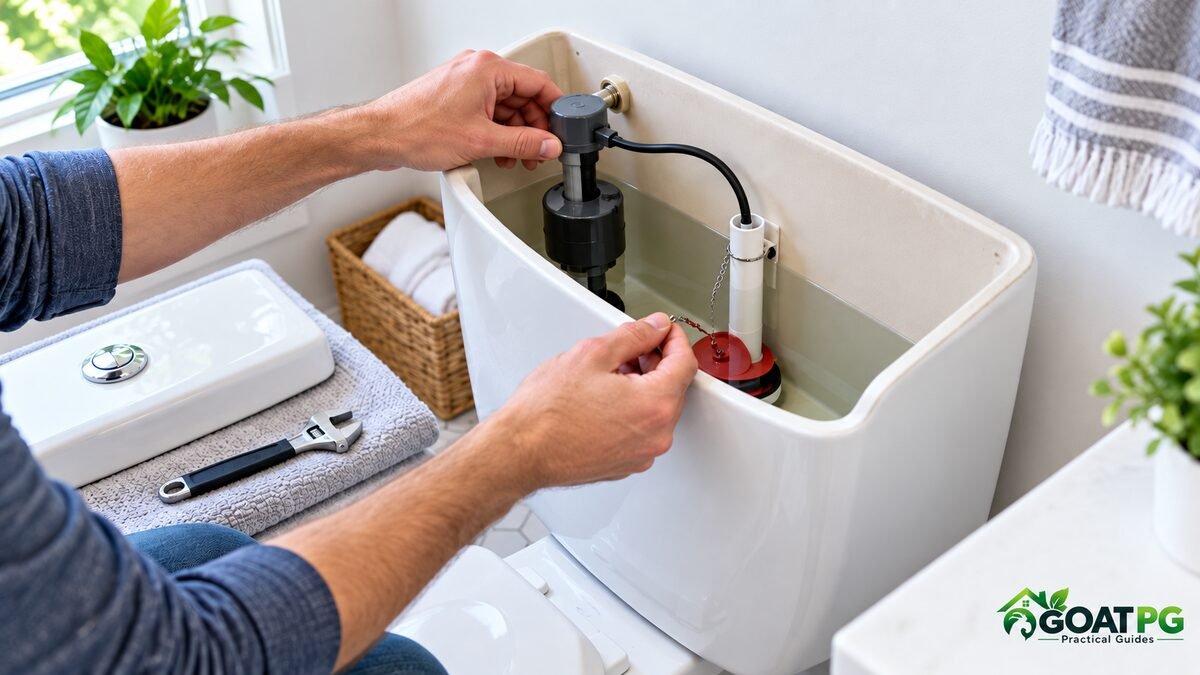
A running toilet can quietly waste water and raise your bill, but many causes are visible once you remove the tank lid. This guide explains how the system works, how to diagnose nine common problems safely, and when it is smarter to call a plumber.
Quick answer: what to check first
Remove the tank lid carefully with both hands and set it on a folded towel where it cannot fall. Then flush once and watch what happens:
- Does the flapper or canister lift and then close completely?
- Is the chain tangled, very loose, or pulled tight?
- Does the float rise freely without touching the tank wall?
- Does the water stop below the top of the overflow tube?
- Is water continually entering the overflow tube?
- Does gently lifting the float stop the fill valve?
If water is spilling over the top of the overflow tube, the problem is usually on the fill side. If the water level falls without entering the overflow tube, the flapper, canister seal, or flush-valve seat is usually leaking.
Before you begin: protect the floor and know the shutoff
Place a towel around the base of the toilet and locate the shutoff valve on the wall or floor behind it. Turn the valve clockwise gently only if you need to stop the water. Do not force a corroded or stuck valve; it can break and create a larger leak. If water is overflowing the tank, spreading across the floor, or leaking from a supply connection, shut off the water if it can be done safely and call a plumber.
The water inside the tank is normally supply water, but wash your hands after handling components. Do not use in-tank chemical tablets unless the toilet manufacturer permits them because some products can damage rubber seals and plastic parts.
Why does my toilet keep running? 9 common causes
1. The flapper chain is too short, too long, or tangled
The chain connects the flush handle to the rubber flapper or flush mechanism. If it is too short, it holds the flapper slightly open. If it is excessively long, it may become trapped under the flapper or wrap around another part. Either condition prevents a complete seal.
Easy fix: With the tank full and the handle at rest, adjust the chain so it has a small amount of slack. It should lift the flapper fully during a flush but allow it to drop straight back onto the seat. Remove unnecessary chain links that can catch under the seal, but keep enough length for smooth operation.
2. The flapper is worn, warped, dirty, or the wrong size
Rubber flappers harden, curl, develop mineral buildup, or lose flexibility with age. A replacement that does not match the flush valve can also leak even when it looks new. The escaping water lowers the tank level until the fill valve switches on again.
Easy fix: Shut off the water, flush to empty most of the tank, and inspect the flapper. Clean light residue with water and a soft cloth. Replace a cracked, stiff, misshapen, or slimy flapper with the correct model and size. Take the old part or a clear photo to the store, or check the toilet manufacturer’s parts list.
3. The flush-valve seat is dirty or damaged
The flapper seals against the circular flush-valve seat at the bottom of the tank. Sediment, a rough mineral deposit, a chip, or a deteriorated gasket can create a tiny path for water to escape into the bowl.
Easy fix: Turn off the supply and empty the tank. Wipe the seat gently with a nonabrasive cloth and inspect it with good lighting. Avoid sandpaper or aggressive scraping that can make the surface uneven. A cracked flush valve or damaged seat normally requires the tank to be removed, so many homeowners prefer a plumber for that repair.
4. The tank water level is set too high
The overflow tube protects the bathroom by directing excess tank water into the bowl. If the fill valve is adjusted too high, water continually spills into the tube, so the valve never reaches a stable shutoff point.
Easy fix: Look for the manufacturer’s water-level mark inside the tank. Adjust the float or fill-valve setting according to the printed instructions so the water stops below the overflow opening and at the specified level. Do not shorten the overflow tube; it is a safety component sized for the toilet.
5. The float is stuck or misadjusted
Older toilets may use a ball float on a metal or plastic arm. Newer valves often use a cup that slides up the fill-valve shaft. A float can rub the tank wall, catch on the chain, become waterlogged, or remain too low to close the valve.
Easy fix: Make sure the float moves freely through its full range and does not touch other components. Reposition the chain or rotate the fill valve only as the manufacturer allows. Replace a damaged or water-filled float. If lifting the float by hand stops the water, adjustment may solve the problem; if it does not, suspect the fill valve.
6. The fill valve is dirty, worn, or failing
The fill valve opens after a flush and should close when the float reaches the correct height. Sediment, worn seals, age, or a damaged diaphragm can make it hiss, spray, refill slowly, or run continuously.
Easy fix: Follow the model-specific cleaning procedure if one is available. Some valves can be flushed to remove small debris, but the water must be controlled carefully. Replacing the complete fill valve is often more reliable than repeatedly adjusting a worn unit. Shut off the supply and confirm that the tank and supply connection remain dry after the repair.
7. The refill tube is inserted too far into the overflow tube
The small flexible refill tube sends water into the overflow tube to restore the bowl’s water level after a flush. If its end is pushed deeply below the tank waterline, it can create a siphon that slowly pulls water from the tank.
Easy fix: Attach the refill tube to the top of the overflow tube with the proper clip, maintaining an air gap as the toilet or fill-valve instructions specify. Do not jam the tube down inside the overflow pipe. A tube that is loose, cracked, or spraying outside the overflow opening should be replaced or secured correctly.
8. The flush handle is sticking
A loose lever, overtightened mounting nut, bent arm, corroded mechanism, or handle that rubs the tank lid can keep the chain lifted after you release it. The flapper then remains partly open and the toilet runs.
Easy fix: Move the handle and watch the lever inside the tank. It should return freely. Reposition a chain that pulls sideways and check whether the lid interferes. Toilet handle nuts are often reverse-threaded, so verify the direction before loosening or tightening anything. Replace a bent or corroded lever with a compatible part.
9. A canister seal, dual-flush seal, or internal gasket is leaking
Not every toilet uses a traditional flapper. Tower, canister, and dual-flush systems rely on large seals that can blister, harden, shift out of position, or collect debris. An incompatible replacement seal may cause intermittent refilling.
Easy fix: Identify the toilet brand and model number, usually found inside the tank or under the lid. Use the matching replacement seal and follow the manufacturer’s instructions. If the flush tower is cracked, the tank-to-bowl gasket leaks externally, or the mechanism requires major disassembly, call a plumber.
How to confirm a silent toilet leak with a dye test
- Wait until the tank has completely filled and stopped.
- Add a few drops of food coloring to the tank—not the bowl.
- Do not flush or use the toilet for about 10 minutes.
- Look in the bowl. Colored water indicates that tank water is passing through the flush seal.
- Flush immediately after the test to reduce the chance of staining.
The U.S. Environmental Protection Agency recommends this simple test and notes that worn toilet flappers are a common source of household leaks. Its WaterSense leak-detection guidance also advises checking the water meter when no water is being used.
Why the toilet runs for a few seconds at random
Intermittent refilling usually means water is escaping slowly from the tank into the bowl. Once the level drops far enough, the float activates the fill valve for a few seconds. A leaking flapper or canister seal is the most common cause, but a low refill tube, damaged flush-valve seat, or wrong replacement part can create the same symptom.
If the bathroom also has a sewer-like odor, the running toilet may be a separate issue. Use our guide to bathroom sewage smells to check traps, seals, drains, and ventilation rather than assuming tank water causes the odor.
What not to do
- Do not force a stuck shutoff valve.
- Do not overtighten plastic nuts or porcelain-mounted hardware; porcelain can crack.
- Do not cut the overflow tube to lower the water level.
- Do not bend components unless the manufacturer specifically describes that adjustment.
- Do not use harsh abrasives on the flapper seat.
- Do not mix cleaning chemicals inside the tank.
- Do not ignore water around the toilet base or supply connection.
- Do not assume every replacement flapper or seal is universal.
When to call a plumber
Call a licensed plumber if the shutoff valve will not operate, the supply line or connection leaks, the tank or bowl is cracked, water appears around the base, or the flush valve requires tank removal. Professional help is also sensible when a new flapper and correct adjustment do not stop the leak, the toilet rocks, the floor feels soft, or repeated clogs and gurgling suggest a drain or vent problem.
Water around the toilet can damage flooring and create persistent odors. If the room already feels damp, follow our checklist for finding a damp bathroom smell and address wet materials promptly.
How to prevent a running toilet from returning
- Check the tank several times a year for slow movement or hissing.
- Test for silent leaks when the water bill rises unexpectedly.
- Keep the chain clear and confirm that the handle returns smoothly.
- Use manufacturer-compatible flappers, seals, and fill valves.
- Avoid unapproved in-tank cleaning tablets that can damage seals.
- Clean light mineral residue before it becomes heavy buildup.
- Replace aging rubber parts before they become brittle or distorted.
- Inspect the floor, shutoff valve, and supply hose for external moisture.
If mineral deposits are common throughout the bathroom, our guide to removing hard-water stains safely explains how to work without aggressive scratching or unsafe chemical mixtures.
Frequently asked questions
Can I leave a running toilet overnight?
It is better to address it promptly. A toilet that is running only into the bowl is unlikely to flood under normal conditions, but it can waste substantial water and a failing component may worsen. If the tank is overflowing, water is on the floor, or a supply connection leaks, shut off the water if safe and arrange urgent repair.
Why does jiggling the handle stop the toilet?
Jiggling changes the position of the lever, chain, and flapper. This usually points to a sticking handle, tangled chain, or flapper that is not landing squarely on its seat. Adjust or replace the faulty part instead of relying on the handle trick.
How much slack should the flapper chain have?
It needs a small amount of slack when the handle is at rest. Exact adjustment varies by toilet. Too little holds the flapper open; too much can tangle or become trapped underneath it.
Why is water flowing into the overflow tube?
The float may be set too high, stuck, or unable to close a worn fill valve. Adjust the water level according to the toilet or valve instructions. Replace the fill valve if lifting the float does not stop the flow.
Why does the toilet keep running after I replaced the flapper?
The new flapper may be the wrong size, the chain may be too short, or the flush-valve seat may be dirty or damaged. A canister-style toilet may also require a different seal rather than a conventional flapper.
The bottom line
A toilet that keeps running is usually telling you that water is escaping through the flush seal or that the fill system cannot shut off. Watch one complete flush, check the chain and flapper, compare the water level with the overflow tube, and test the float. Use a dye test for a silent leak, choose model-compatible parts, and call a plumber when the shutoff, porcelain, supply connection, floor, or internal valve needs more than a simple adjustment.