Why Do My Towels Smell After Washing? Causes and Easy Fixes
You wash your towels, dry them, and expect them to smell fresh. Instead, they come out smelling musty, sour, or strangely stale—or the odor returns as soon as the towel gets wet again.
This usually doesn’t mean you need stronger fragrance or more detergent.
Towels can smell after washing when moisture, body oils, detergent or fabric-softener residue remain trapped in the fibers. Poor rinsing, slow drying, or buildup inside the washing machine can also contribute.
The easiest way to solve the problem is to first notice when the smell appears.
Why Do My Towels Smell After Washing? 7 Common Causes
Before rewashing your towels, use the timing of the odor as a clue.
They smell bad immediately after washing
If towels already smell musty when you remove them from the washer, investigate the washing process first.
Possible causes include:
- An overloaded washing machine
- Too much detergent
- Fabric-softener buildup
- A washing machine that needs cleaning
- Towels sitting wet in the washer after the cycle finishes
The towels may simply not be getting cleaned or rinsed thoroughly enough.
They smell fine until they get wet again
A towel that smells clean when dry but develops a sour or musty odor after a shower may still contain residue or odor-causing material within its fibers.
The moisture can make the existing odor noticeable again.
In this situation, repeatedly covering the smell with fragrance won’t address the underlying problem.
They smell after hanging in the bathroom
If freshly washed towels smell fine initially but become musty after hanging for a while, drying conditions deserve attention.
A towel folded over itself, bunched on a hook, or hanging in a humid bathroom can remain damp for hours.
Improving airflow may be just as important as changing your laundry routine.
1. Your Towels Stay Damp for Too Long
Towels are designed to absorb water, which also means they can remain damp long after you use them.
Problems often begin when wet towels are:
- Left in a pile
- Dropped into a laundry basket while damp
- Bunched together on a hook
- Left inside the washer after the cycle
- Stored before they are completely dry
Instead, hang a used towel fully open whenever possible so air can reach more of the fabric.
After washing, move towels to the dryer or drying area promptly and make sure they are completely dry before folding and storing them.
2. You’re Using Too Much Laundry Detergent
Adding extra detergent to smelly towels sounds logical, but more isn’t necessarily better.
When detergent is not rinsed away completely, residue can remain in the towel’s thick fibers. Over time, this buildup can contribute to stiffness and lingering odors.
Use the detergent amount appropriate for your machine, detergent, load size, and water conditions rather than automatically adding extra.
If you suspect detergent buildup, reducing the amount in future washes and ensuring towels have enough room to rinse properly may help.
3. Fabric Softener Is Building Up on the Towels
Fabric softener can make laundry feel soft, but towels are a special case.
Repeated use can leave a coating on towel fibers. That buildup may reduce absorbency and make it more difficult for the towel to rinse and dry effectively.
If your towels feel waxy, unusually stiff, or less absorbent than they used to, try washing them without fabric softener for a while.
Don’t try to solve a musty smell simply by adding more scented softener. Fragrance can temporarily cover an odor without removing its cause.
4. The Washing Machine Is Overloaded
Towels become heavy when wet and need room to move during the wash and rinse cycles.
Packing too many into the machine can prevent water and detergent from circulating effectively. It can also make thorough rinsing more difficult.
Instead of forcing every towel into one load, divide a very large load when necessary.
Your washing machine’s manual should be the primary guide for its recommended capacity and cycles.
5. The Washing Machine Itself Needs Cleaning
Sometimes the towels aren’t the original source of the smell.
Residue and moisture can accumulate in parts of a washing machine, particularly around areas such as:
- Door seals or gaskets
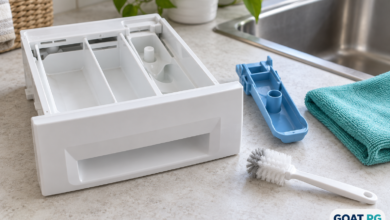
- Detergent dispensers
- The drum
- Filters or other user-serviceable areas specified by the manufacturer
If other laundry also smells stale after washing, the machine becomes a stronger suspect.
Follow the manufacturer’s cleaning and maintenance instructions for your specific washer. Avoid taking apart components that aren’t intended for routine user maintenance.
6. Towels Aren’t Drying Completely
A towel can feel dry on the outside while thicker areas are still holding moisture.
This can happen when:
- The dryer is overloaded
- The drying cycle ends too soon
- Towels are folded while slightly damp
- Indoor air circulation is poor
- Towels are hung too close together
Before storing towels, check that thicker seams, edges, and folded areas are fully dry.
If you’re air-drying them, leave enough space between towels for air to circulate.
7. Your Laundry Products or Water Conditions May Be Leaving Buildup
Sometimes the issue is not a single bad wash but gradual accumulation.
Detergent, fabric-care products, body oils, and minerals in water can contribute to residue over time. This can be especially noticeable when towels start feeling less absorbent or unusually stiff in addition to smelling stale.
Before experimenting with multiple laundry additives, start with the basics: correct detergent dosing, adequate rinsing, no unnecessary fabric softener, an appropriately sized load, and complete drying.
How to Fix Towels That Already Smell
For many everyday cases, you don’t need a complicated “laundry stripping” routine.
Start with this simpler reset.
Step 1: Check the care label
Read the towel’s care instructions before choosing a temperature, wash cycle, bleach product, or other treatment.
Different fibers, colors, decorative trims, and finishes may require different care.
Step 2: Wash the towels without overloading the machine
Give the towels enough room to move.
Use an appropriate amount of laundry detergent rather than increasing the dose because of the smell.
Skip fabric softener during the reset wash.
Step 3: Use an appropriate wash temperature
Use the warmest water temperature permitted by the towel’s care label and compatible with its color and material.
Don’t assume that every towel can safely be washed on the hottest setting.
Step 4: Consider an extra rinse if residue is a problem
If you have been using too much detergent or the towels feel coated, an additional rinse may help remove remaining product.
Again, use the options appropriate for your washing machine.
Step 5: Dry immediately and completely
Don’t leave the washed towels sitting in the drum.
Dry them promptly and make sure they are completely dry before folding or storing them.
This step is easy to overlook and can undo an otherwise successful wash.
What About Washing Towels With Vinegar?
White distilled vinegar is commonly used in laundry to help with certain residues and mineral buildup.
However, don’t assume that vinegar is appropriate for every washing machine or every fabric. Check the towel’s care instructions and your washing machine manufacturer’s guidance before using it.
Most importantly, never mix vinegar with chlorine bleach.
Combining acidic products such as vinegar with chlorine bleach can release dangerous chlorine gas.
You also don’t need to start by mixing several household products together. Correcting detergent use, load size, washer cleanliness, rinsing, and drying may solve the problem without a complicated DIY mixture.
How to Keep Towels From Smelling Again
Once the odor is gone, prevention is usually easier than repeatedly trying to remove it.
Build these habits into your towel routine:
- Hang used towels open so they can dry
- Don’t put soaking-wet towels into a closed hamper
- Wash towels regularly rather than letting damp used towels accumulate
- Use the correct amount of detergent
- Avoid excessive fabric softener
- Don’t overload the washing machine
- Remove towels promptly when the wash cycle ends
- Dry them completely before storing
- Keep the washing machine clean according to its manual
- Make sure stored towels are kept in a dry, ventilated area
The goal isn’t to make towels heavily scented. A properly cleaned and completely dried towel should not need fragrance to hide an underlying odor.
When the Towels May Not Be the Real Problem
If the smell keeps returning despite changing your washing and drying routine, look beyond the towels.
For example, if most loads come out smelling bad, inspect and clean the washing machine according to its manufacturer’s instructions.
If towels only become musty while hanging in one bathroom, the room may have a moisture or ventilation problem.
And if clean, completely dry towels develop a musty smell while stored in a closet, investigate the storage area for excess humidity or dampness.
Finding where in the wash-dry-use-store cycle the smell returns is often more useful than repeatedly washing the towels.
Frequently Asked Questions
Why do my towels smell sour after washing?
A sour smell can be associated with towels remaining damp too long, incomplete cleaning or rinsing, product buildup, or a washing machine that needs cleaning. Notice whether the odor is present immediately after washing or appears later as the towel becomes damp.
Why do my towels smell fine when dry but bad when wet?
Moisture can make an odor trapped in the fibers noticeable again. Detergent or softener buildup, body oils, incomplete washing, and repeated slow drying can all contribute.
Should I use more detergent on smelly towels?
Usually, adding extra detergent isn’t the best first response. Too much detergent can be difficult to rinse completely from thick towel fibers. Follow the detergent and washing-machine dosing guidance instead.
Can fabric softener make towels smell?
Repeated fabric-softener use can leave residue on towel fibers and reduce absorbency. If your towels feel coated or the odor keeps returning, try washing them without fabric softener.
Should towels be completely dry before going into a closet?
Yes. Towels should be completely dry before they are folded and stored. Even a small amount of trapped moisture can encourage musty odors during storage.
The Bottom Line
If your towels smell after washing, don’t immediately add more detergent or fragrance.
First determine when the odor appears.
Towels that smell straight from the washer point toward the wash process or washing machine. Towels that start smelling after they become damp point more toward residue or incomplete drying. Towels that become musty in the bathroom or closet suggest a moisture and airflow problem.
Correct the weak point in that cycle, then keep towels fully dry between washing, use laundry products appropriately, and maintain your washing machine according to its manufacturer’s instructions.
In many cases, those simple changes are enough to keep the smell from coming back.