How to Clean Baseboards Without Bending Over: 7 Easy Steps
How to clean baseboards without bending over is mostly a matter of using the right reach tool and following the right order. Start dry, work from the top edge down, and use as little moisture as the finish allows. With a vacuum wand, an extendable microfiber duster, and a flat mop, you can remove ordinary dust, hair, scuffs, and sticky marks while staying upright.
This guide gives you a practical seven-step routine for painted wood, MDF, and vinyl baseboards. It also explains which tools actually help, how to protect the finish, and when a mark needs touch-up paint instead of harder scrubbing.
Table of Contents
The Quick Answer
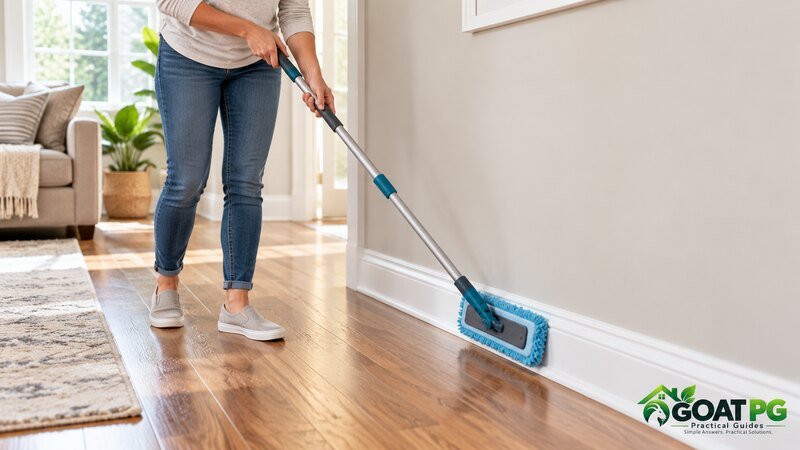
The easiest way to clean baseboards without kneeling is to attach a clean microfiber cloth to a long-handled flat mop. Vacuum the top ledge and grooves first, lightly mist the cloth rather than the trim, then wipe in short sections. Turn or replace the cloth when it becomes gray. Finish with a dry pad so moisture does not sit on paint, wood, or MDF.
That sequence matters. Washing dusty trim first creates muddy streaks and pushes grime into corners. The American Cleaning Institute includes wiping baseboards in its spring-cleaning plan, but you do not need to wait for a seasonal deep clean. A few minutes of dry dusting during normal floor care prevents most buildup.
Tools and Supplies You Will Need
You do not need a specialty gadget for every room. Most households can assemble an effective setup from ordinary floor-care tools:
- A vacuum with an extension wand and soft dusting brush
- An extendable microfiber duster for corners and stair trim
- A long-handled flat mop with removable microfiber pads
- Two or three clean microfiber cloths
- A bucket of lukewarm water
- A few drops of mild dish soap or another finish-safe cleaner
- A clean, dry towel or mop pad
- A soft foam pad for isolated scuffs, if the paint can tolerate it
Choose a flat mop head that can tilt almost vertical. Thick string mops are awkward against narrow trim and may drip onto flooring. A slim rectangular head makes even contact with the face of the baseboard while its front edge reaches the top ledge.
If you buy a cleaner, read the label for both the surface and the required dilution. The EPA’s Safer Choice product search can help you find products whose ingredients meet the program’s criteria. A disinfectant is rarely necessary for routine baseboard dust, and stronger is not automatically better.
How to Clean Baseboards Without Bending Over: 7 Easy Steps
1. Clear a Working Path
Move small baskets, floor lamps, pet bowls, and lightweight chairs away from the wall. You do not have to empty the room. Pull larger furniture forward just far enough for the mop head or vacuum wand to pass behind it. Open curtains and raise low drapes so fabric does not drag through dust or cleaning solution.
Look for loose paint, swollen fiberboard, open seams, and water damage before cleaning. Photograph a questionable area if you want to compare it later. Water can worsen already swollen MDF, and vigorous rubbing can lift peeling paint. Those sections need repair rather than a wet scrub.
Finally, protect delicate flooring. Place a dry towel under the small section you are washing, especially beside unfinished wood or laminate seams. This preparation makes how to clean baseboards without bending over safer for both the trim and the floor.
2. Vacuum the Top Edge and Grooves
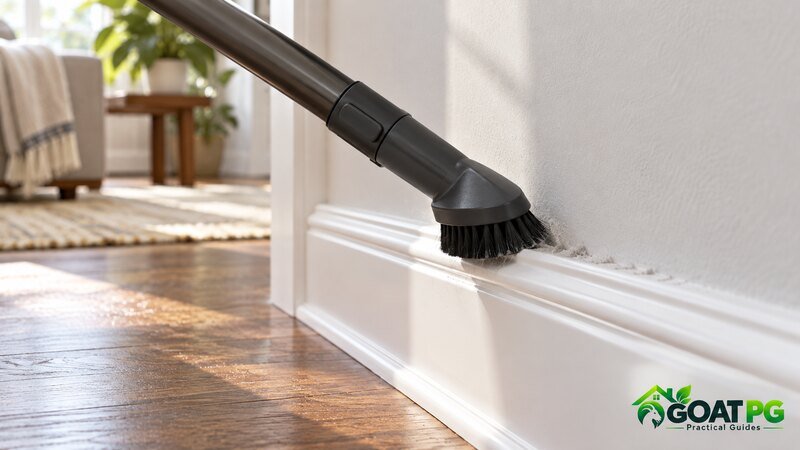
Fit the vacuum with its soft brush and extension wand. With the motor off, confirm that the attachment is secure; then switch the vacuum on and guide the brush along the upper ledge. Angle it gently into decorative grooves and corners. Do not press a hard plastic nozzle directly against painted trim because it can leave dark rub marks.
Work around the room in one direction. A slow pass captures more than rapid back-and-forth strokes. Pay extra attention near HVAC returns, exterior doors, pet beds, and carpet edges, where hair and fine dust accumulate fastest. If your vacuum has adjustable suction, start low on chipped or fragile paint.
Dry removal is the step people most often skip. It is also the step that keeps the damp pad clean longer. If dust seems to return immediately throughout the room, our guide to why a house gets so dusty can help you identify airflow, filter, and housekeeping causes.
3. Dry-Dust the Corners and Hard-to-Reach Areas
A vacuum brush may miss the narrow space behind a toilet, under a radiator cover, or beside a heavy cabinet. Use an extendable microfiber duster for those areas. Flatten the duster head when possible, and pull dust toward an open section where the vacuum can collect it.
For corners, wrap a dry microfiber cloth around the end of a clean broom or flat mop and secure it with reusable clips or elastic bands. Make sure no metal edge can scratch the paint. This simple setup is useful if you are learning how to clean baseboards without bending over and do not want to buy another tool.
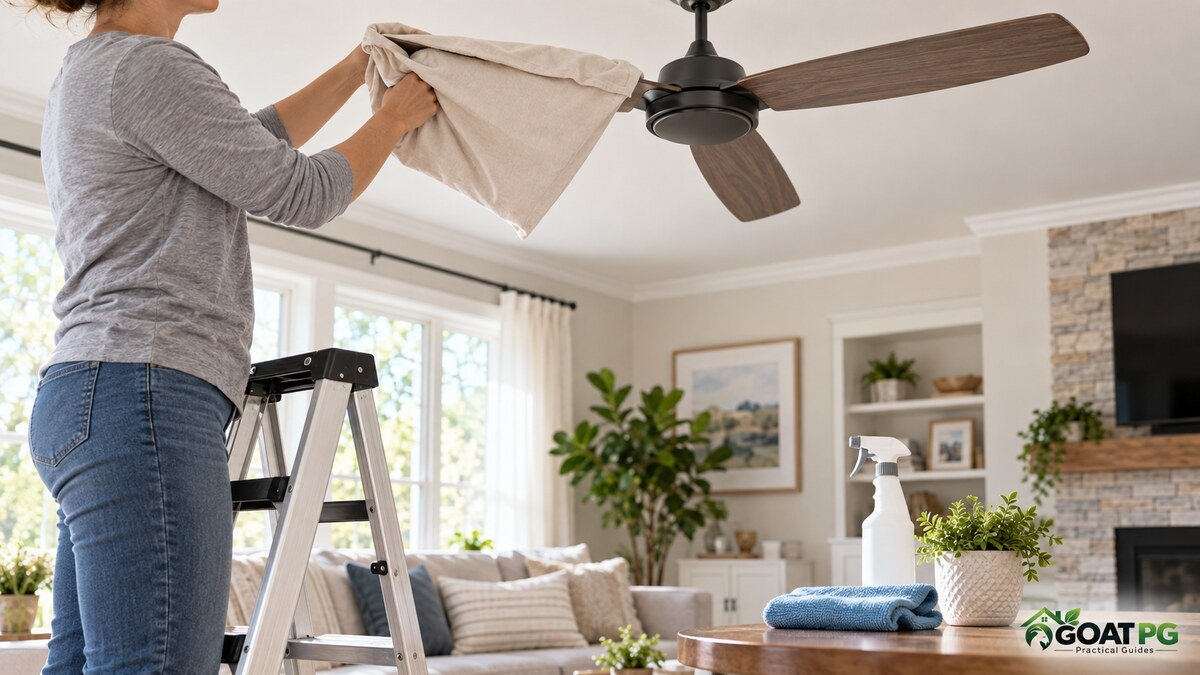
Clean the duster head before moving from a greasy kitchen area to a bedroom. Otherwise, you can transfer residue around the house. The same top-to-bottom habit works for higher surfaces; see our method for cleaning a ceiling fan without making a mess before you tackle the trim below it.
4. Test a Mild Cleaning Solution
Mix a few drops of mild dish soap into a bucket of lukewarm water. You want lightly soapy water, not a bowl of foam. Dip a microfiber cloth, wring it until merely damp, and test an inconspicuous two-inch section behind furniture. Let the spot dry completely and inspect it in good light.
Sherwin-Williams recommends a soft cloth or sponge with mild soapy water for painted surfaces and advises testing the cleaner in an inconspicuous area. Its paint maintenance guidance also cautions against abrasive cleaners and ammoniated products on waterborne paint. Follow the manufacturer’s care instructions if you know the exact trim coating.
Do not mix cleaning products. In particular, never combine bleach with ammonia, acids, vinegar, or another cleaner. Routine dust and fingerprints normally respond to mild soap. If someone in the home is fragrance-sensitive, choose a fragrance-free product and ventilate the room.
5. Wipe in Short Sections With a Long-Handled Flat Mop
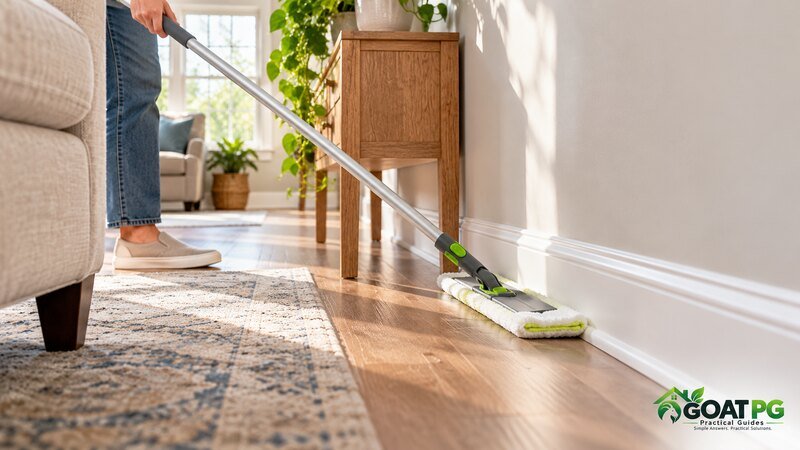
Attach a clean microfiber pad to the flat mop. Instead of spraying the wall or trim, mist the pad lightly or press it against your wrung-out cloth. The pad should feel damp but should not release water when squeezed. Stand facing the wall with relaxed shoulders and keep the handle close to your body.
Tilt the mop head so its long edge contacts the baseboard. Wipe a three- to six-foot section with smooth horizontal passes, then rotate the head to catch the top ledge. Use gentle pressure. Let the microfiber and mild solution do the work; forcing the handle can snap a swivel joint or burnish flat paint.
Check the pad often. Once it is visibly gray, flip it to a clean face or replace it. A dirty pad redistributes grime and produces streaks. This controlled, section-by-section technique is the core of how to clean baseboards without bending over.
6. Treat Scuffs and Sticky Spots Carefully
After the general wipe, inspect the trim from standing height with the room lights on. For an isolated sticky mark, hold the damp mop pad against it for 10 to 20 seconds, then wipe again. Contact time is gentler than scrubbing. For grease near the kitchen, refresh the mild soap solution rather than adding more concentrated detergent. Our guide to cleaning greasy kitchen cabinets explains the same principle of starting mild and testing the finish.
A soft foam cleaning pad may remove shoe scuffs, but it acts like a very fine abrasive. Test it first, use almost no pressure, and stop if color transfers to the pad or the sheen changes. Gloss and semi-gloss trim usually tolerate cleaning better than flat or matte paint, yet any coating can be damaged by repeated abrasion.
If a dark mark is actually missing paint, cleaning cannot restore it. Let the area dry, lightly prepare it according to the paint maker’s directions, and use matching touch-up paint. Knowing when to stop is an important part of how to clean baseboards without bending over; endless rubbing often turns a small scuff into a larger repair.
7. Rinse Lightly, Dry, and Reset the Room
Soap residue attracts dirt and can leave dull streaks. Put a fresh pad on the mop, dampen it with clean water, wring or blot it thoroughly, and make one light pass over the washed sections. Follow immediately with a dry microfiber pad. Pay particular attention to seams, inside corners, and the bottom edge where water can collect.
Allow the trim and floor to air-dry before moving furniture back. While you wait, rinse reusable pads separately from lint-heavy towels. Do not use fabric softener on microfiber because it coats the fibers and reduces their ability to pick up dust.
Walk the room once more and view the baseboards from different angles. If one area remains streaky, buff it with a dry pad rather than adding more cleaner. You now know how to clean baseboards without bending over from the first vacuum pass through the final dry finish.
Adjust the Method for Your Baseboard Material
Painted Wood
Use the mildest effective solution and a well-wrung cloth. Wood expands when it absorbs moisture, especially at joints and damaged paint edges. Never let water pool along the floor. If the trim was recently painted, follow the paint manufacturer’s recommended cure time before washing it.
Painted MDF or Fiberboard
MDF is particularly vulnerable where an edge, nail hole, or seam is unsealed. Prefer dry dusting and spot cleaning. Keep the pad only barely damp, dry each section immediately, and do not try to flatten swollen areas with the mop. Swelling means moisture has already reached the fibers.
Vinyl or PVC
Vinyl generally tolerates a damp wipe well, but a strong solvent or abrasive can still alter its sheen. Mild soap and water are usually enough. Check caulk lines for gaps while you clean, and keep liquid away from adjacent laminate or wood flooring seams.
Stained or Clear-Coated Wood
Use a cleaner approved for the specific finish when possible. Avoid soaking carved details or joints. If the cloth picks up stain color, stop, dry the area, and consult the coating instructions. The universal rule for how to clean baseboards without bending over is that reach should never come at the expense of control.
Common Baseboard-Cleaning Mistakes
- Washing before vacuuming: loose dust turns into gray paste and fills grooves.
- Spraying the baseboard directly: overspray runs into flooring seams and behind MDF.
- Using a dripping mop: extra water does not clean better and may swell trim.
- Scrubbing with a harsh pad: abrasive pads can change the paint sheen or remove color.
- Using one pad for the entire house: a loaded pad spreads hair, soot, and kitchen film.
- Forgetting the top ledge: this narrow horizontal surface collects most visible dust.
- Trying to clean damaged paint: peeling, bubbling, and swelling require repair first.
Another mistake is treating every mark as a sanitation problem. Baseboards are usually low-touch surfaces. Routine cleaning means removing soil; disinfecting is a separate task that should be reserved for situations and products where it is appropriate. Always follow the label, including dwell time and ventilation instructions.
How Often Should You Clean Baseboards?
For most homes, dry-dust or vacuum visible baseboards every two to four weeks and damp-clean them every two to three months. Homes with shedding pets, nearby construction, active fireplaces, or allergy concerns may need more frequent dry cleaning. Kitchens, entryways, and hallways usually soil faster than guest rooms.
Add one wall of trim to each weekly floor-cleaning session if doing the whole house feels overwhelming. That rotation keeps buildup manageable. It also makes how to clean baseboards without bending over a five-minute maintenance task instead of a day-long project.
Window tracks often release grit onto nearby floors and trim. Cleaning them on the same rotation can help; follow our step-by-step guide on how to clean window tracks without pushing dirt deeper into the corners.
Can You Use a Broom or Mop Instead of a Special Tool?
Yes. A clean microfiber cloth secured around a broom head is an inexpensive dry-dusting tool. For damp cleaning, a flat mop is easier to control because its pad stays evenly against the trim. Whatever handle you use, inspect it for exposed metal or hard edges, secure the cloth firmly, and avoid leaning your full body weight into it.
A telescoping handle helps with stairs and wide rooms, but longer is not always better. Adjust it so your elbows remain slightly bent and your shoulders relaxed. If the handle flexes or the head twists away from the wall, shorten it until you regain control.
Frequently Asked Questions
What is the fastest way to clean baseboards without kneeling?
Vacuum the top edge with an extension wand, then wipe the face with a lightly damp microfiber flat mop. Work in short sections and finish with a dry pad. For ordinary dust, that is the fastest reliable version of how to clean baseboards without bending over.
Do dryer sheets keep dust off baseboards?
They may leave a coating that temporarily changes how dust behaves, but that residue can attract grime, affect paint appearance, or bother fragrance-sensitive people. A clean, dry microfiber pad is more predictable and reusable.
Can I use vinegar on painted baseboards?
Do not assume vinegar is safe for every finish. Its acidity can dull or damage some coatings and nearby stone surfaces. Mild soap and water are usually the safer starting point. Test any solution in a hidden spot and follow the paint or trim manufacturer’s instructions.
How do I clean baseboards behind heavy furniture?
Do not strain to move something unsafe. Use a slim vacuum attachment and a pivoting flat mop through the available gap. If the area cannot be reached safely, ask for help moving the furniture or clean it the next time the room is rearranged.
What should I do if my back hurts while cleaning?
Stop if cleaning causes pain, numbness, dizziness, or instability. Use shorter sessions, keep the tool close to your body, and avoid twisting while your feet stay planted. This article offers housekeeping techniques, not medical advice; consult a qualified health professional about persistent symptoms or personal movement limits.
Final Takeaway
The best method for how to clean baseboards without bending over is simple: clear a path, vacuum loose soil, test a mild solution, wipe with a barely damp long-handled microfiber tool, and dry the trim. The order prevents streaks, while the long handle reduces unnecessary kneeling.
Start with one room and inspect the finish as you go. Clean pads, light moisture, and gentle pressure will do more for the result than a harsh chemical or aggressive scrub. Once you know how to clean baseboards without bending over, regular dry dusting is usually all it takes to keep them looking finished.