Why Does My Smoke Alarm Keep Going Off? 10 Causes and Safe Fixes
Why does my smoke alarm keep going off? First, treat every full alarm as a possible emergency—not as a nuisance. Look and smell for smoke only if you can do so safely. If you see smoke, smell burning, feel unusual heat, hear a combined alarm announce carbon monoxide, or cannot quickly explain the alert, get everyone outside and call emergency services from a safe location.
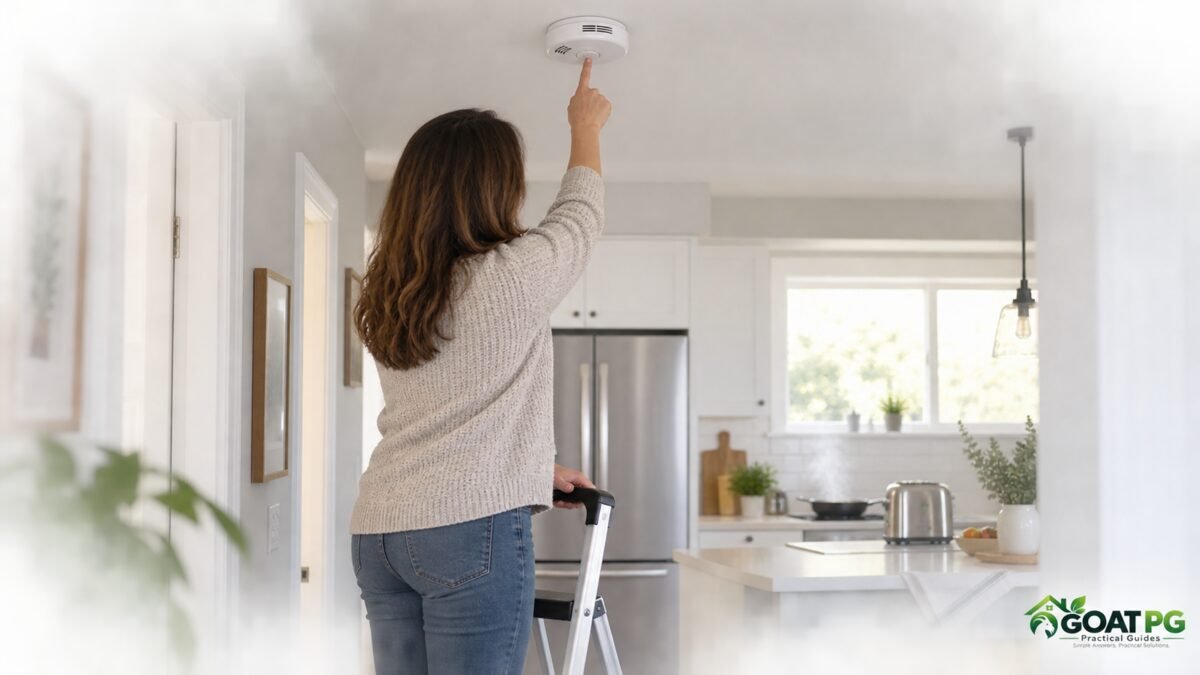
If there is clearly no emergency, repeated alarms often come from cooking particles, steam, dust, aerosols, poor placement, an interconnected unit elsewhere in the house, or an aging detector. The steps below help you identify the trigger without disabling a device that protects your home.
Quick safety check before troubleshooting
- Assume the alarm may be real. Check for visible smoke, flames, burning odors, unusual heat, or an appliance malfunction.
- Know which device is sounding. A smoke alarm, carbon monoxide alarm, heat alarm, and combination unit may use different patterns or spoken warnings. Follow the label and manufacturer’s instructions rather than guessing from memory.
- Leave if you are uncertain. Do not search through a smoky home or delay evacuation to silence the alarm.
- Never remove the battery to stop a nuisance alarm. Use the temporary hush feature only when you have confirmed the area is safe.
A single brief chirp every minute is different from a loud repeating alarm pattern. If your device is chirping instead of sounding continuously, follow our guide to smoke detector chirping causes and fixes.
Why does my smoke alarm keep going off? 10 common causes
1. There is real smoke or an early-stage fire
A smoke alarm may detect a problem before you can see flames. Overheated wiring, a failing appliance, food left on a burner, a smoldering trash can, fireplace embers, or a charger overheating behind furniture can create enough particles to trigger the sensor.
What to do: Do not silence the alarm first and investigate later. If the source is not immediately obvious and harmless, evacuate. Call the fire department from outside. Never re-enter until emergency personnel say it is safe.
2. Cooking smoke or airborne grease
Broiling, frying, searing, burned toast, and an overheated pan can release tiny particles even when the kitchen does not look smoky. A detector close to the kitchen or directly in the path of rising air may respond quickly.
What to do: Turn off the heat if it is safe, move the pan away from the burner, run the range hood that vents outdoors, and open a nearby window or door. Press the alarm’s hush button if the instructions allow it. Do not fan smoke deeper into the home or disconnect the device. Repeated cooking alarms may indicate poor kitchen ventilation or unsuitable alarm placement.
3. Steam or very high humidity
Dense shower steam can resemble smoke particles to some sensors. Steam from boiling water, a dishwasher, humidifier, or bathroom may travel into a hall and activate a nearby device. Condensation inside an alarm can also cause erratic behavior.
What to do: Improve ventilation, keep the bathroom door closed during a shower, and run the exhaust fan. If moisture lingers, our guide to a bathroom fan that is not removing moisture explains how to check airflow, duct restrictions, and fan capacity. Do not relocate a hardwired alarm yourself; ask a qualified electrician to follow local rules and the manufacturer’s spacing instructions.
4. Dust, renovation debris, or small insects
Dust can enter the sensing chamber and scatter light or interfere with internal components. Drywall sanding, sweeping, attic work, and HVAC dust are common triggers. A tiny insect inside the chamber can create the same effect.
What to do: Switch off power at the breaker before handling a hardwired alarm if the manufacturer requires it. Clean only as directed—usually with a soft brush or gentle vacuum around the vents. Do not spray cleaner, compressed propellant, or water into the device. If dust returns quickly throughout the home, see our guide on why a house gets so dusty.
5. Aerosol sprays, paint, or strong cleaning products
Hairspray, air freshener, insect spray, spray paint, sanding residue, and solvent vapors may reach the sensor. Even products that look clear in the air can contain droplets or particles large enough to cause an alert.
What to do: Stop using the product, ventilate the room, and move aerosol work outdoors when the label permits. Keep sprays pointed away from alarms. Never cover a detector except for a manufacturer-approved temporary dust cover during renovation, and remove the cover as soon as the work and cleanup are complete.
6. Candles, fireplaces, vaping, or tobacco smoke
A candle burning close to a detector, smoke from a fireplace with a weak draft, tobacco smoke, and some vaping aerosols can activate an alarm. A fireplace may also release smoke into the room when the flue is cold, the damper is not fully open, or the chimney needs service.
What to do: Extinguish the source safely, ventilate, and keep candles well away from combustible materials and alarms. Stop using a fireplace that spills smoke indoors until a qualified chimney professional has checked it. Never move an alarm simply to accommodate indoor smoking or vaping.
7. Poor location or strong airflow
An alarm positioned too close to a kitchen, steamy bathroom, supply register, ceiling fan, or drafty doorway may receive concentrated particles or moisture. Strong airflow can also carry cooking smoke from one room to a detector in another.
What to do: Compare the installation with the alarm manual and local code requirements. The correct location depends on the device, ceiling shape, nearby appliances, and jurisdiction. Battery-operated units may sometimes be moved according to instructions; hardwired units should be relocated by a qualified electrician.
8. Another interconnected alarm is detecting the problem
Interconnected alarms are designed so that when one unit detects smoke, every connected unit sounds. The alarm closest to you may be responding to a detector in the basement, garage-adjacent area, bedroom, or another floor.
What to do: Look for a flashing indicator, spoken location, app alert, or other manufacturer-specified signal that identifies the initiating unit. Check the entire home safely. Do not assume the nearest alarm caused the alert. If you cannot locate the initiating detector or rule out an emergency, leave and call for help.
9. Power interruptions or wiring problems
A hardwired alarm may react to a loose connector, unstable circuit, failing backup battery, recent outage, or incompatible device on an interconnected network. Electrical work, a tripped breaker, or a loose neutral can create confusing behavior.
What to do: Note whether the problem began after an outage or electrical work. Check the breaker only if there is no smoke, heat, sparking, or burning odor. Do not open junction boxes or handle exposed conductors. A qualified electrician should inspect repeated alarms associated with power changes, warm devices, buzzing, damaged wiring, or multiple hardwired units.
10. The alarm is old, damaged, defective, or recalled
Smoke alarms do not last forever. Sensor contamination, corrosion, impact damage, moisture exposure, or age can cause unreliable alarms. The manufacture date is usually printed on the back or inside the battery compartment.
What to do: Replace a damaged unit and any smoke alarm that has reached the manufacturer’s replacement age. The U.S. Fire Administration advises replacing smoke alarms 10 years from the manufacture date and testing them monthly. Check the model number against the manufacturer’s notices and the U.S. Consumer Product Safety Commission recall database.
How to stop a nuisance alarm safely
- Confirm there is no emergency. If you are not certain, evacuate.
- Remove the harmless source. Turn off cooking heat, extinguish a candle, or stop using an aerosol.
- Ventilate. Open a door or window and run an exhaust fan that vents outdoors.
- Use the hush button. Follow the alarm manual. Hush mode is temporary and should not replace correcting the source.
- Clear the air near the detector. Gently wave a towel below the alarm; do not strike it or blow contaminants into the chamber.
- Clean the exterior vents. After the air is clear, vacuum or brush the alarm only as the manufacturer directs.
- Document the pattern. Record the time, room, activity, weather, and which unit initiated the event.
- Test after the problem is resolved. Use the test button according to the instructions, not real smoke or an open flame.
What not to do
- Do not remove the battery or leave a hardwired alarm disconnected.
- Do not cover the detector with tape, plastic, fabric, or paint.
- Do not spray household cleaner, lubricant, or canned propellant into the alarm.
- Do not test it with a candle, match, cigarette, or burning paper.
- Do not ignore an alarm because previous alerts were caused by cooking.
- Do not replace a smoke alarm with a carbon monoxide alarm or assume one device performs both functions unless it is labeled as a combination unit.
- Do not modify hardwired connections unless you are qualified and local rules allow it.
When the alarm needs replacement
Replace the unit if it is past its service life, damaged, contaminated by paint or water, missing identification, unable to pass the manufacturer’s test, or continuing to alarm after correct cleaning and removal of environmental triggers. Use a compatible replacement when alarms are interconnected; mixing incompatible models can prevent the network from working correctly.
The U.S. Fire Administration recommends alarms inside every bedroom, outside each separate sleeping area, and on every level of the home, including the basement. It also advises monthly testing and replacement every 10 years. Review its official smoke alarm safety guidance and follow the instructions supplied with your exact model.
When to call a professional
Call emergency services for smoke, flames, a burning smell, unusual heat, a carbon monoxide warning, symptoms such as headache or dizziness, or any alarm you cannot safely explain. Contact a licensed electrician for recurring hardwired alarms, loose or warm connections, circuit problems, incompatible interconnected units, or relocation. Ask the manufacturer about unusual patterns, warranty coverage, and model-specific troubleshooting.
Your local fire department’s nonemergency line may also provide advice about alarm placement or community smoke-alarm programs. Do not use the emergency number for routine maintenance questions.
How to prevent repeat false alarms
- Use the range hood and bathroom exhaust fan consistently.
- Keep alarms away from direct spray, dust-producing work, and heavy steam according to manufacturer instructions.
- Vacuum alarm vents gently during regular home maintenance.
- Test every alarm monthly.
- Write the manufacture date and planned replacement date in a home maintenance record.
- Replace all units in a compatible interconnected system when required.
- Check the initiating unit after any network-wide alert.
- Keep cooking attended and maintain heating, fireplace, and electrical equipment.
Frequently asked questions
Why does my smoke alarm go off at night?
Possible reasons include a real smoldering problem, temperature changes, insects or dust, power fluctuations, or an aging unit. Because occupants are less likely to notice early fire signs while asleep, never assume a nighttime alarm is false. Evacuate if the cause is not immediately clear.
Can humidity set off a smoke detector?
Yes. Dense steam or condensation may enter some sensing chambers and resemble smoke particles. Improve ventilation and ask a qualified professional about placement if the problem repeats, but do not disable the alarm.
Why do all my smoke alarms go off together?
They are probably interconnected. One initiating alarm can activate the entire network. Identify the initiating unit using the model’s indicator light, voice message, app, or manual, and check that area first without delaying evacuation.
Should I replace the battery after a false alarm?
A fresh battery may help when low or unstable power is involved, but it will not solve cooking smoke, steam, dust, poor placement, or a failing sensor. Follow the manufacturer’s battery instructions and replace the entire unit when it has reached the end of its service life.
What is the difference between an alarm and a chirp?
A loud repeating pattern generally signals detected smoke, heat, or carbon monoxide depending on the device. An occasional chirp commonly indicates a maintenance condition such as low backup power or end of life. Patterns vary, so read the label and manual for your model.
The bottom line
When a smoke alarm keeps going off, safety comes before convenience. Rule out a real fire or carbon monoxide event, identify which interconnected unit started the alert, remove only clearly harmless triggers, ventilate, and use the hush feature as directed. Clean, test, relocate, or replace the alarm according to its instructions—never solve the problem by leaving your home unprotected.