
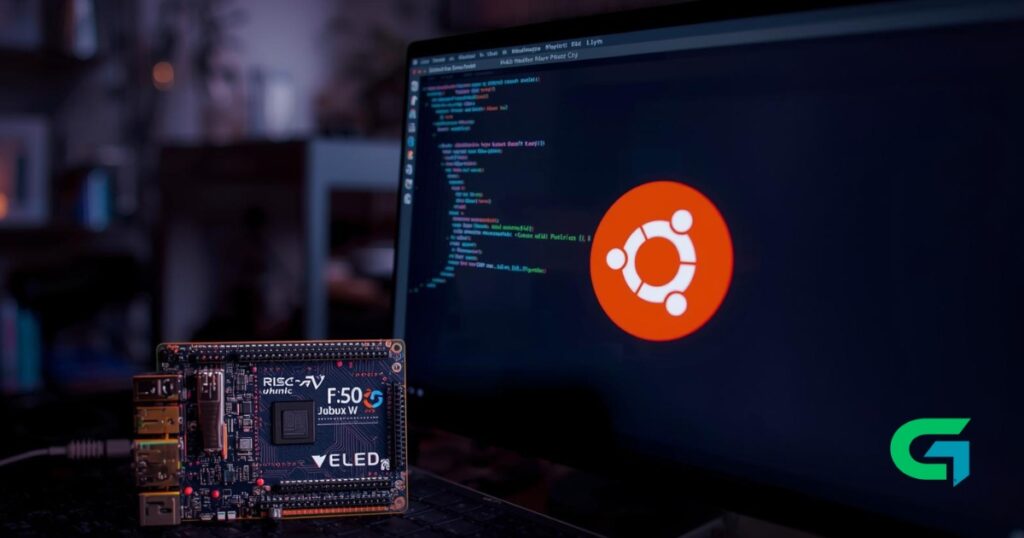
Ubuntu on RISC-V is making strides thanks to a promising new collaboration between Canonical and SpacemiT, marking a significant boost for Linux users interested in cutting-edge hardware. This development unlocks new potential for the open-source community by delivering optimized support for SpacemiT’s RISC-V systems-on-chip (SoCs), including the innovative K3 series and existing K1 processors.
Canonical, the company behind the popular Ubuntu Linux distribution, revealed today that it is working closely with SpacemiT (Hangzhou) Technology Co., Ltd. to enhance Ubuntu’s compatibility on the company’s RVA23-profile RISC-V SoCs. This collaboration specifically targets SpacemiT’s K3 series SoCs, which are slated for launch soon, alongside extending existing support for their K1 SoC. For developers, enthusiasts, and enterprises, this move signals a promising future for Ubuntu on the RISC-V architecture, bridging the gap between open hardware innovation and mainstream Linux usability.
Why Ubuntu on RISC-V Is Generating Buzz
The RISC-V ecosystem has been gaining substantial traction in recent years due to its open-source nature, allowing chip designers and system architects unprecedented flexibility to customize CPUs for specific applications without royalties. However, despite hardware advancements, software support especially for major operating systems like Ubuntu has historically lagged behind. This has limited RISC-V adoption beyond niche markets and experimental setups.
With Ubuntu being one of the most widely used Linux distributions globally, its robust support is essential to unlock RISC-V’s full potential. Canonical’s alignment with SpacemiT directly addresses this by ensuring Ubuntu can be delivered as a stable, high-performance OS on these new chips. This partnership is a critical step forward in making RISC-V a viable alternative to x86 and ARM processors for both developers and end users.
Ubuntu on RISC-V: What’s New with SpacemiT’s SoCs
SpacemiT’s RISC-V SoCs leveraging the RVA23 profile aim to outperform previous iterations by providing improved power efficiency, scalability, and integration for embedded and general-purpose computing needs. The K1 SoC, already supported, is designed for high-efficiency applications, while the upcoming K3 series promises enhanced performance suitable for a broader range of workloads.
Canonical’s work involves deep integration of Ubuntu’s kernel, device drivers, and user-space tools tailored specifically to SpacemiT’s hardware. This ensures that Ubuntu on RISC-V not only boots reliably but also fully utilizes the K1 and K3 chips’ capabilities such as advanced power management and hardware acceleration features.
For users and organizations, this means smoother deployment of cloud, edge, and IoT solutions based on both Ubuntu and RISC-V. The collaboration also encourages third-party developers to create optimized applications and middleware that leverage the unique advantages of SpacemiT’s silicon.
Expanding Ubuntu on RISC-V’s Ecosystem and User Benefits
The canonical-SpacemiT collaboration helps address a key challenge for RISC-V’s broader adoption: a mature and well-supported operating system environment. By enabling Ubuntu on SpacemiT’s chips, there is potential for accelerated software ecosystem growth, including containerization, cloud-native tools, and AI workloads optimized for RISC-V.
For Linux enthusiasts, the partnership means easier access to a fully functional, familiar OS running on modern open hardware. For enterprises, this collaboration could lower total cost of ownership by combining Ubuntu’s enterprise support and SpacemiT’s customizable SoCs, ideal for tailored deployments in telecom, automotive, and industrial sectors.
Looking Ahead: The Future of Ubuntu on RISC-V
This milestone highlights the increasing viability of RISC-V as a mainstream computing architecture and showcases how collaborative efforts can bridge hardware innovation with software readiness. As SpacemiT releases the K3 series and further optimizations to Ubuntu roll out, expect the RISC-V platform to gain a stronger foothold in various applications.
Canonical’s commitment to improving Ubuntu on RISC-V is likely to inspire other chipset makers to follow suit, fueling a competitive and dynamic ecosystem. In turn, users benefit from greater choice, performance improvements, and the unique freedom offered by open computing standards.
Read also : Galaxy S26 Wireless Charging: What Samsung Still Misses
Ubuntu on RISC-V is no longer an experimental concept but a growing reality supported by powerful new hardware and committed software development. The Canonical–SpacemiT alliance is a critical step toward a future where Linux users can fully harness the promise of open-source silicon without compromise.