
Linux Gaming Distros Join Forces to Solve Longstanding Issues
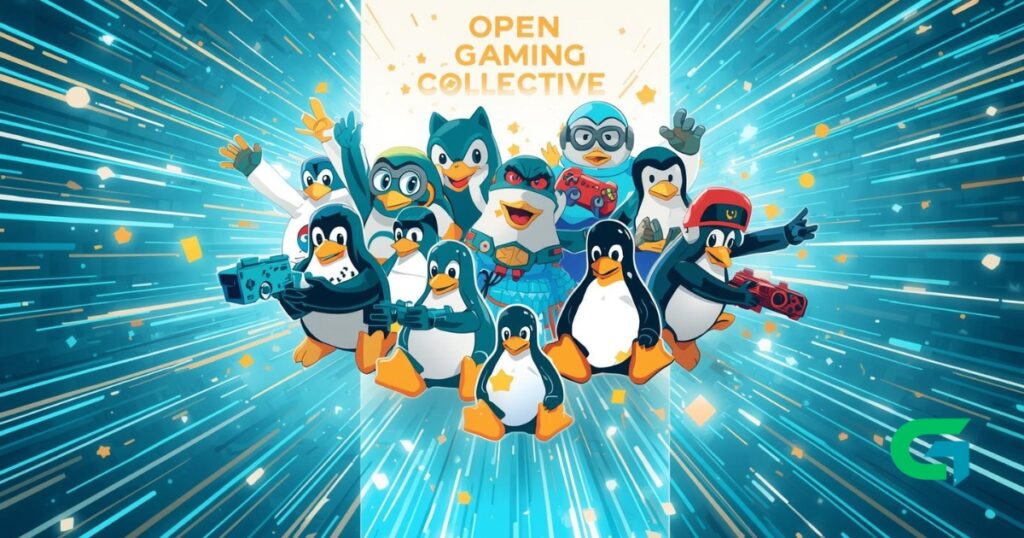
Several Linux gaming distros and open-source development teams have announced a major collaboration aimed at fixing deeper, ecosystem-wide problems that have plagued Linux gaming for years. The initiative, called the Open Gaming Collective (OGC), seeks to reduce duplicated effort, improve long-term stability, and strengthen Linux as a serious gaming platform.
Rather than competing in isolation, these projects are pooling resources to address shared challenges that affect gamers regardless of which distro they choose.
What Is the Open Gaming Collective?
The Open Gaming Collective is a coordinated development mission formed by Linux distributions and software projects that primarily target gamers. Its core goal is simple: stop reinventing the wheel and work together on shared foundations that benefit everyone.
The founding members include:
- Universal Blue & Bazzite (Fedora-based immutable gaming distros)
- ASUS Linux (software improving Linux on ROG laptops)
- ShadowBlip (Linux enhancements for handhelds and console-style PCs)
- PikaOS (a Debian-based gaming-focused distro)
- Fyra Labs (developers behind Ultramarine Linux and Fedora Terra)
In addition, several well-known projects and developers are listed as strategic partners, including ChimeraOS, Nobara Linux, Playtron, and Glorious Eggroll.
The OGC Kernel: A Shared Foundation
The most significant outcome of this collaboration is the OGC kernel, a unified set of gaming-focused kernel patches and improvements. Previously, many gaming distros maintained their own custom kernels, each with similar tweaks for performance, hardware compatibility, and latency.
Instead of fragmenting efforts, the Open Gaming Collective is merging these improvements into a single shared kernel project.
Upstream-First Philosophy Explained
A key principle of the Open Gaming Collective is its upstream-first approach. Any improvements developed by OGC members are intended to be submitted to the original upstream projects, such as the main Linux kernel or Mesa graphics stack.
This means:
- Fixes won’t live forever in private forks
- Improvements benefit all Linux users, not just OGC members
- Gamers won’t need a special kernel to see long-term benefits
Over time, even users running standard Linux kernels should benefit from OGC contributions.
Reducing Choice Paralysis for Gamers
One hidden problem in Linux gaming is decision paralysis. With so many gaming distros offering slightly different kernels, patches, and tweaks, new users often struggle to choose the “best” option.
If the OGC kernel succeeds, distro choice becomes less about technical kernel differences and more about:
- User interface and defaults
- Community support
- Update models and philosophy
This could significantly lower the barrier to entry for new Linux gamers.
More Than Just a Kernel
The Open Gaming Collective isn’t stopping at kernel work. The group has also announced plans for a downstream fork of Gamescope, Valve’s isolated compositor used for gaming enhancements.
The goal is to expand hardware support to more devices, especially handhelds and non-standard gaming PCs. While this project is still early, it highlights the collective’s broader ambitions beyond just kernel development.
Not Everyone Is On Board Yet
Some major gaming-focused distros, such as CachyOS and Garuda Linux, are notably absent. In fact, CachyOS has publicly expressed skepticism about the collective’s structure and motivations.
Whether these projects eventually join or remain independent remains to be seen, but the OGC has already assembled a critical mass of influential contributors.
Why This Matters for Linux Gaming
Linux gaming has made huge strides in recent years thanks to Proton, Vulkan, and better driver support. However, fragmentation has remained a persistent issue.
By coordinating development, the Open Gaming Collective aims to:
- Improve performance consistency
- Reduce duplicated work
- Strengthen long-term maintenance
- Make Linux gaming more approachable
If successful, this collaboration could mark a turning point for the entire ecosystem.
Read also : Google Maps with Gemini: Smarter Navigation Powered by AI
The formation of the Open Gaming Collective shows that Linux gaming distros are ready to tackle bigger problems together. With a shared kernel, upstream-focused development, and coordinated tooling, the collective has the potential to reduce fragmentation and accelerate progress. While not every project has joined yet, this unified effort could make 2026 a landmark year for Linux gaming.